Quick answer
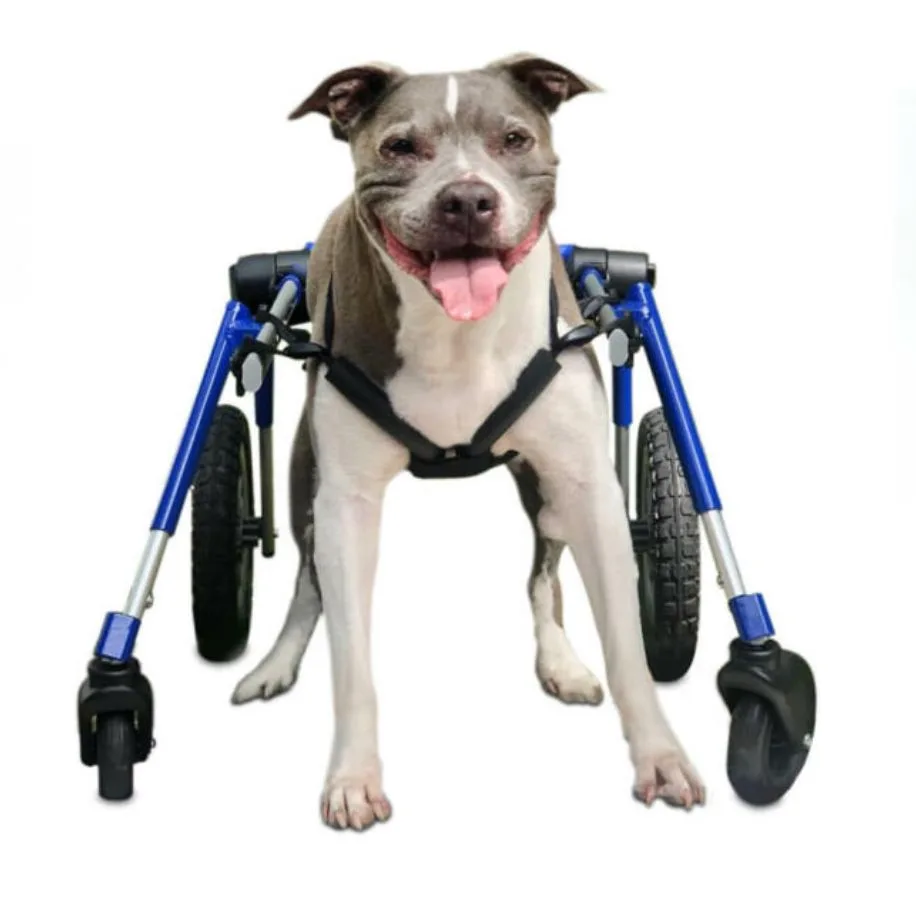
For dogs with hip dysplasia, a rear-support dog wheelchair like the Walkin' Wheels can relieve pressure on painful hip joints, improve mobility, and help maintain muscle tone. Choose the model that matches your dog's weight: Medium (26–49 lbs), Med/Large (50–69 lbs), or Large (70+ lbs). Measure carefully and consider whether your dog needs full support or just rear assistance.
How a rear wheelchair helps dogs with hip dysplasia
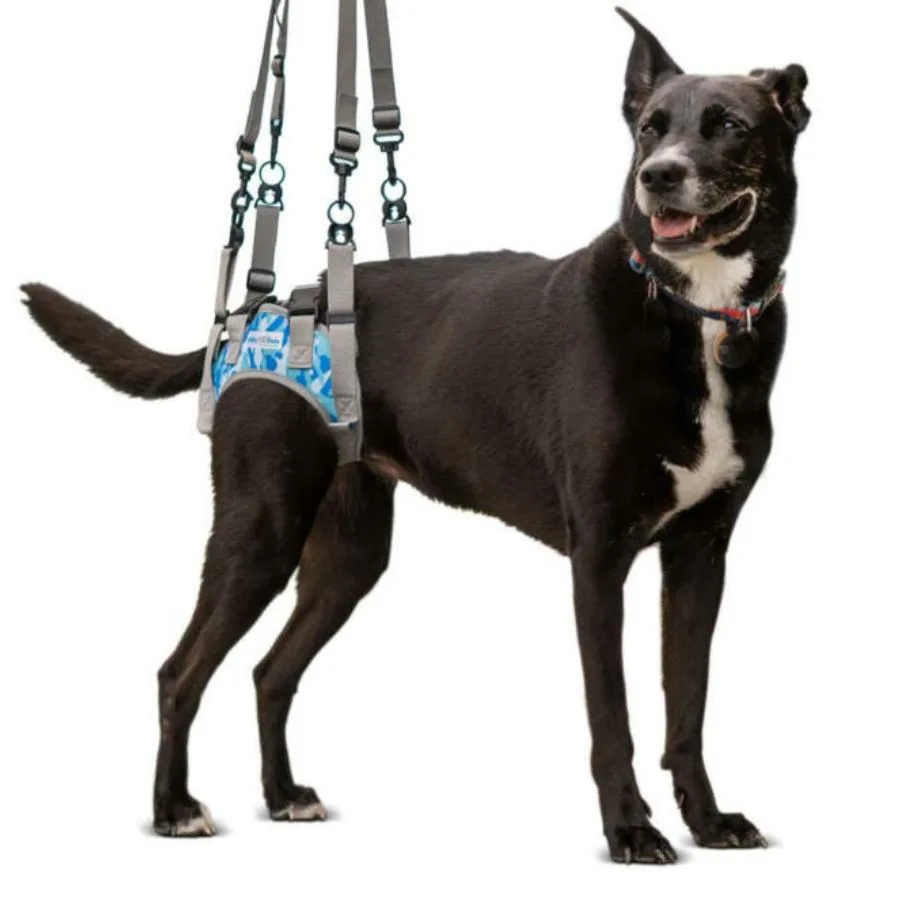
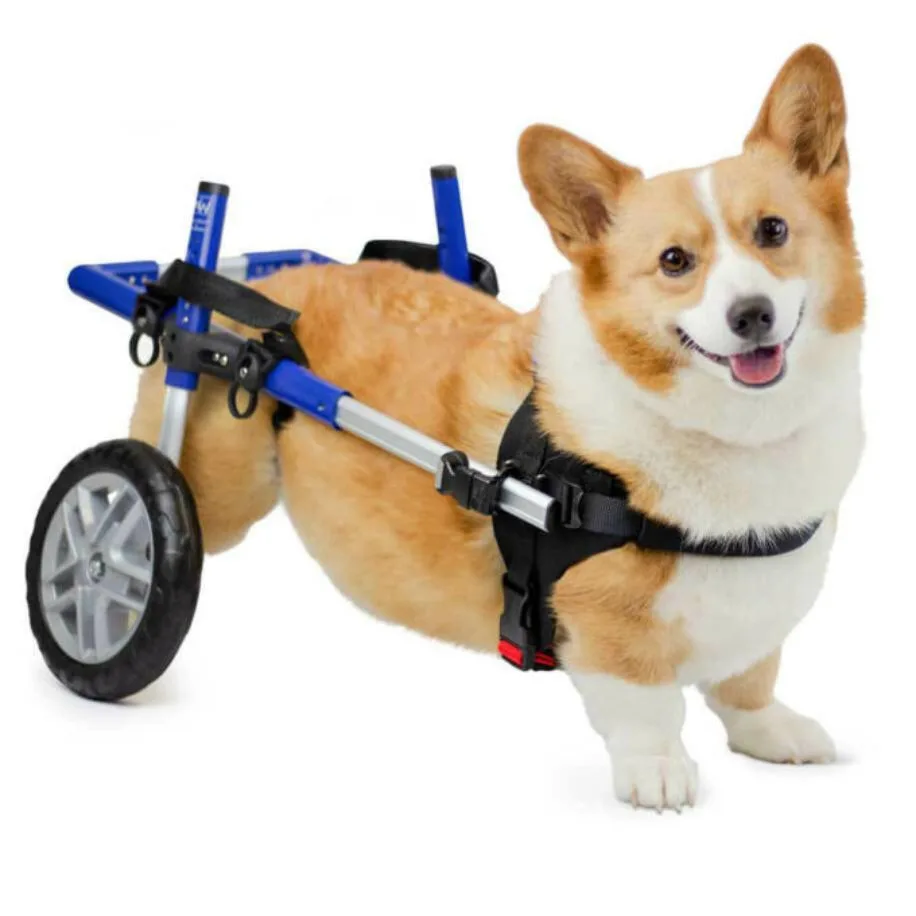
Hip dysplasia causes the hip joint to develop abnormally, leading to pain, stiffness, and reduced mobility. A rear-support wheelchair lifts the hindquarters, taking weight off the affected joints while allowing your dog to use their front legs freely. This can reduce pain during walks, help rebuild hind leg muscles, and let your dog enjoy daily activities without over-stressing the hips.
The Walkin' Wheels line is designed specifically for rear support. Each model uses a lightweight frame and adjustable components to fit your dog's body shape. The key is matching the size to your dog's weight and ensuring the saddle supports the belly without rubbing.
Weight-based sizing: the first decision rule
Walkin' Wheels offers three rear-support models for dogs with hip dysplasia. The Medium model supports 26 to 49 lbs, the Med/Large supports 50 to 69 lbs, and the Large supports 70+ lbs. If your dog is close to a boundary, consider the next size up for extra adjustability—especially if your dog is still growing or may gain weight during recovery.
The saddle and frame geometry differ between sizes. A properly fitted wheelchair prevents pressure points and allows natural movement. Measure your dog's weight, chest girth, and back length before ordering. The manufacturer provides a sizing guide for each model.
When rear support is enough vs. when it isn't
Hip dysplasia typically affects the rear legs, so a rear-support wheelchair is usually the right choice. However, if your dog also has front leg weakness, arthritis in the shoulders, or a neurological condition that affects all four limbs, a full-support (quad) wheelchair may be better. The Walkin' Wheels Small Quad model supports 11–25 lbs and provides both front and rear support.
For most dogs with hip dysplasia alone, rear support is sufficient and allows more freedom of movement. If your dog has trouble standing or walking even with rear support, consult your vet to see if a quad model or additional therapy is needed.
Decision rules for choosing a hip dysplasia wheelchair
- Weight rule: Match your dog's current weight to the Walkin' Wheels size: Medium (26–49 lbs), Med/Large (50–69 lbs), or Large (70+ lbs). If your dog is at the upper end of a range, consider the next size up for adjustability. Weigh your dog before ordering.
- Mobility rule: If your dog can still walk but is in pain, rear support is usually enough. If your dog cannot stand or has front leg issues, consider a full-support (quad) model. Check front leg strength.
- Fit rule: Measure chest girth and back length. The saddle should support the belly without rubbing the hips. Adjust the frame height so the dog's feet just touch the ground when standing. Use the manufacturer's measuring guide.
Walkin' Wheels models for hip dysplasia
- Walkin' Wheels MEDIUM Dog Wheelchair: The Walkin’ Wheels Medium dog wheelchair provides rear support for paralyzed and injured pets weighing between 26 to 49 lbs. Give medium sized dogs the rear leg support they need to stay active and continue to run and play. Ideal for medium-breed dogs with hip dysplasia, such as Corgis or Beagles. The rear support lifts the hips without restricting front leg movement.
- Walkin' Wheels Med/Large Dog Wheelchair: The Walkin’ Wheels Medium/Large Dog Wheelchair supports medium-sized dog breeds between 50 to 69 lbs. With the support of their rear dog wheelchair, your dog can get the exercise they need to stay healthy, rebuild muscle tone, enjoy their daily walk, and play. Best for larger medium breeds like Border Collies or Bulldogs. The frame is built to handle more weight while still allowing your dog to rebuild hip and leg muscles.
- Walkin' Wheels LARGE Dog Wheelchair: The Walkin’ Wheels Large dog wheelchair built to support you large or giant breed dog to help them lead an active lifestyle. The large dog wheelchair gives your dog the stability and rear support they need to exercise, go to the bathroom, and enjoy their time with their family. Suitable for large breeds like Labradors or German Shepherds with hip dysplasia. The robust frame provides the stability needed for bigger dogs with painful hips.
Who should use a Walkin' Wheels rear wheelchair?
Best for
- Dogs with hip dysplasia who still have good front leg strength and want to stay active
- Medium to large breeds (26–69+ lbs) needing rear support for walks and exercise
Not for
- Dogs with front leg weakness or full-body paralysis that require a quad (4-wheel) wheelchair
- Very small dogs under 11 lbs – consider the Walkin' Wheels Small Quad instead