Quick answer
Use a soft measuring tape to measure your natural waist, the widest part of your hips, and your torso length. Compare your numbers to the brand's size chart — not your usual clothing size. For fajas with firm compression, consider sizing up if you are between sizes.
What you need before you start
Grab a soft, flexible measuring tape and a mirror. Wear minimal, close-fitting clothing or underwear so the tape sits against your skin without extra bulk. Stand straight with your feet together and breathe normally. Do not suck in your stomach or pull the tape too tight — the measurement should be snug but not digging in.
Write down each number immediately. Most shapewear size charts ask for three key measurements: waist, hips, and torso length. Having all three ready saves time and helps you avoid guesswork.
Step-by-step measuring instructions
For your waist, find the narrowest part of your midsection — usually an inch or two above your belly button. Wrap the tape around that point and keep it parallel to the floor. For your hips, measure around the fullest part of your buttocks and hips, typically 7–9 inches below your waist. For torso length, start at the center of your shoulder, go down across the fullest part of your bust, and continue to your natural waistline in front. Then run the tape between your legs and up your back to the starting point at your shoulder. This full circle gives you the torso length needed for bodysuits and high-waist shapers.
If you are measuring for a post-surgical garment or a high-compression faja, accuracy matters even more. A difference of half an inch can change how the garment feels after a few hours of wear. Take each measurement twice and use the larger number if they differ slightly.
How to read a shapewear size chart
Shapewear size charts are not the same as ready-to-wear clothing sizes. A size S in jeans may correspond to a size M or L in a compression garment. Always use the brand's specific chart. Look for your waist and hip measurements on the chart first — those are the most common fit determinants. If your measurements fall into two different sizes, choose the larger size for comfort, especially if the fabric is labeled as firm or extra-firm compression.
Pay attention to notes about compression level. A garment with PowerSlim® fabric or extra-firm compression will feel tighter than a moderate-control piece. Sizing up in those cases can make the difference between a wearable shaper and one you take off after an hour.
Common measuring mistakes and how to avoid them
One frequent mistake is measuring over bulky clothing or pulling the tape too loose. Both give you a number that is larger than your actual size, leading to a shaper that shifts or rolls down. Another is ignoring torso length for bodysuits. If your torso is longer than average, a standard bodysuit may pull on your shoulders or ride up. Look for styles with adjustable straps or multiple hook closures to fine-tune the fit.
Also, do not assume your pre-pregnancy or pre-weight-loss size still applies. Bodies change, and shapewear needs to match your current shape to work properly. Measure fresh each time you shop.
Decision rules for choosing your shapewear size
- Waist measurement is your starting point: Find your waist number on the size chart first. For high-waist shapers and girdles, this is the primary fit zone. If your waist measurement lands between sizes, size up for comfort.
- Hip measurement confirms the bottom fit: For shaper shorts and bodysuits with a short bottom, the hip measurement determines whether the leg openings will stay in place or dig in. A hip measurement that is more than 2 inches larger than the chart suggests you may need a different style with a wider bottom.
- Torso length decides bodysuit comfort: Bodysuits and step-in shapers require a correct torso length. A too-short torso causes shoulder strain; a too-long torso leads to bagging at the waist. If your torso measurement exceeds the chart's max, choose a style with adjustable straps or a separate top and bottom.
Shapewear options that reward accurate measuring
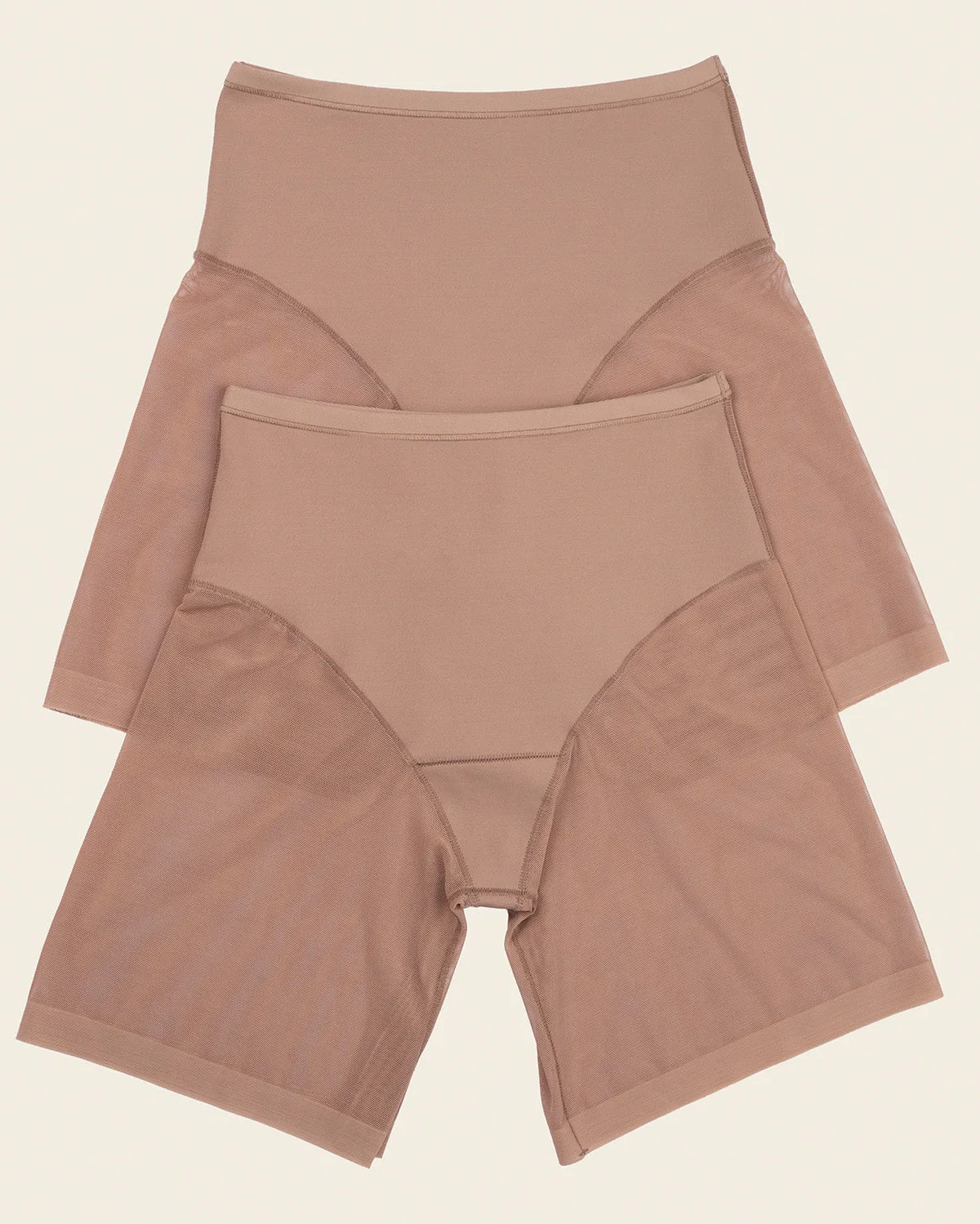
- Extra High Waisted Firm Shaper Short: Extra High Waisted Firm Shaper Short features an extra-high waistband with PowerSlim® fabric for firm compression and a silicone anti-slip grip lining to prevent roll-down. Accurate waist measurement is critical here because the silicone grip needs to sit at your natural waist without slipping. If you size too large, the grip loses contact and the shaper may roll.
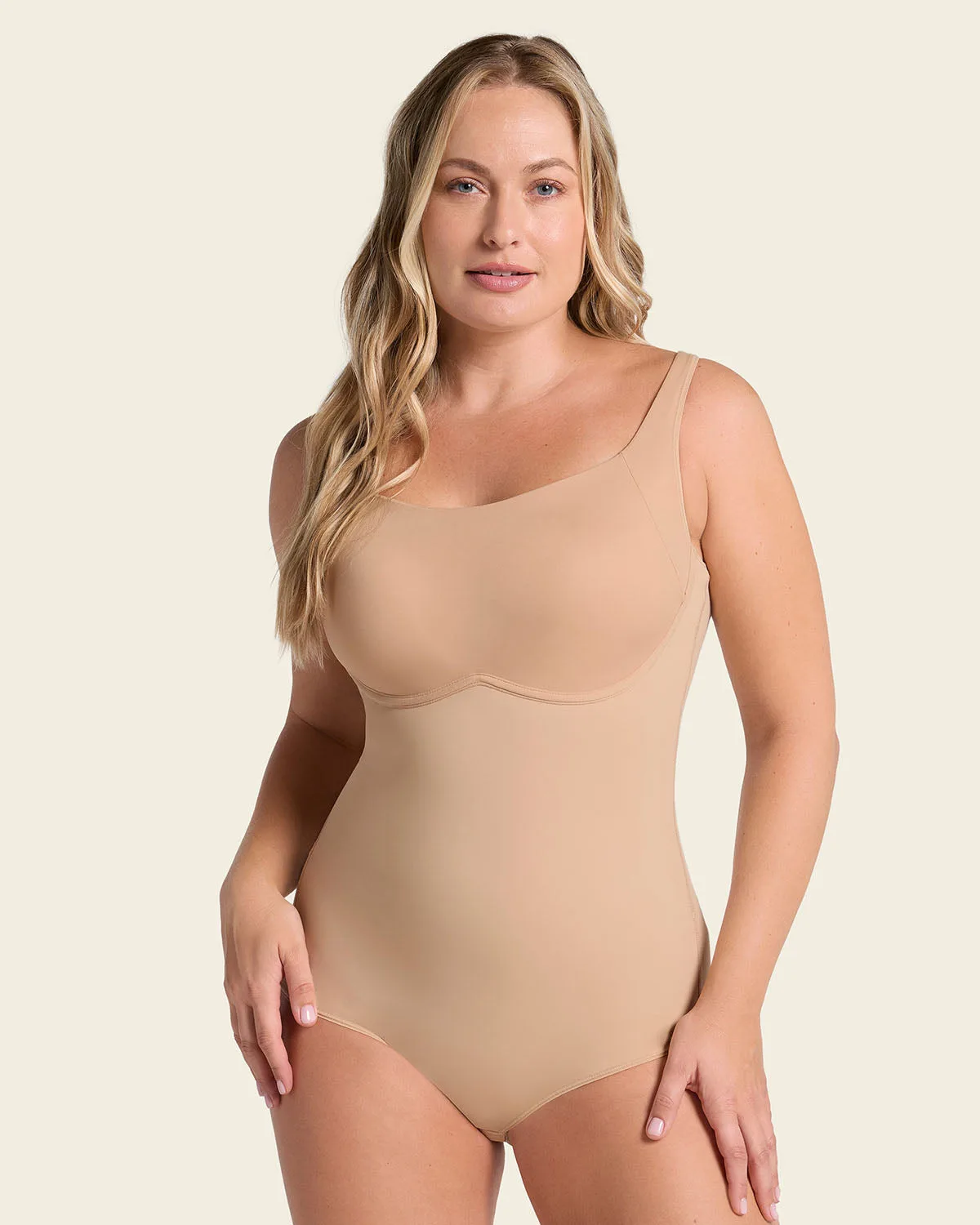
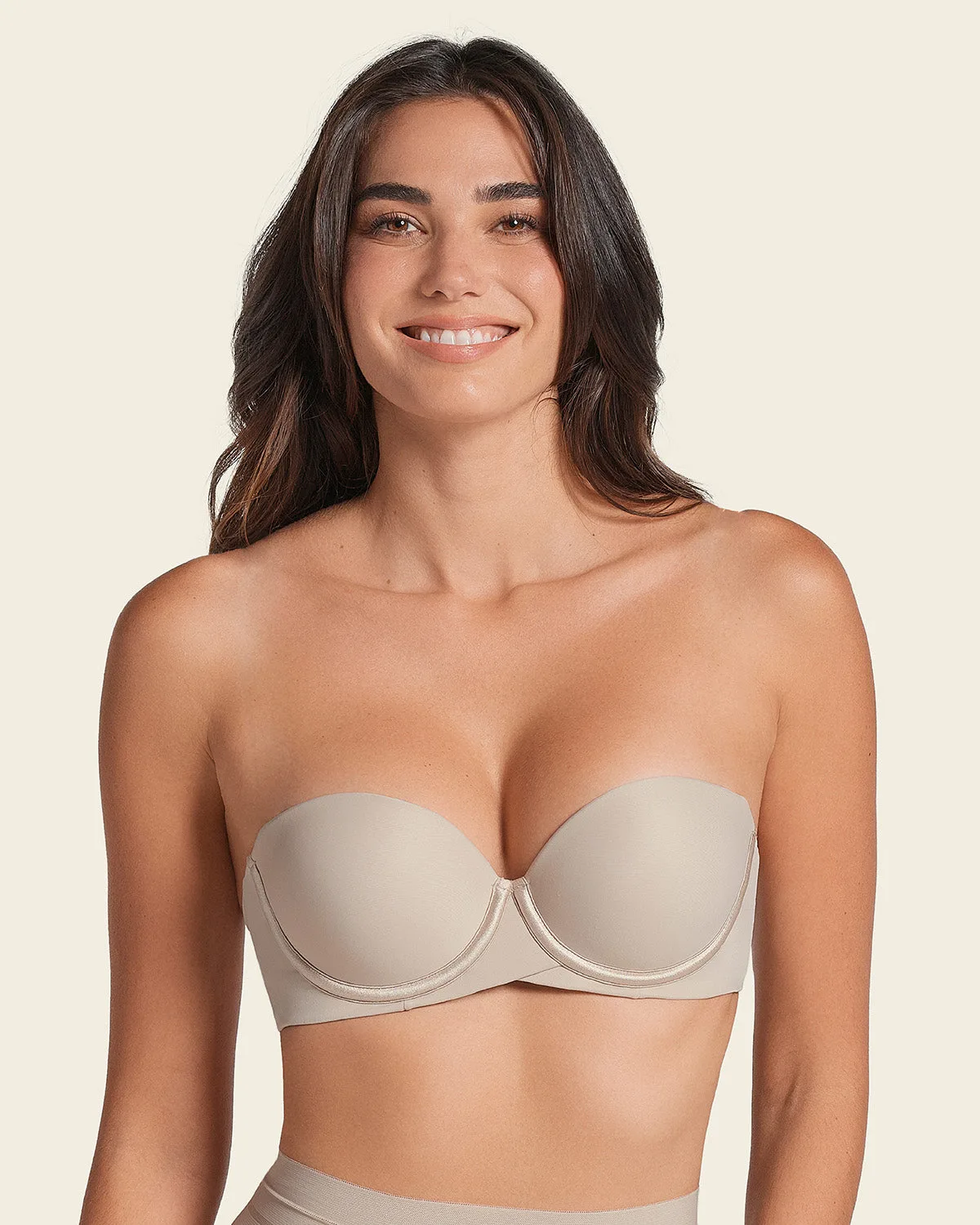
- Strapless Sculpting Step-in Body Shaper with Short Bottom: Strapless Sculpting Step-in Body Shaper with Short Bottom has double-layered fabric in the tummy and two loops front and back so you can wear it with or without straps. This bodysuit relies on torso length measurement for a comfortable fit. If your torso is longer than average, the strapless option may feel restrictive; measuring your torso accurately helps you decide whether to use the straps for extra support.
Who should size up vs. stick to chart
Stick to chart size if
- Your measurements fall clearly within one size range on the brand's chart
- You are buying a moderate-control shaper for occasional wear (e.g., under a dress for a few hours)
Size up if
- You are between sizes on the chart — the larger size will be more comfortable for all-day wear
- You need extra-firm compression (e.g., PowerSlim® fabric) and plan to wear the shaper for 6+ hours