Quick answer
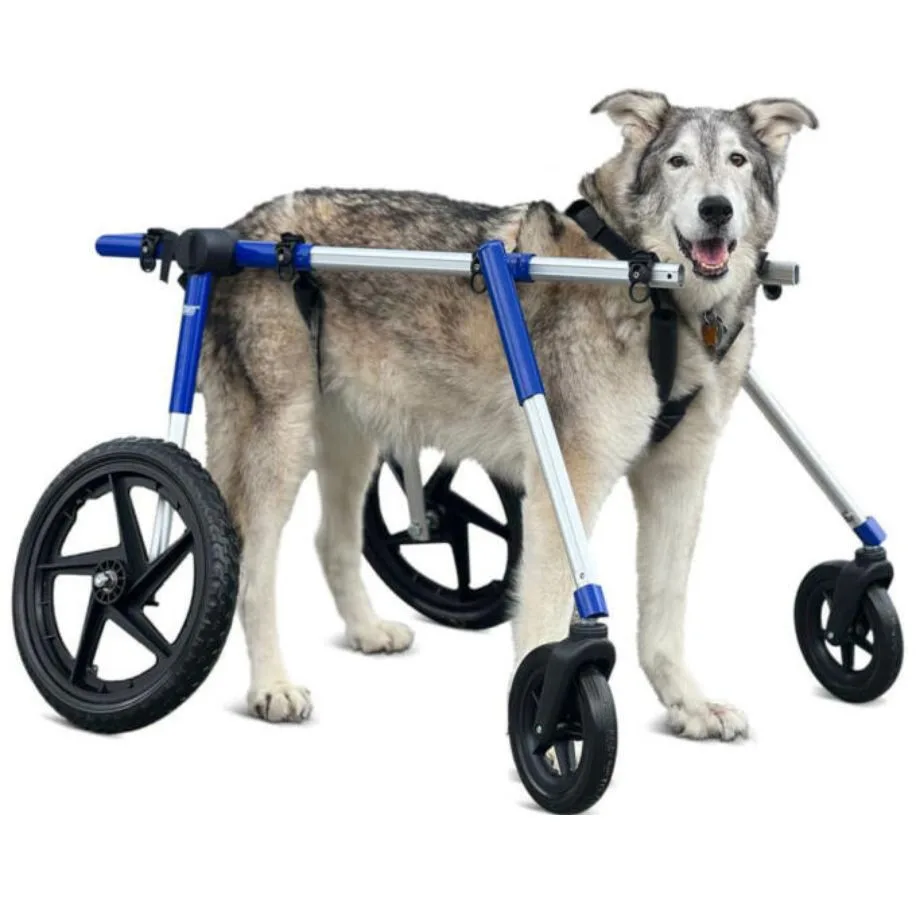
Choose your full support wheelchair by weight first: 11-25 lbs for the Small, 50-69 lbs for the Medium/Large, and 70-180 lbs for the Large. Then confirm the weakness pattern. A 4-wheel cart is for dogs that need both front and hind support, while rear-only weakness usually points to a standard rear wheelchair.
Why weight brackets decide the frame
Walkin' Wheels publishes weight ranges for each full support model, and those ranges are the fastest way to narrow the choice. The Small covers 11-25 lbs, the Medium/Large covers 50-69 lbs, and the Large covers 70-180 lbs. A dog that sits near a bracket edge needs a careful measurement check before ordering, because frame width and wheel placement change with the size.
Weight is not the only factor. A dog at the top of the Small range may still fit if its body is narrow, while a dog at the bottom of the Medium/Large range may need that larger frame if its chest is broad. Use weight to pick the bracket, then use body shape to confirm it.
Rear-only weakness vs. full support
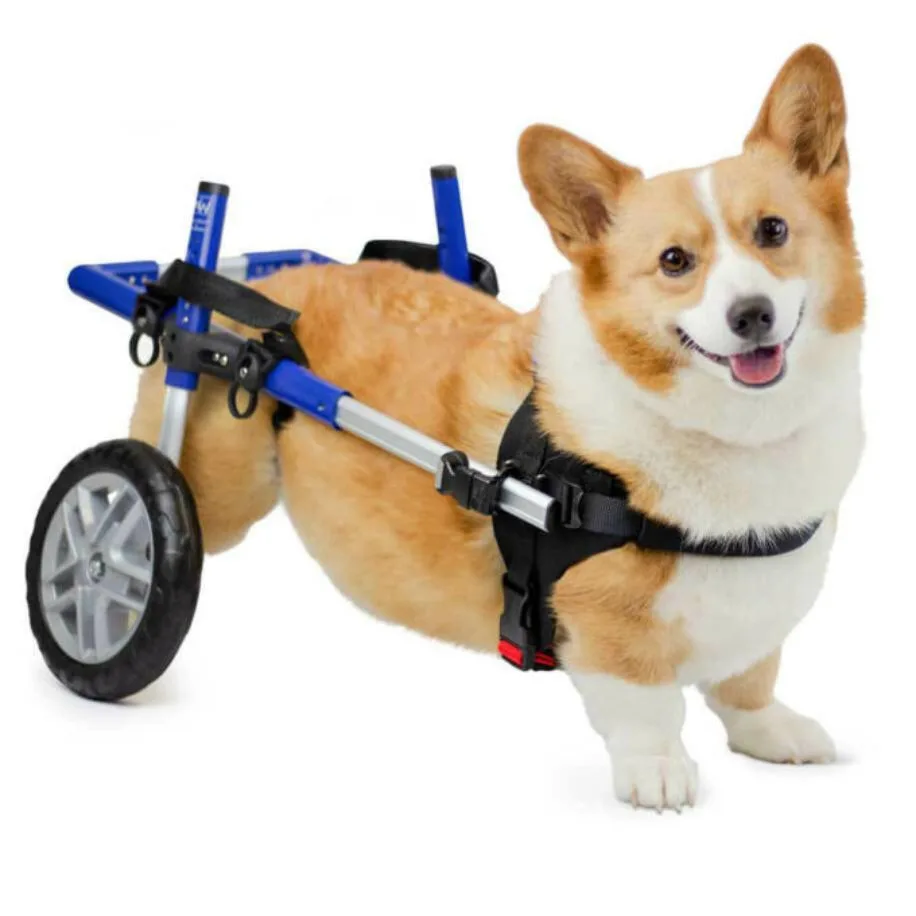
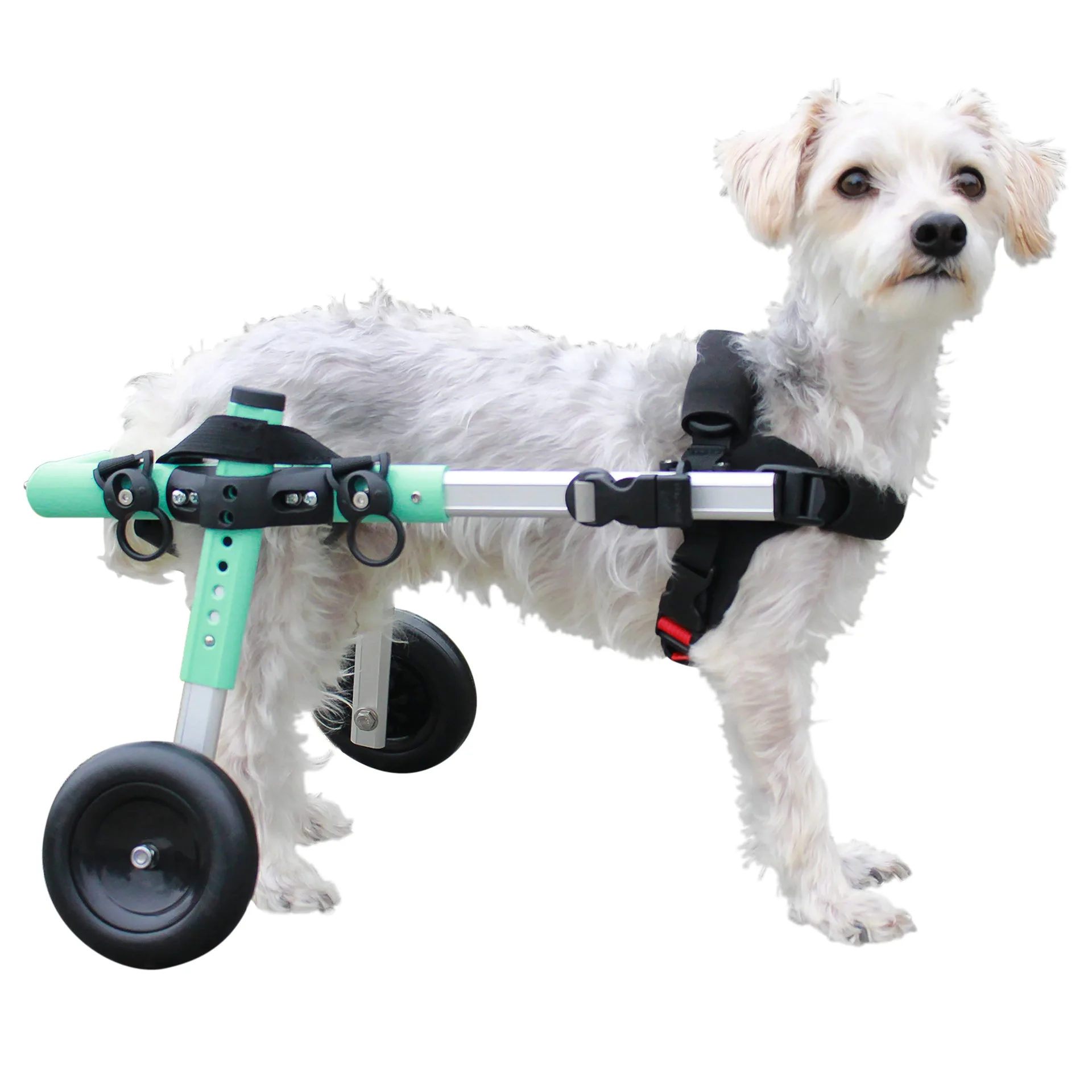
A standard rear wheelchair supports the hind legs and leaves the front legs free. A full support 4-wheel cart adds front support as well. If your dog can still bear weight on its front legs and only drags or knuckles the rear, a rear cart is usually the simpler and lighter option. If the front legs are also weak, knuckling, or collapsing, the 4-wheel design keeps the chest and shoulders stabilized.
Progressive conditions can change the answer over time. A dog that starts with rear-only weakness may eventually need front support, so it helps to know which full support size matches your dog before that transition happens.
Measuring before you commit
Walkin' Wheels sizing relies on more than weight. You will need your dog's length from the front of the chest to the rear, the width across the widest part of the body, and the height from the floor to the top of the back. These measurements determine whether the frame sits correctly and whether the wheels clear the legs.
Measure with your dog standing in its normal posture if possible. If your dog cannot stand, measure while it is lying flat and note that position when you order. A cart that is too long can cause the rear to drag, and a cart that is too short can put pressure on the shoulders.
What changes as the cart gets bigger
Larger full support carts use stronger frames and wider wheel bases to carry more weight and stay stable. That added stability matters for a 70-180 lb dog, but it also makes the cart heavier and less nimble in tight spaces. Smaller carts are easier to lift into a car and turn indoors, which is why the Small model suits petite dogs and small animals.
The trade-off is straightforward: pick the smallest full support size that safely carries your dog's weight and fits its body. Going larger than needed adds bulk without adding useful support.
Decision rules for choosing a full support size
- Start with the weight bracket: Match your dog's current weight to 11-25 lbs (Small), 50-69 lbs (Medium/Large), or 70-180 lbs (Large). If your dog is between brackets, measure body length and width before deciding. Weight gets you to the right model family; measurements confirm the exact fit.
- Confirm the weakness pattern: Choose a 4-wheel full support cart only when the front legs also need help. If the front legs are strong, a rear wheelchair is lighter and easier to maneuver. Full support is about front and rear stability, not just extra wheels.
- Check the transition plan: For progressive conditions, note the next size up so you know what to order if front weakness develops later. Re-measure at that point rather than guessing. Buying for today's needs is fine; knowing the next step prevents a rushed decision.
Full support models at a glance
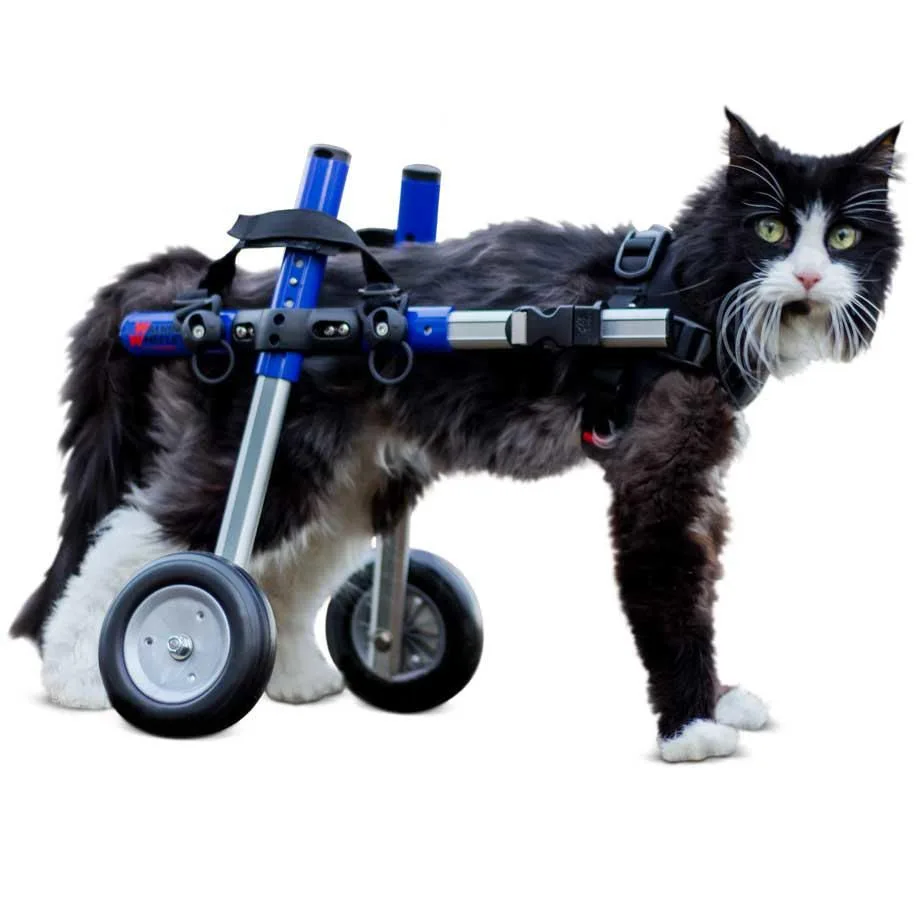
- Walkin' Wheels Full Support/4-Wheel SMALL: The Walkin' Wheels Full Support/4-Wheel SMALL provides full body support for small pets between 11 and 25 lbs., with both front and hind leg support. This is the starting point for small dogs and other small animals that need more than rear-only help.
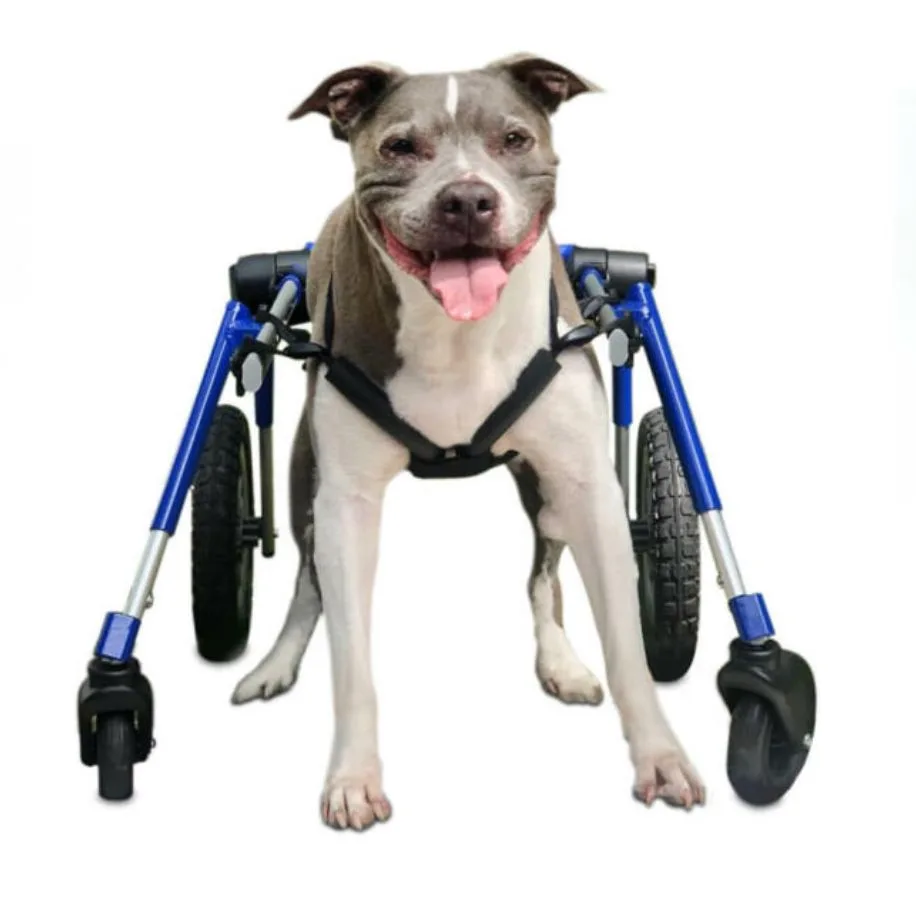
- Walkin' Wheels Full Support/4-Wheel MED/LARGE: The Walkin' Wheels Full Support/4-Wheel MED/LARGE is designed for pets weighing 50-69 lbs. and offers balanced assistance to both the front and rear legs. It fills the gap between small and large carts, which matters for mid-sized dogs with weakness in all four limbs.
- Walkin’ Wheels Full Support/4-Wheel LARGE: The Walkin' Wheels Full Support/4-Wheel LARGE provides complete support for pets weighing 70-180 lbs. and is built strong enough to support your dog's weight while remaining agile. Large breed dogs need a frame rated for their weight, so this is the safe choice once your dog is over 70 lbs.
Who each full support size fits
Best for
- Small dogs and other small animals 11-25 lbs with front and hind weakness
- Mid-sized dogs 50-69 lbs that need balanced four-limb support
- Large breed dogs 70-180 lbs with weakness in all four limbs
Not for
- Dogs with rear-only weakness that can still bear weight on the front legs
- Dogs whose weight or body measurements fall outside the published ranges