What Does a Circular Polarizing Filter Do for Landscape Photography?
How does a circular polarizing filter deepen blue skies?
A CPL filter selectively blocks polarized light from the sky, which makes blue tones appear richer and more saturated. The effect is most pronounced when the sun is at the appropriate angle relative to your subject, as described in the product instructions. The ProMaster Pure Light CPL filter achieves an average light transmittance of 42.9%, or 1.2 f-stops higher than traditional CPL filters, so you get richer skies without losing as much shutter speed.
Can a CPL filter reduce reflections from water or glass?
Yes. A circular polarizer removes reflections from non-metallic surfaces such as water, glass, and wet foliage. This lets you see through the surface to capture the detail beneath. The ProMaster Pure Light CPL filter is designed to dramatically reduce reflections without affecting overall color balance.
Does a polarizing filter increase color saturation?
By cutting glare and haze, a CPL filter boosts apparent color saturation in foliage, rocks, and skies. The result is more vibrant, contrast-rich images straight out of camera. The ProMaster Pure Light CPL filter is described as an indispensable tool for photographers seeking to enhance the natural beauty of their subjects.
ProMaster Pure Light CPL Filter Key Specs
-
Promaster Pure Light Circular Polarizing Filter: Average light transmittance of 42.9%, or 1.2 f-stops higher than traditional CPL filters. This higher light transmission means you lose less shutter speed when using the polarizer, making it easier to shoot handheld in lower light or to maintain a fast shutter speed for moving subjects.
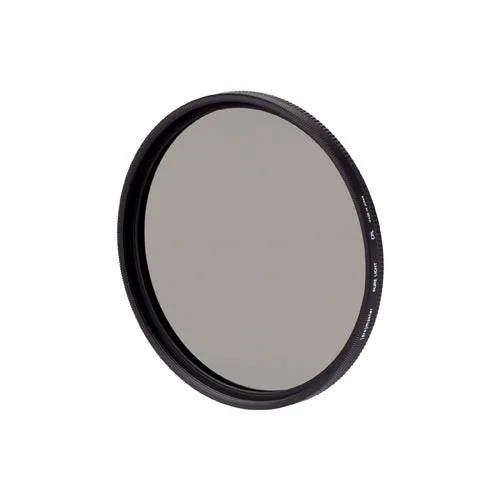
Promaster Pure Light Circular Polarizing Filter
-
Promaster Pure Light Circular Polarizing Filter: Manufactured in Japan using Schott B270™ optical glass with 12 specially formulated coatings. The high-quality glass and multicoating ensure minimal internal reflections and excellent clarity, so the filter does not degrade image sharpness or introduce color casts.
-
Promaster Pure Light Circular Polarizing Filter: Oil- and water-resistant coating for easy cleaning. Fingerprints and smudges wipe away easily, keeping your images spotless even in dusty or damp outdoor conditions.
Using a CPL Filter in the Field
How do I attach the filter to my lens?
Choose the size that matches your lens's filter thread diameter (e.g., 67mm, 72mm, 77mm). The ProMaster Pure Light CPL filter is available in 12 sizes from 40.5mm to 95mm. Simply screw it onto the front of the lens. The slim frame is designed to avoid vignetting on wide-angle lenses.
How do I adjust the polarizing effect?
Rotate the front ring of the filter while looking through the viewfinder or live view. The effect will change as you turn it—you can maximize or minimize reflections and sky darkening. The filter's streamlined, reflective-free design helps you see the effect clearly without internal glare.
What are the limitations of a CPL filter?
A CPL filter reduces the amount of light reaching the sensor by about 1.2 stops (with the ProMaster Pure Light model), so you may need a slower shutter speed or higher ISO in dim conditions. Also, the polarizing effect varies with the angle of the sun—it works best when the sun is at the appropriate angle relative to your subject, as specified in the product instructions.