Quick answer
A farm table is a sturdy, often handcrafted dining table with a simple, rustic design. For most homes, a solid wood farm table in a finish that complements your decor offers the best balance of durability and timeless style.
Why wood choice matters
Farm tables are most commonly made from solid wood. The type of wood affects the table's weight, durability, and appearance over time. Softer woods like pine show dents and scratches more easily but develop a warm patina that many owners love. Hardwoods like oak or maple resist wear but can be heavier and more expensive.
If you plan to use the table daily for meals, homework, or projects, consider a wood that can handle the activity. Pine is a classic choice for its light color and rustic character, while reclaimed wood adds an eco-friendly story and unique grain patterns.
Size and proportion
Farm tables come in a range of lengths, typically from 60 to 96 inches. The right size depends on your room dimensions and how many people you want to seat. Allow at least 24 inches of table width per person and 36 inches of clearance between the table edge and walls or furniture for comfortable movement.
Measure your dining space before shopping. A table that is too large can make a room feel cramped, while one that is too small may look lost in a big open area. Many farm tables also offer extension leaves for added flexibility.
Style and finish
Farm tables range from rustic, distressed finishes to more refined, smooth surfaces. The style should complement your existing decor. A white or light finish brightens a room and fits a cottage or modern farmhouse aesthetic. Darker stains or natural wood tones work well in traditional or industrial spaces.
Consider the maintenance of the finish. Painted or sealed surfaces are easier to clean, while oiled or waxed wood requires periodic reapplication to maintain its appearance.
How to choose your farm table
- Measure your space first: Measure the length and width of your dining area. Subtract 36 inches from each side to find the maximum table size that still allows comfortable walking room. For seating, plan on 24 inches of table width per person. A 72-inch table seats six people comfortably; an 84-inch table seats eight.
- Choose wood based on use: If the table will see heavy daily use, opt for a hardwood like oak or maple. For a lighter, more rustic look with lower cost, pine is a good choice. Reclaimed wood works for an eco-friendly, character-rich option. Softer woods like pine may show wear faster but can be sanded and refinished easily.
- Match the finish to your decor: White or light finishes suit cottage, farmhouse, or Scandinavian styles. Dark stains or natural wood complement traditional, rustic, or industrial interiors. Consider how the finish will hold up to spills and cleaning. Sealed or painted finishes are easier to wipe clean; oiled finishes need periodic maintenance.
Product spotlight
-
Provence Farm Table, White: Handcrafted by European artisans from sustainably sourced European Pine, each table has unique characteristics such as variations in color, grain, hairline cracks and knots that make each piece one-of-a-kind. This means no two tables look exactly alike, and the pine construction keeps the table lighter and more affordable than hardwoods while still offering a solid, durable surface.
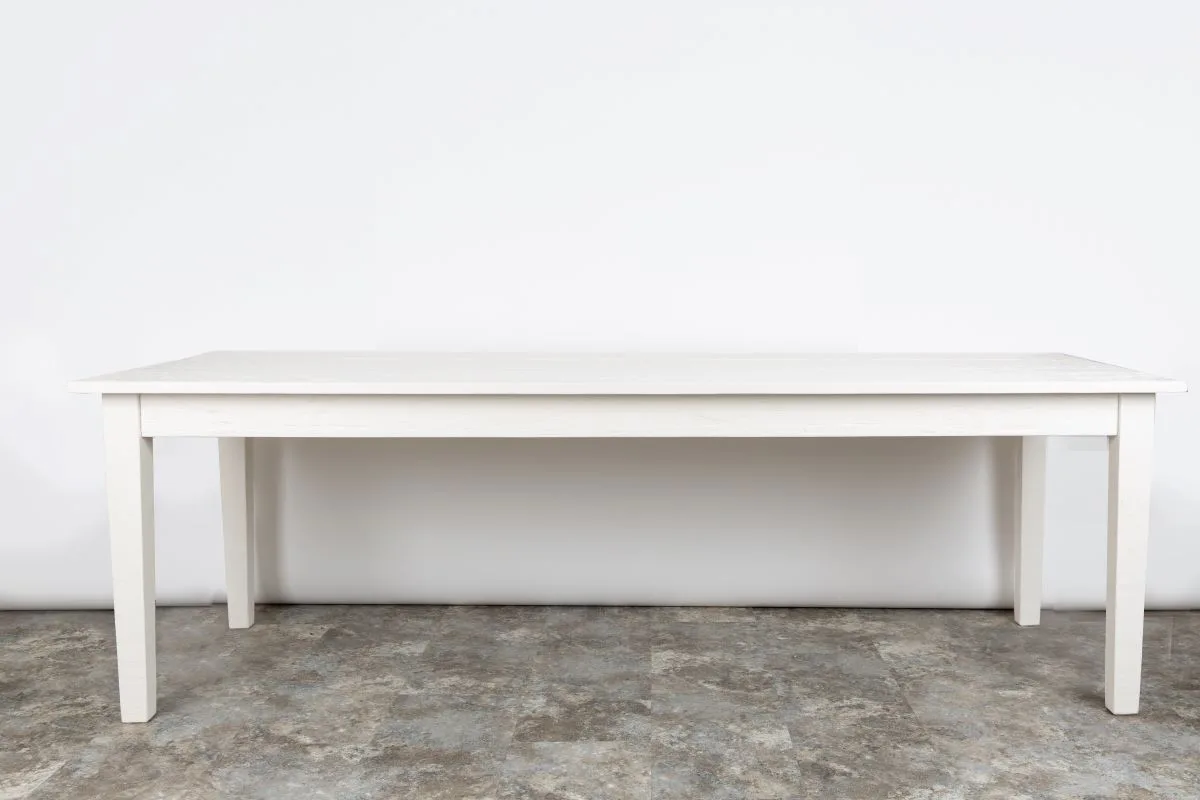
Provence Farm Table, White
Is a farm table right for you?
Best for
- Homes with a casual, rustic, or farmhouse aesthetic
- Families who want a durable table that can handle daily meals and activities
- People who appreciate handcrafted, one-of-a-kind furniture
Not ideal for
- Very formal dining rooms that require a polished, sleek look
- Small spaces where a round or drop-leaf table would fit better
- Buyers seeking a lightweight table that is easy to move frequently