Quick answer
A spindown d20 arranges numbers in a sequence around the die, so you can quickly find the next number without hunting. It's designed for tracking life totals in Magic: The Gathering, but it can also speed up tabletop games that use counters or frequent d20 rolls.
How is a spindown d20 different from a standard d20?
On a standard d20, numbers are placed so opposite faces add up to 21, which helps distribute rolls evenly. A spindown d20 instead places numbers in a spiral or sequential order, so 1 is next to 2, 2 next to 3, and so on. This makes it easier to adjust a life total or counter without re-reading the die.
The tradeoff: because the layout is not balanced for randomness, a spindown d20 is not recommended for actual roll resolution in games where fairness matters. Use it for tracking, not for determining outcomes.
What are common spindown dice uses beyond Magic?
In tabletop RPGs, a spindown d20 can serve as a hit point tracker for a character or a monster, letting you quickly tick down from 20 to 1. It also works for any game that uses a d20 as a counter, such as tracking rounds, charges, or limited-use abilities.
For board games that require counting down from 20, a spindown d20 is more convenient than a standard d20 because you don't have to rotate the die to find the next number. Just be aware that if you use it for actual rolls, the distribution may not be as random as a standard d20.
Can you use a spindown d20 for D&D?
Technically yes, but it's not ideal for attack rolls, saving throws, or skill checks because the number arrangement can lead to biased results. Many players do use spindown d20s as hit point dice or to track conditions, but they keep a standard d20 for rolls that need fairness.
If you want a large, satisfying die for display or for rolling when balance isn't critical, a 30mm or 50mm spindown d20 can be a fun addition. Just remember to switch to a standard die for actual gameplay rolls.
Spindown d20 FAQ
Is a spindown d20 the same as a standard d20?
No. A spindown d20 has numbers in sequential order for easy tracking, while a standard d20 has numbers arranged for balanced random rolls. Use a standard d20 for rolls that need fairness.
Can I use a spindown d20 for D&D?
Yes, but only for tracking life totals or counters, not for rolls that determine outcomes. The layout can bias results. Keep a standard d20 for attack rolls and saving throws.
Why do spindown dice exist?
They were designed for Magic: The Gathering to speed up life total tracking. The sequential layout lets you flip to the next number quickly. Spindown dice are tools for tracking, not for rolling.
Dice that make tracking fun
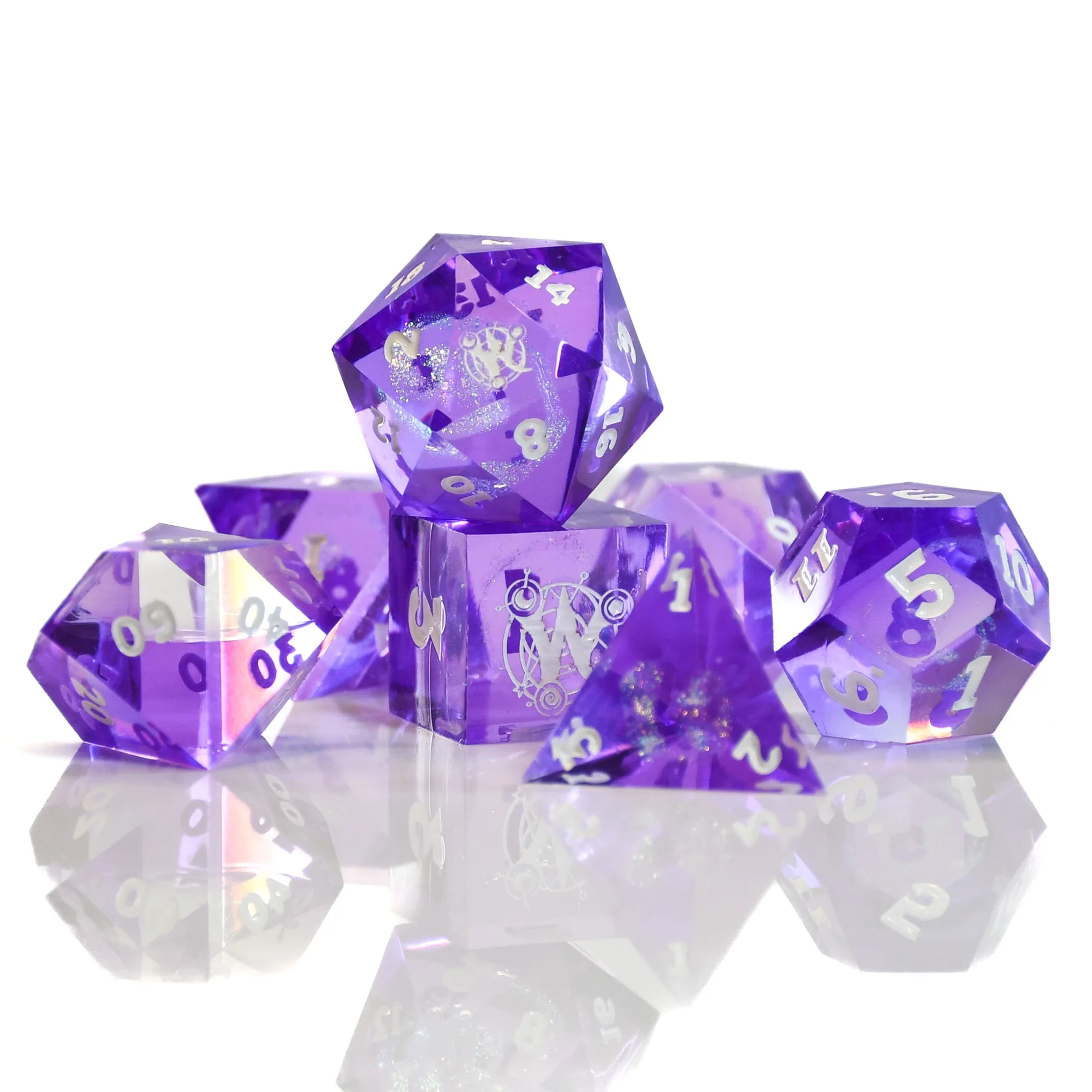
- Pre-Order|| Purple Mage Liquid Core 50mm D20: The Purple Mage Liquid Core 50mm D20 is a massive 50mm liquid core D20 filled with arcane mastery and mystical purple energy — watch the liquid swirl and settle with every roll, creating pure drama every time you reach for it. At 50mm, this oversized d20 is perfect for display or as a dramatic life counter. The liquid core adds visual flair, but remember it's not a standard d20 layout, so use it for tracking or show, not for fair rolls.
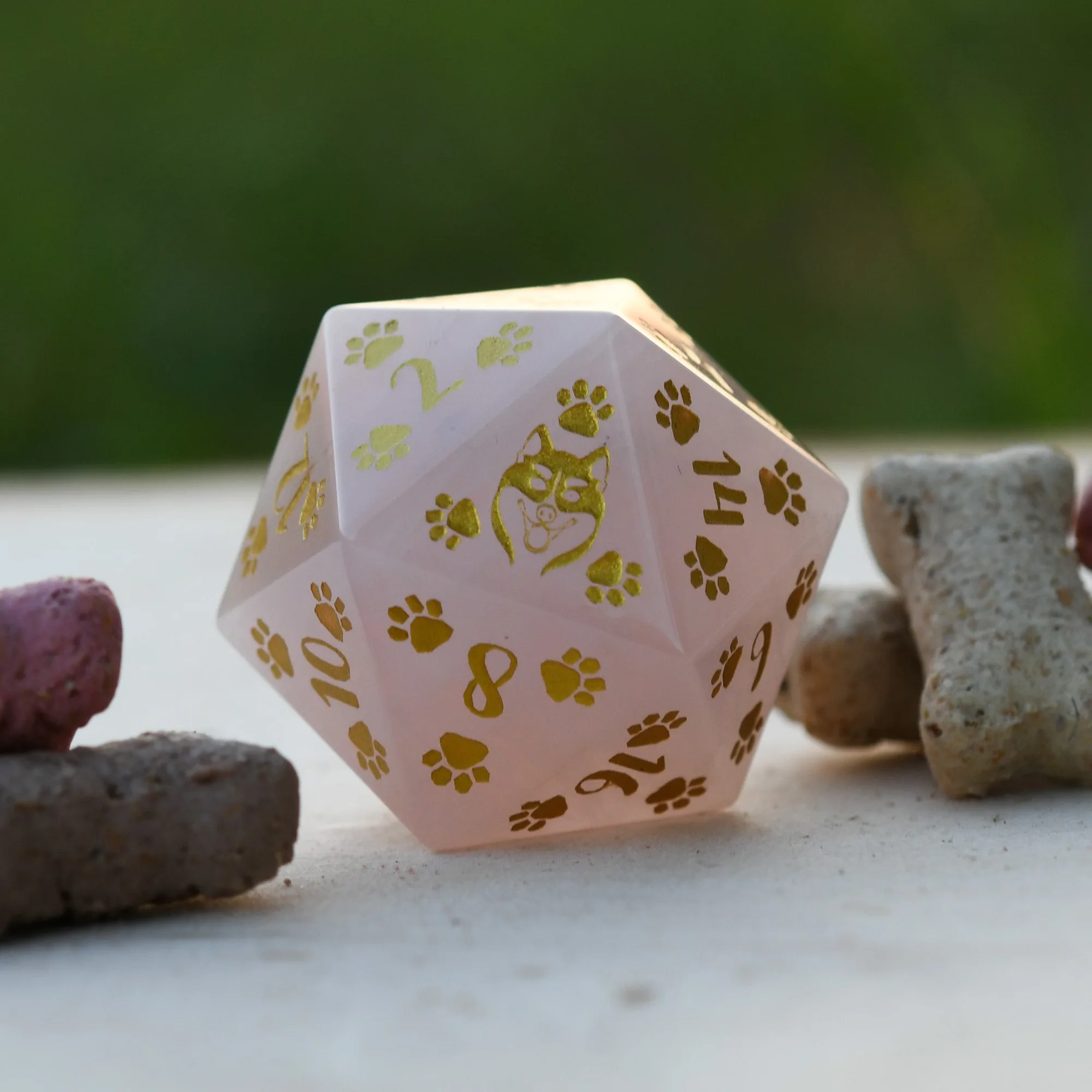
- PRE-ORDER || Husky Puppy Paws Rose Quartz 30mm D20: The Husky Puppy Paws Rose Quartz 30mm D20 is a stunning 30mm D20 carved from genuine rose quartz — featuring soft pink hues and gentle romantic tones. A 30mm rose quartz d20 gives you a satisfying, substantial roll that standard dice can't match. If you're using a spindown layout, this could be a beautiful tracker for your table, but check the number arrangement if you need a standard d20.