Quick answer
Non-adhesive Hexatex 420D is a 420-denier polyester ripstop fabric with a hexagonal reinforcement grid. It's water-resistant, ultrathin, and sold by the yard without a fusible backing. Choose it when you want a durable, lightweight lining or exterior that won't stiffen your bag; choose adhesive Hexatex when you need a bondable layer that stays put without pins.
If you've seen "Hexatex 420D" in bag-making groups and wondered whether it's worth the shelf space, the short version is this: it's a 420-denier polyester ripstop with a slick finish and a hexagonal grid that helps stop tears. The non-adhesive version has no heat-activated glue on the back, so it stays flexible and won't gum up your iron.
This guide covers what the fabric actually is, how it behaves in real projects, and how to choose between the non-adhesive and adhesive versions. You'll also get concrete decision rules and fit guidance so you can pick the right yardage the first time.
What 420D Hexatex actually is
Hexatex 420D is a 420-denier polyester ripstop. The "hex" refers to the hexagonal reinforcement pattern woven into the fabric, which interrupts tear propagation. The result is a thin, slick material that resists water and holds up to repeated abrasion. It's sold by the yard, often precut, and comes in printed and solid options.
Because it's non-adhesive, there's no fusible glue on the back. That means you can iron it carefully without it sticking to your ironing board, and it stays pliable. It also means you need to sew it in place rather than fuse it, so it's best for applications where you're stitching seams anyway.
- Water-resistant but not waterproof: seams and needle holes can let moisture through.
- Ultrathin and slick: use a fresh needle and a slightly longer stitch length to avoid puckering.
- Sold by the yard: check whether your listing is precut or continuous before ordering multiple yards.
Why bag makers reach for it
Bag makers like non-adhesive Hexatex because it adds durability without bulk. It's a common choice for linings, interior pockets, and lightweight exterior panels where you want tear resistance but not stiffness. The slick finish also makes it easy to wipe clean, which matters for totes, pouches, and outdoor gear.
It also plays well with other materials. You can pair it with heavier canvas or vinyl for structure, or use it alone for packable bags. The hexagonal grid gives it a technical look that reads as intentional, not improvised.
- Use it for linings when you want a wipe-clean interior.
- Use it for exterior panels on lightweight bags where weight matters.
- Clip or pin carefully: the slick surface can shift, so basting or Wonder Clips help.
Non-adhesive vs adhesive Hexatex: which to choose
The main difference is how you attach it. Non-adhesive Hexatex is sewn in place. Adhesive Hexatex has a fusible backing that bonds to fabric with heat, which can save time on small pieces or when you can't sew through a panel. Adhesive versions are often used for linings that need to stay put without pins.
Choose non-adhesive when you want maximum flexibility, when you're sewing seams that will be enclosed, or when you're worried about glue residue on your iron. Choose adhesive when you need a bondable layer for small details, or when you're working with a material that's hard to pin.
- If you plan to topstitch or quilt, non-adhesive gives you more control.
- If you're making small card slots or zip pockets, adhesive can speed up assembly.
- Always test adhesive on a scrap: some fabrics scorch or stiffen.
How much yardage to buy
Yardage depends on your pattern and whether you're using Hexatex as a lining or an exterior. For a small pouch, half a yard is often enough. For a tote lining, one yard is a safe starting point. If you're cutting multiple bags, buy two yards to allow for pattern matching and mistakes.
Remember that Hexatex is sold by the yard, and some listings are precut. If you need a continuous length, check the product description before ordering. Also note that shipping costs can vary by weight and destination, so factor that in when comparing prices.
- Measure your largest pattern piece and add 20% for layout waste.
- For bags with directional prints, add extra for fussy cutting.
- If you're new to the fabric, buy one yard to test before committing to a full project.
Decision rules for buying Hexatex
- If you need a flexible, sew-in lining: Choose non-adhesive Hexatex 420D. It won't stiffen your bag and won't leave glue residue on your iron. Best for totes, pouches, and packable bags.
- If you need a bondable layer for small details: Choose adhesive Hexatex. It fuses in place and saves time on card slots, zip pockets, and other small pieces. Test on a scrap first to avoid scorching.
- If you're working with a directional print: Buy extra yardage. Fussy cutting a hexagonal print can eat up fabric quickly. Add at least 25% to your estimate.
- If you're on a tight budget: Compare the per-yard price and shipping. Non-adhesive and adhesive versions are priced differently, and shipping can vary by weight. Order a sample if you're unsure.
Product facts to know
- Sewful NON-Adhesive Hexatex 420D (Yard): Park Snacks: Custom Design Ripstop 420D fabric, sold by the yard precut; made from 420 denier polyester. Precut yardage means you know exactly what you're getting, and 420D polyester gives you tear resistance without bulk.
- Adhesive Hex Polyester Ripstop 420D (HALF Yard) Tanzanite: Adhesive polyester ripstop 420D, water-resistant nylon ripstop, available by the half yard. The adhesive backing lets you fuse it in place, which is useful for small pieces or when pins won't work; half-yard cuts are good for sampling.
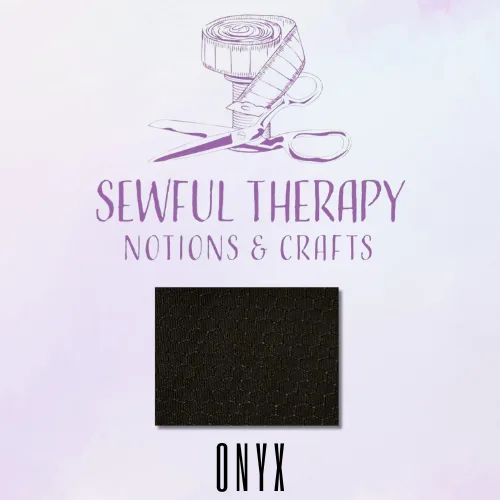
- Hex Polyester Ripstop 420D Onyx (Yard): Polyester ripstop 400D fabric, available by the yard; water-resistant nylon ripstop. A solid color option for linings or exteriors when you want a clean look; the 400D weight is slightly lighter than 420D.
Is Hexatex 420D right for your project?
Best for
- Bag makers who want a durable, water-resistant lining that stays flexible
- Lightweight exterior panels on totes, pouches, and outdoor gear
- Sewists who prefer to sew rather than fuse their interfacing
Not for
- Projects that need a stiff, structured bag bottom (choose a heavier stabilizer)
- Applications requiring waterproof seams (Hexatex resists water but isn't seam-sealed)
- Anyone who wants a fusible product without sewing (choose adhesive Hexatex instead)
Non-adhesive Hexatex 420D earns its place in a bag maker's stash when you want a thin, tough, water-resistant layer that sews beautifully and won't stiffen your finished bag. Pick it for linings and lightweight exteriors, and switch to an adhesive version when you need a bondable layer for small details. Start with a yard, test it on a scrap, and you'll know quickly whether it fits your workflow.