Quick Answer
First confirm it is a real shortage and not a counting or coverage problem. If you truly ran out, check whether your canvas is sold as a thread kit or canvas only, then match dye lot and fiber before buying more. When no match exists, blend a close substitute in a low-visibility area, or redesign the section. Stop and reorder rather than force a mismatched thread through a focal area.
You are three stitches from finishing a block of basketweave and the strand is too short to thread. It happens to almost every stitcher, and it is rarely a disaster. The fix depends on why you ran out and how visible the missing area is.
This guide separates the symptom from the cause, gives you corrective actions in order of preference, and tells you when to stop improvising and simply reorder. It also explains how canvas-only versus thread-kit purchases change your options.
Symptom Check: Are You Actually Out of Thread?
Before you order anything, rule out the two most common false alarms. First, coverage: if your stitches look thin or the canvas shows through, you may be using too short a length and wasting thread on frayed tails rather than running out. Second, counting: a strand that measures shorter than your arm's length is normal at the end of a skein, not a sign you misjudged the whole project.
Lay out what is left of each color next to the stitched area. If you have at least one full strand of every color still in play, you are not out of thread yet. If one color is down to a single short tail while others have plenty, you have a localized shortage, which is the easiest kind to fix.
- Measure remaining strands against your arm, not against the original skein.
- Check the back of the canvas for thread you can reclaim from a tail.
- Photograph the remaining thread in daylight before you go shopping.
Likely Cause: Why the Thread Ran Out
The most common cause is a mismatch between the amount of thread a kit or chart assumes and how you actually stitch. Basketweave uses more thread per square inch than continental, and a padded or layered stitch uses more than either. If you changed stitch direction or added a decorative stitch halfway through, your consumption changed with it.
The second cause is fiber choice. Silk and wool fibers behave differently in how far a strand stretches and how much it covers. If you substituted a fiber partway through, or if you are stitching from a canvas-only purchase where you chose your own threads, your original estimate may simply have been optimistic.
- Note the stitch you used in the short area; it may explain the shortfall.
- Check whether the canvas was sold as canvas only or as a thread kit.
- Keep a small scrap of each thread for future matching.
Corrective Action: Match, Substitute, or Redesign
Your first move is always to try to match. Dye lots change between production runs, so the safest match is thread from the same purchase or the same kit. If you bought a canvas-only design and chose your own threads, check whether you still have the label or band; that gives you the brand, color number, and fiber to reorder accurately.
If an exact match is not available, substitute in the least visible place. Use the substitute in a background, a border, or a shadow area rather than in the focal point of the design. Blend by alternating one stitch of old thread with one stitch of new thread across a transition zone so the change reads as shading rather than a patch. If neither matching nor blending works, redesign: turn the short area into a deliberate color change, a border, or a different stitch texture.
- Match fiber type first, then color, then dye lot.
- Blend substitutes over at least a two-stitch transition zone.
- Never force a thicker thread through an 18 mesh hole; it distorts the canvas.
When to Stop and Choose Another Option
Stop and reorder when the shortage falls in a focal area, a face, a letter, or any place the eye lands first. A visible mismatch there will bother you more than a short delay. Stop also when the thread is a specialty fiber you cannot easily replace, because a close-looking substitute in a different fiber will behave differently under tension and may pull the canvas unevenly.
Choose another option when the design allows it: convert the short section into an intentional design element, or finish the project with a different but deliberate color story. If you are early in the project and already short, that is a signal your thread estimate was wrong for your stitch choice, and adjusting the plan now saves a second shortage later.
- Focal area shortage: reorder, do not substitute.
- Specialty fiber shortage: reorder or redesign, do not blend.
- Early-project shortage: revise your thread estimate before continuing.
Thread Shortage Diagnosis
- Symptom: one color is short, others are fine: This is a localized shortage, usually caused by a stitch change or heavier coverage in one area. Match or blend in a low-visibility area; reorder only if the short area is focal.
- Symptom: several colors are running low at once: This points to an estimate problem, often from stitching a denser stitch than the chart assumed or choosing a different fiber. Revise your thread plan before continuing; buy extra of every color still in play.
- Symptom: the short area is a face, letter, or focal point: A visible mismatch here will read as a mistake no matter how careful the blend. Stop and reorder the closest dye lot match rather than substituting.
- Symptom: the thread is a specialty fiber you cannot replace: Different fibers tension differently, so a close color in another fiber can distort the canvas. Redesign the section deliberately or wait for the correct fiber; do not blend.
How Wheelhaus Needlepoint Canvas Options Affect Your Thread Plan
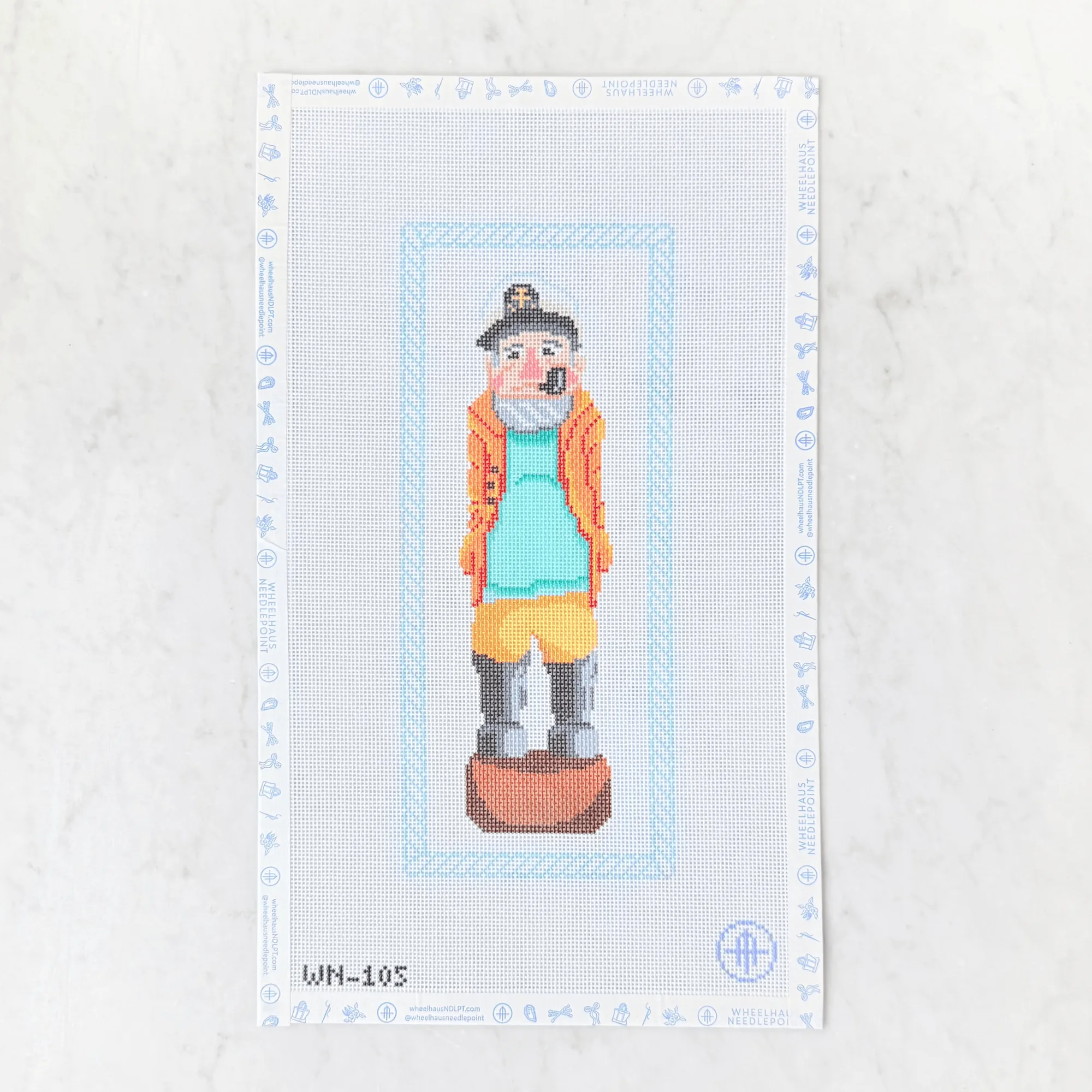
- Old Salt Wooden Sea Captain: Offered as canvas only or as a thread kit that includes a curation of all the silk and wool fibers needed, plus a thread ring, tapestry needle, and stitch brochure. If you buy the thread kit, you are far less likely to run out mid-project; if you buy canvas only, you choose and estimate your own threads, so buy a little extra of each color.
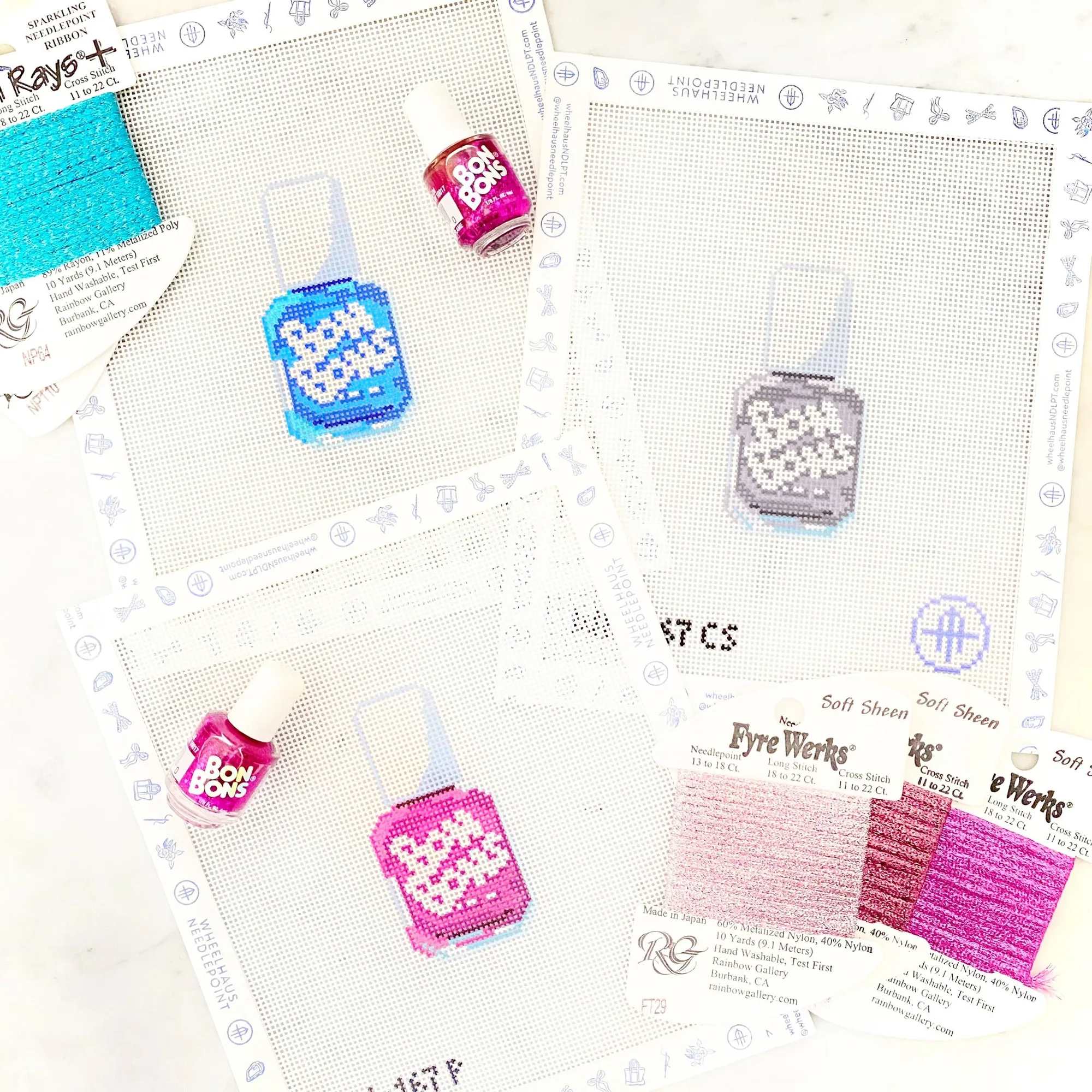
- Bon Bons Nail Polish: 18 mesh, design 1.25W x 3H, available as canvas only or as a thread kit with silk and wool fibers, a thread ring, tapestry needle, and stitch brochure. A small 18 mesh design uses little thread, so a single kit is usually enough; canvas-only buyers should still match fiber type before substituting.
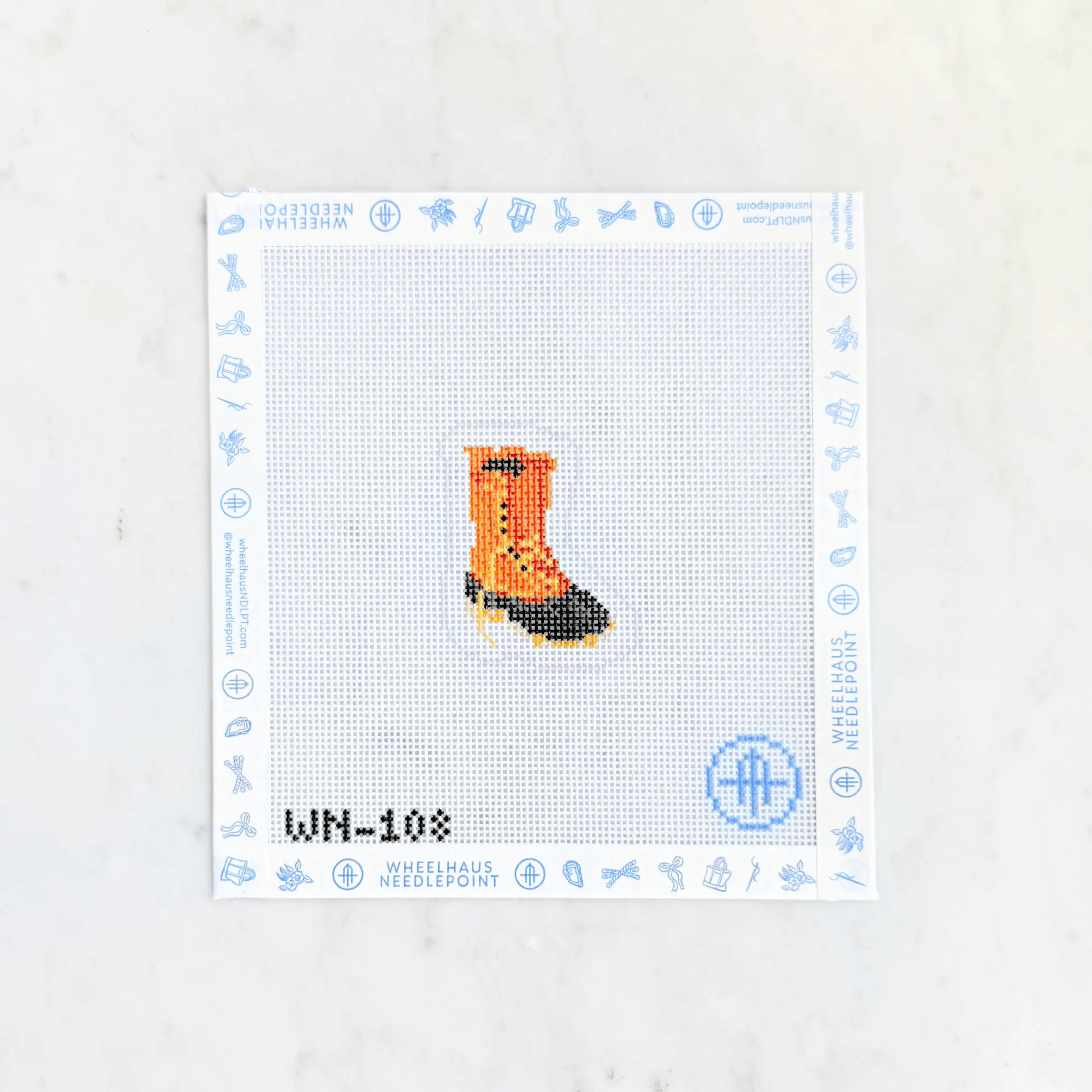
- Mini Duck Boot Charm: 18 mesh, design 2x3, StitchPerfect painted, sold as canvas only with a stitch pamphlet, WIP project card, and reusable PVC protective project baggy; threads are not included unless a kit is purchased. Because threads are not included, this is the type of purchase where a thread shortage is most likely, so plan your fiber purchase with a small buffer.
Most thread shortages are fixable with a match, a careful blend, or a small redesign. Diagnose the cause first, protect your focal areas, and when in doubt, reorder rather than force a substitute. A short pause beats a visible patch you will always notice.