Quick answer
The best board game gift for a new player is one they can learn in under 15 minutes, play in under an hour, and bring to the table with the people they actually game with. Prioritize clear rules, a forgiving first play, and a theme that matches their interests. If you are unsure, pick a cooperative game or a short strategic game with a strong solo mode.
Buying a board game for someone who is new to the hobby is not about finding the heaviest box or the most hyped title. It is about matching a game to the player: their patience for rules, the size of their usual group, and how often they will realistically get it to the table. A gift that sits unplayed is a worse gift than a simpler game that hits the table every week.
This guide gives you concrete decision rules and trade-offs so you can choose a board game present idea with confidence. We will look at complexity, play time, player count, theme, and the small extras that make a first game feel special. You will also see how specific Orange Nebula titles fit different kinds of new players.
Match complexity to the player, not the hobby
New players are not a single group. A person who plays video games or strategy apps can often handle more rules than someone who last played Monopoly at a family gathering. The safe zone for most beginners is a game with a clear goal, a short rulebook, and decisions that make sense on the first turn. If the rulebook takes longer to read than the first game takes to play, look for something lighter.
A useful test: can you explain the core loop in two sentences? If not, the game may be too heavy for a gift. Cooperative games lower the pressure because everyone wins or loses together, which helps new players ask questions without feeling behind. Competitive games with low interaction or short rounds also work well.
- Ask what games they already enjoy, even party games or phone games.
- Prefer games with player aids or reference cards for each player.
- Avoid games that require a dedicated rulebook study before the first play.
Play time and player count decide whether it hits the table
The most common reason a gifted game goes unplayed is mismatched play time. A 90-minute game is a hard sell for a weeknight group that meets for an hour. A 20-minute game can feel too slight for a group that blocks out an afternoon. Aim for a play time that fits their existing routine, not an idealized game night.
Player count matters just as much. If the recipient usually plays with a partner, a two-player-friendly game is essential. If they host a monthly group of five or six, check whether the base game supports that count or needs an expansion. Many games list a player range that is technically playable but best at a lower number, so look for honest best-at counts in reviews or product descriptions.
- Match play time to the night they actually have, not the night they wish they had.
- For two-player households, confirm the game works well at two, not just that it allows two.
- If their group is five or more, check for a dedicated expansion or module.
Theme and table presence are part of the gift
New players often choose games by theme first. A space exploration game, a fantasy adventure, or a nature-themed puzzle will appeal to different people. Theme is not shallow; it is the hook that gets the box opened. If you know they love a particular setting, lean into it, but avoid licensed games with weak mechanisms unless the license itself is the point.
Table presence also matters. Attractive components and clear art make the first play more inviting. That said, do not confuse big miniatures with a beginner-friendly experience. Some of the best beginner games use simple wooden pieces and cards because the design focuses on smooth play rather than spectacle.
- Choose a theme they already talk about, not the one you personally love.
- Look for clear iconography and readable cards; they reduce rules questions.
- Skip games that need painting or assembly before the first play.
How to choose a board game gift when you are still unsure
If you cannot decide between two games, give the one with the lower complexity and the shorter play time. You can always add an expansion later once they are hooked. Another option is to pair a base game with a small, useful accessory that improves the experience without adding rules overhead.
Gift receipts and store credit are not failures. If you are buying for someone whose taste you do not know well, a gift card to a board game store lets them pick the theme and complexity themselves. That said, a thoughtfully chosen game with a short learning curve often feels more personal and gets played sooner.
- When in doubt, go lighter and shorter.
- Add a small accessory only if it does not require reading new rules.
- Consider a gift card for a store that stocks a wide range of beginner games.
Decision rules for gifting a board game to a new player
- Rule 1: If they have never played a hobby game, choose cooperative or short competitive.: Cooperative games let everyone learn together and reduce the fear of losing. Short competitive games with clear goals also work. Avoid heavy euros or games with lots of hidden information for a first gift. Checkpoint: Can you explain the goal in one sentence? If not, pick something simpler.
- Rule 2: Match play time to their real schedule.: A 30-60 minute game is the sweet spot for most new players. If they only have 30 minutes on a weeknight, a 90-minute game will stay on the shelf. If they host long game days, a one-hour game can still work as a warm-up. Checkpoint: Does the listed play time fit the night they actually have?
- Rule 3: Confirm player count before you buy.: Two-player households need games that are genuinely good at two. Groups of five or six may need an expansion or a module to support the full table. Do not assume the base game plays well at every listed count. Checkpoint: Will their usual group fit the player range without awkward compromises?
- Rule 4: Prefer a game that can grow with them.: A game with modular content or expansions gives the gift a longer life. If they enjoy it, you can add a small expansion later. That said, do not buy an expansion as a standalone gift unless you know they own the base game. Checkpoint: Is this a complete experience on its own, or does it require something they do not have?
Product facts that help you decide
- Unsettled® Framework and Planets 001-002: Unsettled® is an award winning cooperative game system built around a versatile framework and a myriad of plug and play planets. The framework features all the basic components that will be used in every play. The planet boxes hold everything that makes that planet's experiences unique, like the cards and tokens that make up the environment and the things you find there. Cooperative play lowers the pressure for new players, and the plug-and-play planet structure lets you add variety later without buying a whole new game.
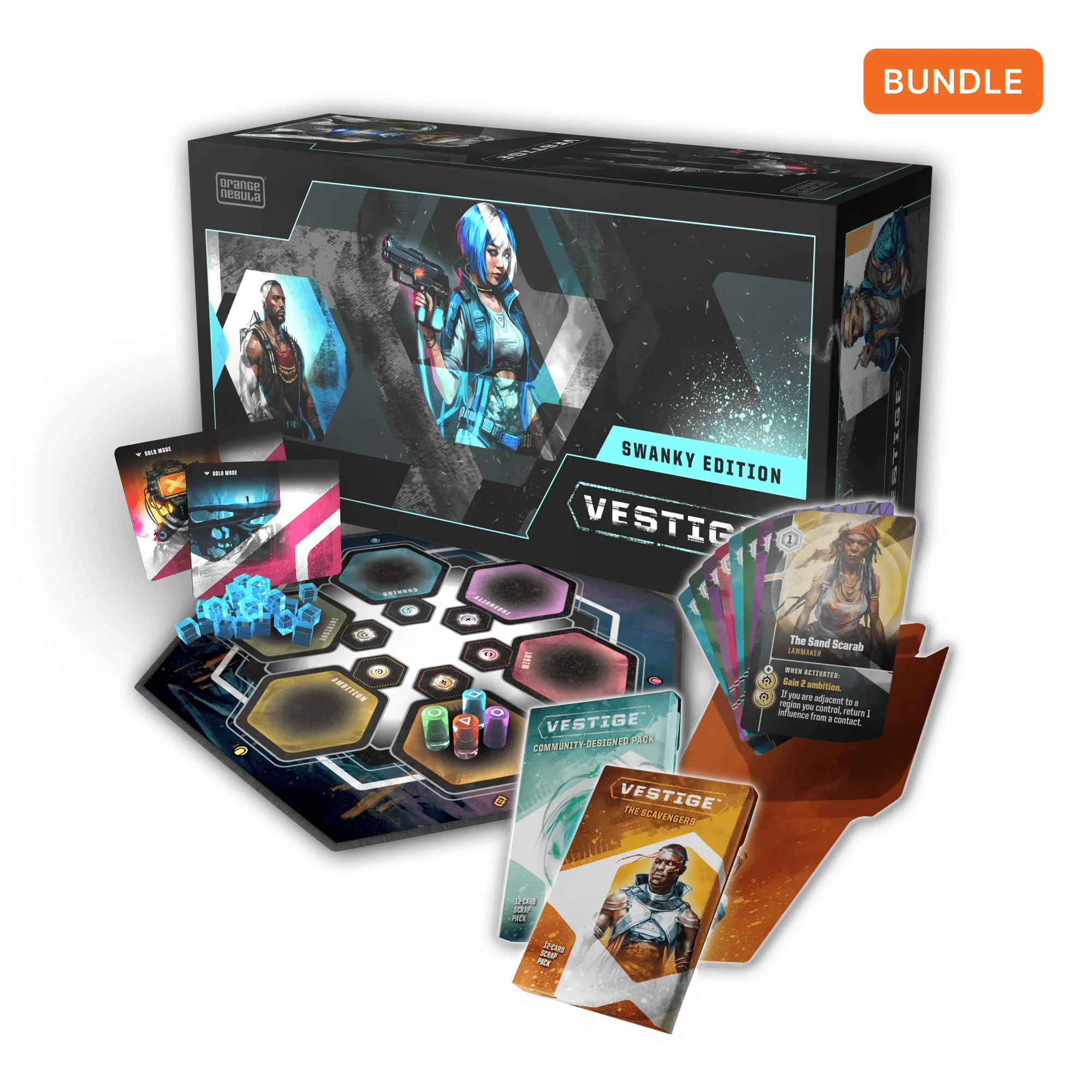
- Vestige Swanky- The Arrival Bundle: VestigeTM is a highly strategic modern euro that you can play in an hour. It’s built around a resource alchemy system modeled on the color wheel that offers great depth but can be understood almost instantly. A modular game board; variable end-game conditions; and a card-tableau, engine-building heart makes every game a crunchy, combo-driven, highly replayable delight. Derived from the critically-lauded Vindication®. If the new player already enjoys strategy games and wants depth without a three-hour commitment, this one-hour euro gives them room to grow.
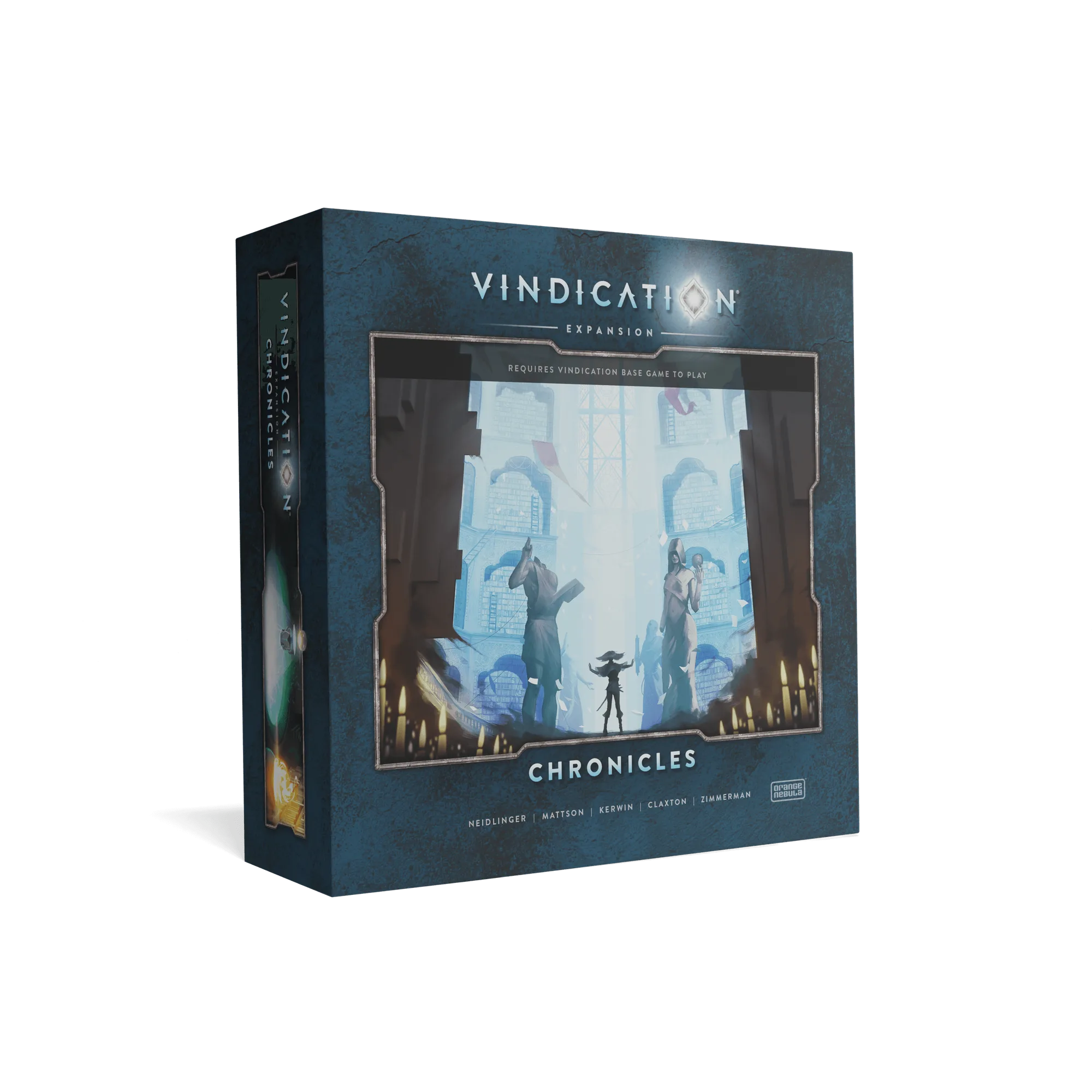
- Vindication® Chronicles Expansion: Your story is worth telling, and the Chronicles expansion takes this aspect of Vindication® deeper by adding an additional narrative layer to many of the game’s existing systems. Story prompts and narrative decision trees add additional context and weight to each of the cards in your tableau, and the choices you make reveal new details about your character, unlocking powerful new abilities and combo potentials. This is not a standalone gift for a beginner. It is a good add-on for someone who already owns Vindication® and wants more story, so only buy it if you know they have the base game.
Who this advice fits
Best for
- Shoppers buying a first board game for a friend or family member who is new to the hobby.
- Gift-givers who know the recipient's usual player count and available play time.
- Anyone looking for a board game present idea that will actually get played, not just displayed.
Not for
- Experienced hobbyists who already own a large collection and want deep, heavy strategy games.
- Buyers looking for a collectible or display piece rather than a playable game.
- Shoppers who cannot confirm the recipient's player count or interest in tabletop games at all.
A great board game gift for a new player is not the most complex or expensive box. It is the one that matches their group size, their available time, and their comfort with rules. Start with a cooperative or short strategic game, confirm the player count, and choose a theme they already love. If you are still unsure, go lighter and shorter, and save the expansions for later.