Quick answer
For most Commander and 100-card constructed decks, choose a deck box rated for 100 double-sleeved cards with archival-safe, acid-free, non-PVC materials and a secure lid. If you play 60-card formats or keep a small sideboard, a 100-card box still works but wastes space. Prioritize fit and closure over artwork.
A deck box is the first line of defense for your trading cards, but not every box fits every deck. The right choice comes down to three things: how many cards you carry, how they are sleeved, and how the box closes. Get those wrong and you risk bent corners, scratched foils, or cards spilling out in your bag.
This guide walks through capacity, materials, closure types, and fit so you can pick a box that protects your deck without overspending. It also covers when a simple plastic box is enough and when you should step up to something more rugged.
Capacity: match the box to your format and sleeves
Capacity is the most common mistake. A box rated for 100 double-sleeved cards holds a full Commander deck with room to spare, while a 60-card deck will rattle around. If you double-sleeve, your cards take up noticeably more space than single-sleeved ones, so a box that fits 100 single-sleeved cards may not close comfortably with double sleeves.
Check the stated capacity and whether it refers to single- or double-sleeved cards. For Commander, look for a box that explicitly says it holds 100 double-sleeved cards. For 60-card formats, a smaller box or a bundle with a divider keeps things snug. If you carry a sideboard, add that count to your total before choosing.
- Count your main deck plus sideboard, then add 10–15% for tokens and extras.
- Double-sleeved cards need more room than single-sleeved; verify the box's stated capacity matches your sleeving method.
- A box that is too large lets cards slide and corners can bend; too small and the lid won't close without pressure.
Materials: what archival-safe actually means
Cards are paper, and paper reacts to chemicals, moisture, and acids over time. Look for boxes described as archival-safe, acid-free, and non-PVC. These materials are less likely to off-gas or leach chemicals that can discolor or damage card surfaces, especially foils and older cards.
Plastic boxes vary widely. Some are simple and affordable, while others use materials chosen specifically for long-term storage. If you are storing a valuable deck or a collection you plan to keep for years, the material claim matters more than the artwork. If you just need a cheap way to carry a casual deck to game night, a basic plastic box can be fine.
- Archival-safe, acid-free, non-PVC materials are the baseline for long-term storage.
- Soft fabric or padded interiors reduce surface scratches during transport.
- Avoid boxes with strong plastic odors or unclear material claims if you store foils or high-value cards.
Closure and durability: how the box stays shut
A deck box only protects your cards if it stays closed. Self-locking lids, hook-and-loop closures, and snug friction fits all work, but they behave differently. A self-locking lid is quick to open and close and holds securely when the box is in a bag. Hook-and-loop closures are easy to operate one-handed but can wear out over time.
Think about how you transport your deck. If it rides loose in a backpack, a secure lid and rigid walls matter. If it goes into a dedicated case, a lighter box is fine. Whichever you choose, test the closure before you load it—an empty box that pops open easily will do the same when full.
- Self-locking lids offer secure storage with easy access.
- Hook-and-loop closures are convenient but check for wear after heavy use.
- Rigid walls resist crushing; thin walls can flex and pinch cards.
Fit and size: the deck box size guide
Standard trading cards measure about 2.5 in. x 3.5 in., and most deck boxes are built around that footprint. The variables are height and internal depth. A box sized for standard cards will fit sleeved cards, but double-sleeved cards add thickness per card, so a 100-card double-sleeved deck needs a box specifically rated for that load.
If you use a playmat, dice, or tokens, measure whether they fit alongside the deck or need a separate pouch. Some boxes include a divider to keep cards upright and separated. A divider also helps prevent cards from sliding when the box is not completely full.
- Standard card size is 2.5 in. x 3.5 in.; confirm the box is sized for standard trading cards.
- Double-sleeved decks need a box rated for double-sleeved capacity, not just card count.
- Use the included divider to keep a partial deck from sliding.
When a simple plastic box is enough
Not every deck needs a premium box. If you are carrying a casual 60-card deck, a budget plastic box with a divider does the job. It holds up to 100 sleeved cards, keeps them together, and costs very little. The trade-off is less padding and a simpler closure, so it is better for a shelf or a bag with other soft items than for rough transport.
Step up to a box with archival-safe materials and a more secure lid when you are protecting foils, a Commander deck you have tuned for years, or cards you plan to store long term. The extra cost is small compared to replacing a damaged card.
- Budget plastic boxes work for casual decks and short trips.
- Upgrade when the deck contains foils, high-value singles, or a long-term collection.
- A divider is a cheap way to add organization to any box.
Decision rules for choosing a deck box
- Rule 1: Match capacity to your sleeving method: Count your deck plus sideboard, then confirm whether the box's 100-card rating refers to single- or double-sleeved cards. Double-sleeved Commander decks need a box explicitly rated for 100 double-sleeved cards. If the listing doesn't state double-sleeved capacity, assume it won't fit a double-sleeved 100-card deck.
- Rule 2: Choose materials based on how long you'll store the cards: For long-term storage or valuable foils, prioritize archival-safe, acid-free, non-PVC materials. For a casual deck you rotate often, a basic plastic box is acceptable. Material claims are the main difference between a budget box and a storage-grade box.
- Rule 3: Pick a closure that matches your transport: Self-locking lids hold securely in bags and are quick to open. Hook-and-loop closures are convenient but can wear. Friction-fit boxes are lightest but least secure. Test the closure empty before loading it—if it pops open easily, it will do the same when full.
- Rule 4: Verify fit for standard cards and extras: Standard trading cards are 2.5 in. x 3.5 in. Check that the box is sized for standard cards and decide whether dice, tokens, or a divider need to fit inside or travel separately. A divider keeps a partial deck from sliding and is worth having even in a budget box.
Product facts to know before you buy
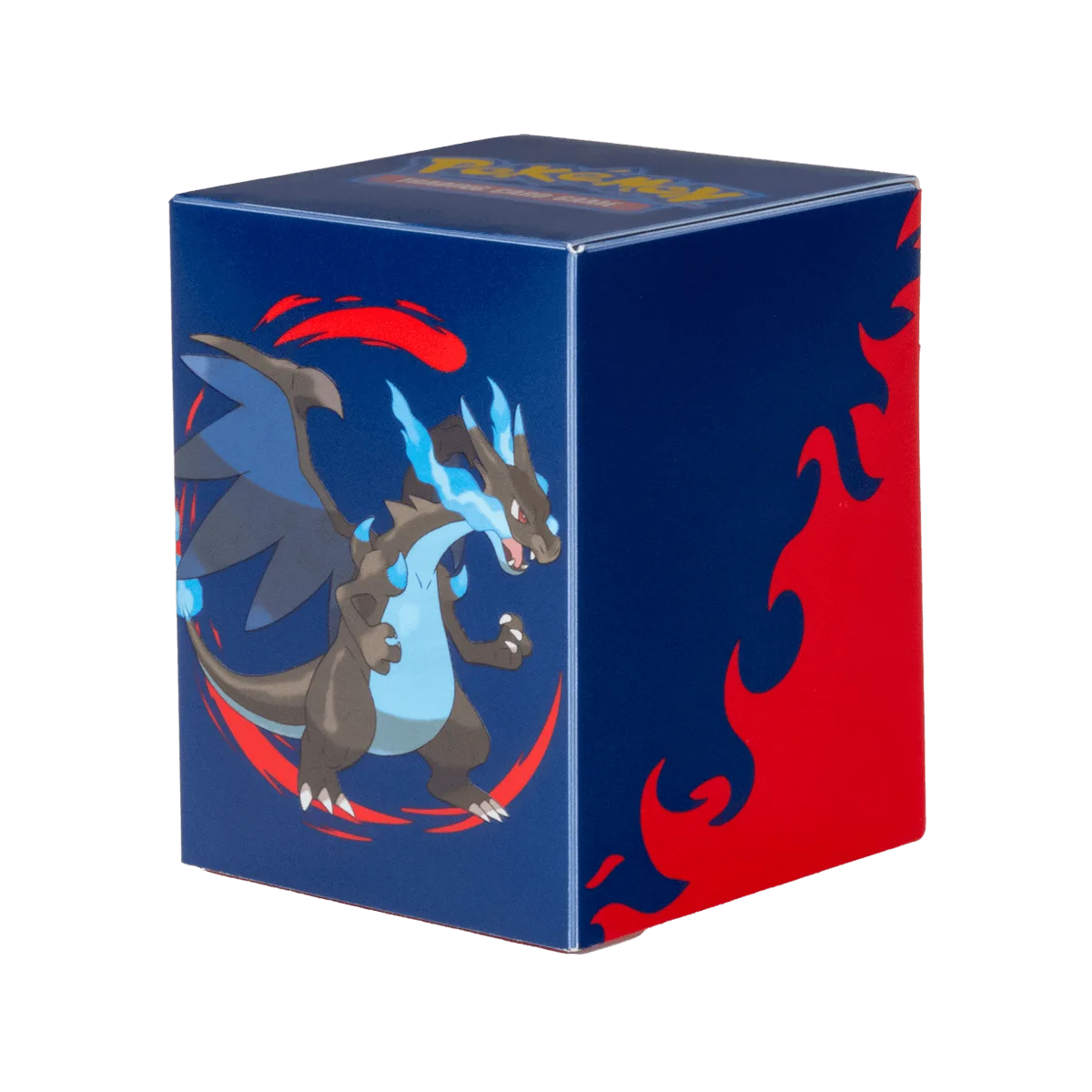
- Mega Charizard X 100+ DECK BOX® for the Pokémon Trading Card Game: Features vibrant, full-color artwork of Mega Charizard X and includes one matching deck divider. Made with archival-safe, acid-free, non-PVC materials, it can store up to 100 double-sleeved cards comfortably. The self-locking lid keeps cards secure when not in use while offering easy access. This is a strong example of a box that matches the recommended baseline: archival-safe materials, a secure self-locking lid, and a stated 100 double-sleeved capacity. The included divider helps keep a partial deck upright.
- Mana 8 - 105ct APEX DECK PROTECTOR® Sleeves - Island for Magic: The Gathering: Made with an easy-shuffle formulation and archival-safe polypropylene materials, with a gloss clear front that lets foil cards shine. Sized for standard size trading cards measuring 2.5 in. x 3.5 in. Sleeves change your deck's thickness, so they directly affect which deck box fits. Knowing your sleeves are standard size and archival-safe helps you match capacity and material expectations when choosing a box.
- Commander Series #1: Mono - Fynn Stitched Standard Gaming Playmat for Magic: The Gathering: Features a soft fabric top to reduce damage to cards during play and a non-slip rubber backing to keep the playmat from shifting. Stitched edges add a premium feel. Dimensions are approximately 24 in. x 13.5 in. If you carry a playmat with your deck, its size matters for your bag setup. A playmat this size usually needs its own tube or slot, so plan deck box and playmat storage separately.
Who this advice fits
Best for
- Commander and 100-card constructed players who double-sleeve and need a box rated for that capacity
- Players storing foils or valuable singles who want archival-safe, acid-free, non-PVC materials
- Anyone who carries a deck loose in a bag and needs a secure, self-locking lid
Not for
- Players who only need a cheap way to hold a casual 60-card deck on a shelf—a basic plastic box is enough
- Collectors looking for graded-card or long-term display storage, which needs a different product type
- Players who carry a playmat and dice and want one all-in-one case—plan separate storage instead
Choose a deck box by capacity first, then materials, then closure. If you double-sleeve a Commander deck, get a box rated for 100 double-sleeved cards with archival-safe materials and a secure lid. If you just need to keep a casual deck together, a simple plastic box with a divider will do the job.