Quick answer
Pack your mini tech case by starting with the devices you charge daily, then add one cable per device, a compact wall charger, earbuds, and only the adapters your trip requires. Keep everything visible and secured with elastic loops or mesh pockets so you can spot a missing item before you zip up.
Start with your daily charging routine, not a generic packing list
The most reliable way to decide what goes in a mini tech case is to walk through your normal day at home. Which devices do you plug in before bed? Which cable lives in your bag right now? Those are the items you will actually miss on a trip. Write them down before you open the case, because a small pouch fills up quickly and every item you add should earn its place.
Match each cable to one device and label it
A mini tech case is not the place for a tangled pile of mystery cords. Pair one cable with one device—phone, tablet, earbuds, watch—and wrap it using the case's elastic loops or a hook-and-loop tie. If two devices share the same connector, you can carry one cable for both, but decide that before you pack rather than discovering it at the airport. Labeling with a small sticker or a colored tie makes it obvious which cable belongs to which device, especially if you travel with someone whose cables look identical.
Choose a charger that matches your destination, not your nightstand
The wall charger you use at home may be larger than you need on the road. Check the plug type for your destination and whether your devices charge over USB-C, USB-A, or a proprietary connector. If your trip crosses regions, a single compact travel adapter is usually easier to manage than multiple plug converters. Keep the charger in the main compartment where it will not press against the case's shell or get buried under cables.
Add small essentials that are easy to forget
Beyond cables and chargers, most travelers need a short list of tiny items: earbuds or headphones, a screen cloth, a spare SIM tool if you swap SIMs, and a small power bank if your itinerary includes long transit days. These items are small enough to disappear into a pocket, so place them in a mesh section where you can see them at a glance. If your mini tech case has elastic loops, use them for cords and keep loose items in the zippered or mesh side.
Do a final zip test and a weight check
Before you close the case, zip it slowly. If the zipper catches or the shell bulges, you have packed too much. A mini tech case should close without force so the hard shell can protect what is inside. Pick it up and feel the weight—if it feels heavy for its size, remove anything you can charge from a laptop or borrow at your hotel. A lighter case is easier to move between a carry-on and a personal item.
Your step-by-step mini tech case packing process
- Step 1: List your daily devices and their cables: Write down every device you charge each day—phone, tablet, earbuds, watch, laptop—and the cable each one uses. This list becomes your packing checklist. Common mistake: packing cables you never use at home. If it is not on your daily list, leave it out unless a specific trip activity requires it.
- Step 2: Coil and secure each cable: Wrap each cable into a loop that fits the case's elastic bands or mesh pocket. Use a hook-and-loop tie or a twist tie if the case does not have enough loops. Checkpoint: shake the closed case gently. If you hear cables sliding around, they are not secured and may scratch other items.
- Step 3: Add the right wall charger and adapter: Choose one compact charger that covers your devices and matches your destination's plug type. Add a travel adapter only if you cross regions. Common mistake: bringing a bulky multi-port charger when a single-port charger would do. Match the charger to the trip, not to your home setup.
- Step 4: Place small essentials in visible pockets: Put earbuds, a screen cloth, a spare SIM tool, and a power bank in mesh or zippered sections so you can see them without unpacking the whole case. Checkpoint: open the case and confirm you can identify every item at a glance. If something is hidden, move it to a mesh pocket.
- Step 5: Zip, weigh, and do a final check: Close the case without forcing the zipper, then pick it up to check the weight. Remove anything you can borrow or charge elsewhere. Common mistake: overstuffing the case until the zipper strains. A mini tech case works best when it closes easily and stays light.
Products that fit this method
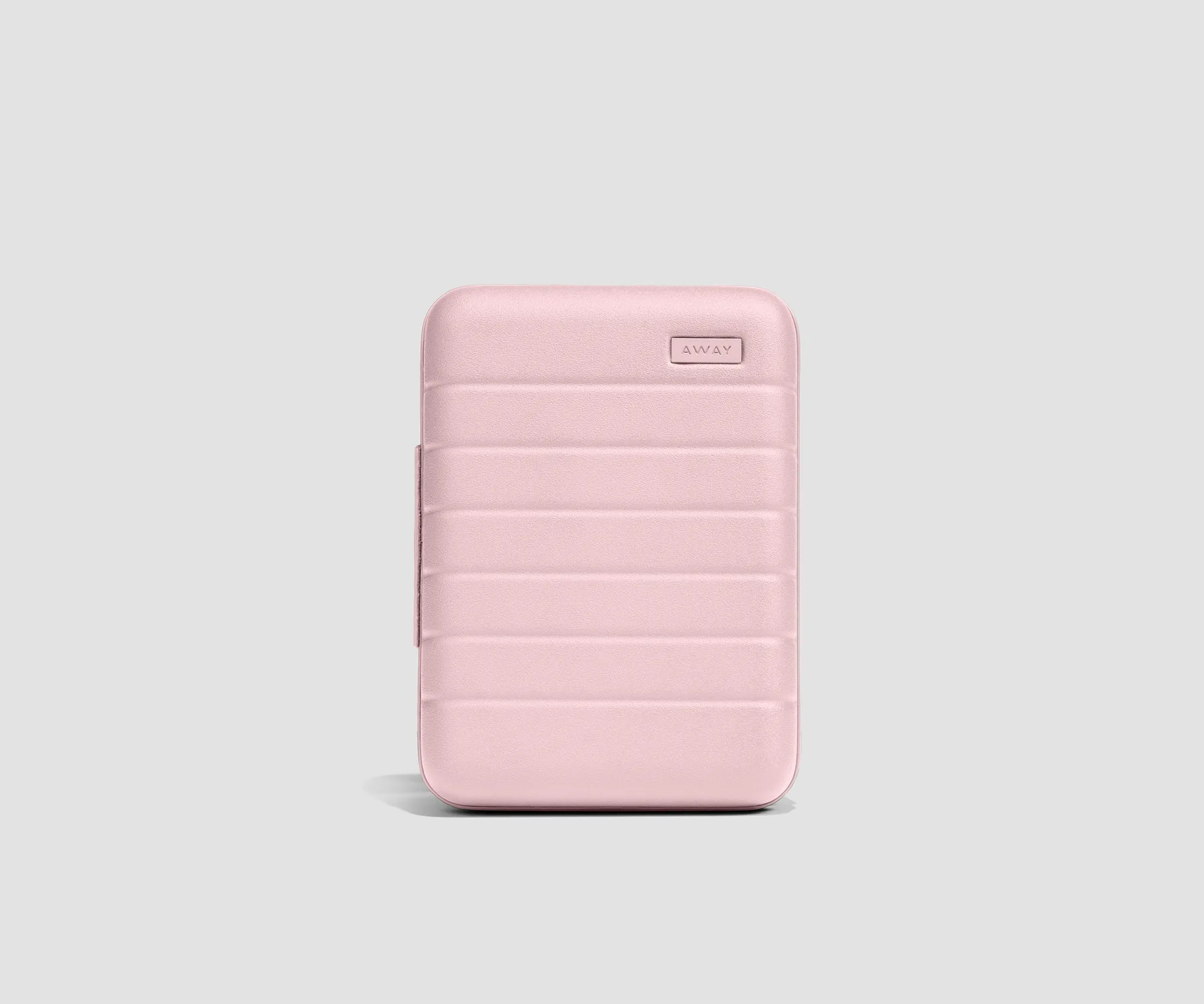
- Mini Tech Case in Blush Pink: The Mini Tech Case in Blush Pink has a durable hard-shell design with dedicated storage for cables, chargers, and headphones, plus mesh pockets for visibility and elastic loops that keep cords neatly in place. The hard shell protects small electronics from pressure in a carry-on, while the mesh and elastic loops make it easy to see what is missing before you leave.
- Mini Tech Case: The Mini Tech Case is a compact travel accessory that keeps small electronics neat and accessible, with a size that fits easily into any carry-on or tote. Its compact footprint means it can live in a personal item without crowding other essentials, and the available Blush Pink option matches other travel accessories.
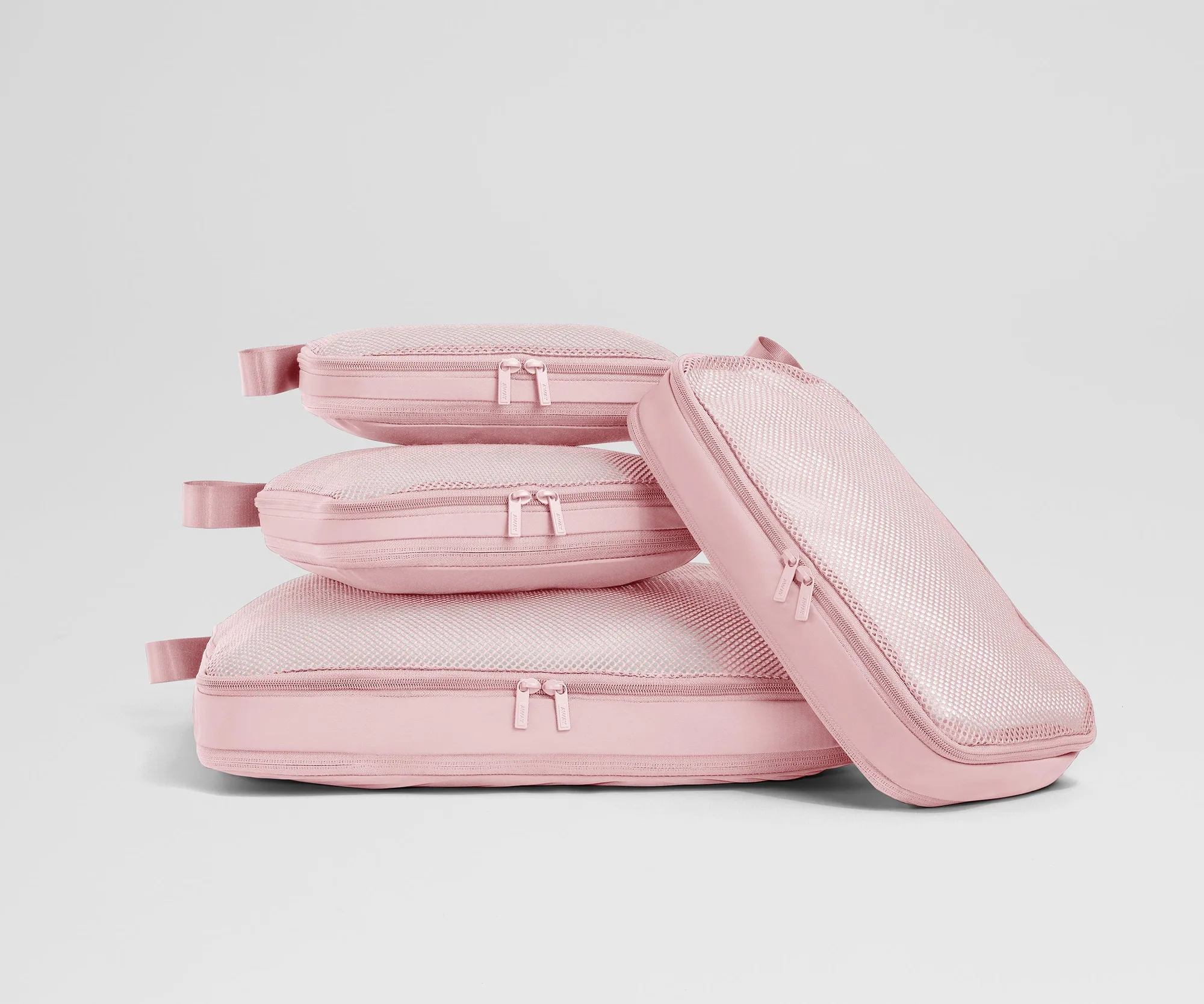
- Compression Packing Cubes: Compression Packing Cubes come in a set of four and are available in multiple colors, including Blush Pink, Cherry Red, Jet Black, Navy Blue, Coast Blue, Olive Green, Scenic Route, and Nautical. If your mini tech case goes in a carry-on, packing cubes keep clothing compressed and separate so the tech case does not get buried or crushed.