Quick answer
Pack for one night by starting with what you'll wear, then add only the smallest set of toiletries, chargers, and medications you actually need. Use pouches or cubes to group items, keep the heaviest items closest to your back or the bottom of the bag, and leave about a quarter of the space empty. A structured https://verabradleytr.com/products/weekender-travel-bag-5583224251-510053c7b39ca576a4e9f64a-1701445https://verabradleytr.com/products/weekender-travel-bag-5440220090-fc0ba6a042bb95e72837ad13-1701477weekender travel bag with a few pockets makes this easier than a single open compartment.
Start with the outfit you'll wear, not the bag
Lay out the clothes for tomorrow first, including underwear and socks. For one night, one complete change of clothes is usually enough unless you have a specific event that requires a second outfit. Add sleepwear only if you won't be provided with any, and choose pieces that can do double duty, like a plain t-shirt that works for sleeping or as a layer.
A common mistake is packing for the person you wish you were: three 'just in case' tops, two pairs of shoes, and a sweater for weather that isn't forecast. Check the forecast for your destination and commit to one backup layer at most. If you're driving and space is less of a constraint, you can be more generous, but for a carry on weekender checklist, restraint is what keeps the bag comfortable to carry.
Choose the right bag before you pack it
The bag you use determines how well your packing list works. A large open tote can swallow a weekender's worth of items, but without pockets, small things migrate to the bottom. A travel-ready bag with a defined shape and a few compartments keeps clothes separate from toiletries and electronics. If you're checking bag dimensions against an airline's carry-on limits, measure the bag when it's packed, not empty, because soft bags expand.
For one-night trips, a bag in the 30–40 liter range is usually enough for clothes, a small toiletry kit, and a laptop or tablet. If your bag is much larger, you'll be tempted to fill it. If it's much smaller, you'll end up carrying a second bag, which defeats the purpose of a weekender.
Pack toiletries as a separate, sealed kit
Toiletries are where overnight trip packing goes wrong most often. Decant liquids into travel-size containers or use solid versions where you can. Keep everything in one sealed pouch so a leak doesn't ruin your clothes. If you're flying with only a carry-on, remember the 3-1-1 rule for liquids: containers must be 3.4 ounces or less, all in one quart-sized bag.
Don't pack full-size products 'just in case.' Most hotels provide basics like shampoo and soap, so you can leave those out unless you have a specific sensitivity or preference. Prescription medications should go in your personal item, not the weekender, so they stay with you if the bag gets stowed.
Use pouches and cubes to create zones
Grouping items into small pouches or cubes turns a chaotic bag into a set of predictable zones. One pouch for chargers and cables, one for toiletries, one for small clothing items like socks and underwear. This isn't just about neatness; it means you can find your phone charger without unpacking the whole bag in a dark hotel room.
A common mistake is using too many pouches, which adds weight and bulk. Two or three small ones are usually enough for an overnight trip. If you're using a bag with exterior pockets, reserve those for items you'll need during travel: tickets, phone, keys, a snack, and a water bottle.
Pack layers and shoes with intention
Shoes take up more space than any other single item. Wear your bulkiest pair and pack only one additional pair if you truly need it. Stuff socks or small items inside the packed shoes to use that empty space. For layers, a single mid-weight layer is more versatile than two thin ones, and it can be worn on the journey if your bag gets tight.
Rolling clothes can save space and reduce wrinkles for casual fabrics, but structured items like a blazer may do better folded flat. There's no single right method; the checkpoint is whether the bag still closes without force. If you have to sit on it, you've packed too much.
Keep a small 'essentials' kit packed between trips
The easiest way to make overnight trip packing fast is to keep a duplicate set of small essentials already packed: a phone charger, a toothbrush, a mini deodorant, a few pain relievers, and a stain remover wipe. Store them in a pouch that lives in your weekender bag. Then for each trip, you only add clothes and any trip-specific items.
This approach also reduces the chance of forgetting something. The checkpoint is simple: if you had to leave in 20 minutes, could you grab the bag and go? If not, your essentials kit isn't complete yet.
Step-by-step: pack a weekender in 20 minutes
- Check the forecast and your plans: Look at the weather for your destination and note any specific activities. This determines whether you need a rain layer, formal shoes, or just casual clothes. Checkpoint: if you can't name the one activity that requires special gear, you probably don't need extra items for it.
- Lay out one complete outfit plus sleepwear: Choose one outfit for tomorrow and sleepwear if needed. Add one backup layer at most. Keep shoes to the pair you're wearing plus one packed pair. Common mistake: packing multiple 'maybe' outfits. For one night, one change is enough.
- Build your toiletry pouch: Decant liquids into travel sizes or use solids. Place everything in one sealed pouch. If flying carry-on, follow the 3-1-1 rule for liquids. Checkpoint: your toiletry pouch should be small enough to fit in an exterior pocket or on top of clothes without crushing them.
- Pack electronics and chargers in a separate pouch: Phone charger, any camera or laptop cables, and a portable battery if you use one. Keep this pouch accessible so you can charge during travel. Common mistake: burying chargers at the bottom of the bag. You'll end up unpacking everything to find them.
- Roll or fold clothes into the main compartment: Place heavier items like shoes at the bottom or closest to your back if the bag is a backpack style. Fill gaps with socks or small items. Use pouches for underwear and socks. Checkpoint: the bag should close without force. If it doesn't, remove one clothing item.
- Add a small essentials kit and leave space: Include medications, a stain wipe, and any must-have personal items in a https://verabradleytr.com/products/small-pouch-5354923476-3f1a292316e94db855db3944-1699774small pouch. Aim to leave about a quarter of the bag empty for souvenirs or layers you shed. Next step: keep this essentials kit packed between trips so you only need to add clothes next time.
Bags that fit this packing approach
- Original Vera Tote: The Original Vera Tote is a classic large tote with generous space and multiple pockets, designed for workday must-haves and weekend extras. Its pocket layout helps separate clothes from smaller items, which supports the zone-packing method above without needing extra pouches.
- Weekender Travel Bag: The Weekender Travel Bag combines a timeless silhouette with space for everything on your packing list. A dedicated travel bag with a defined shape makes it easier to pack for one night and still carry the bag comfortably.
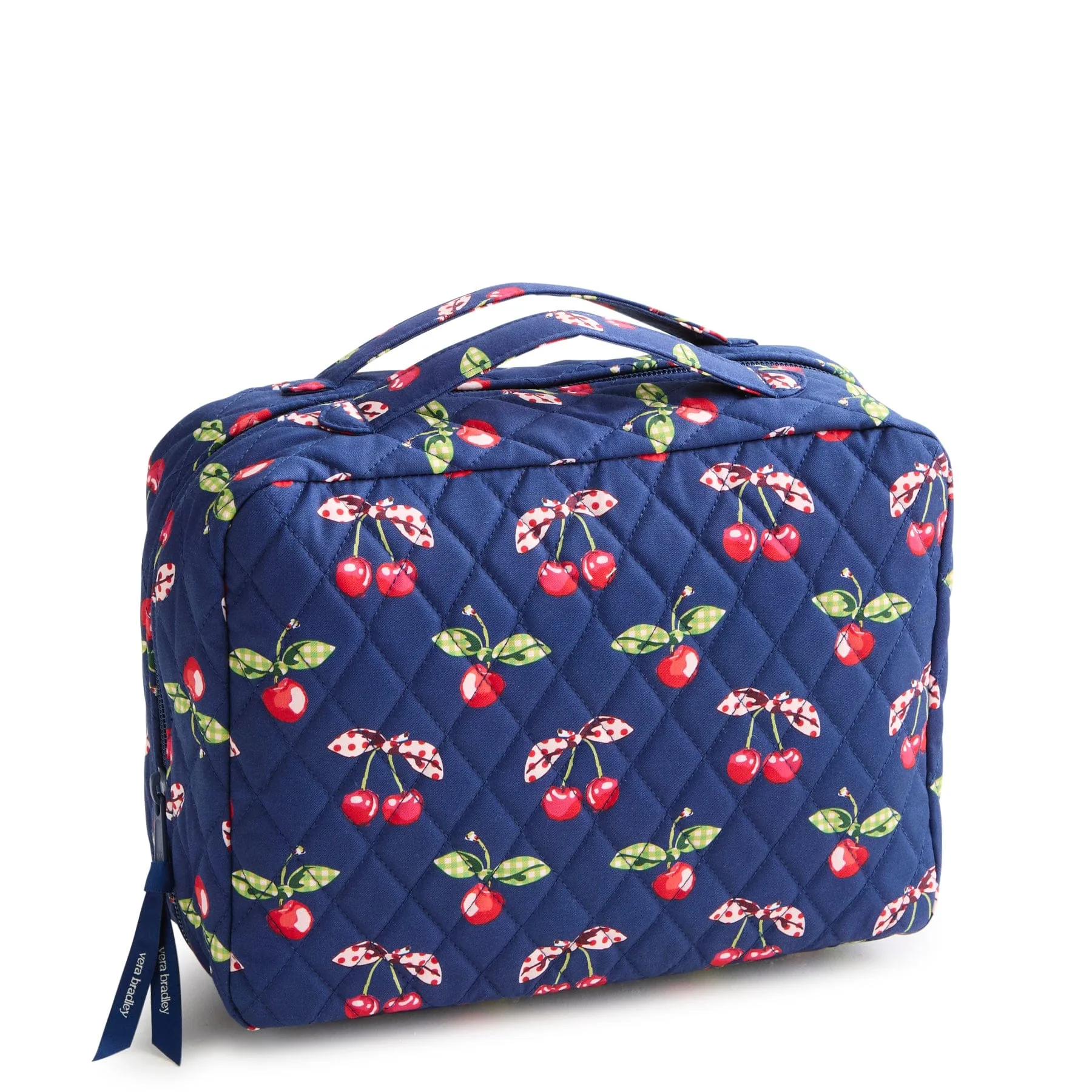
- Cherry Cosmetic: The Cherry Cosmetic bag is cute, compact, and ready to brighten any vanity. A compact cosmetic bag keeps toiletries sealed and separate from clothes, which is one of the most common packing mistakes to avoid.