Quick answer
Pack a mix of high-value and low-value treats, a clicker or target stick, a poop bag, and a small first-aid item in your dog training treat pouch. Choose a pouch with secure closures and multiple compartments to keep everything organized and accessible.
Why what you pack matters
The contents of your training pouch can make or break a walk. If you only bring one type of treat, you might struggle to keep your dog’s attention in distracting environments. A balanced selection allows you to reward quickly and effectively.
Organization is also key. When you’re fumbling for treats or a clicker, you lose momentum and your dog’s focus. A pouch with separate compartments helps you grab what you need without breaking eye contact.
Treat selection: high-value vs. low-value
High-value treats—like small pieces of chicken, cheese, or liver—are essential for challenging situations, such as passing other dogs or crossing busy streets. Low-value treats, like kibble or biscuits, work well for routine obedience in quiet areas.
A good rule is to fill about 70% of your pouch with low-value treats and 30% with high-value ones. This preserves your special rewards for when you really need them.
Consider the size of the treats. Bite-sized pieces are easier to deliver quickly and prevent overfeeding. If your dog is on a restricted diet, you can use a portion of their daily kibble as the low-value option.
Closure and access trade-offs
Training pouches often have either magnetic or zipper closures. Magnetic closures allow silent, one-handed access, which is great for quick rewards. However, they may not be as secure if you’re hiking or running. Zipper closures are more secure but can be noisy and slower to open.
Some pouches, like the Wilderdog Dog Training Treat Pouch, offer both a magnetic and a zipper closure on the main pocket. This gives you the best of both worlds: quick access during training and secure storage when you’re on the move.
Think about how you’ll wear the pouch. Waist straps keep it stable, while a carabiner lets you clip it to a belt loop or backpack. Choose the method that feels most comfortable and accessible for your typical walks.
Packing decision rules
- Treat variety: Pack a mix of high-value and low-value treats. Use low-value for everyday commands and high-value for high-distraction moments. Aim for a 70/30 split.
- Training tools: Include a clicker or target stick if you use them. Keep them in a separate pocket to avoid fumbling.
- Cleanup essentials: Always carry at least one poop bag. Fold it flat and place it in a side pocket for quick access. Check your pouch before every walk.
- Emergency item: Add a small item like a bandage or antiseptic wipe. It takes up little space but can be invaluable in a pinch.
- Water and hydration: If your walk is longer than 30 minutes, carry a collapsible water bowl or a small water bottle. Clip it to your pouch or belt loop. Hydration is as important as treats.
Product spotlight
-
Dog Training Treat Pouch: Main pocket has both zipper and magnetic closures; additional smaller pocket with zipper closure. You can access treats quickly with the magnetic closure during training, then secure everything with the zipper when you’re done or on the move.
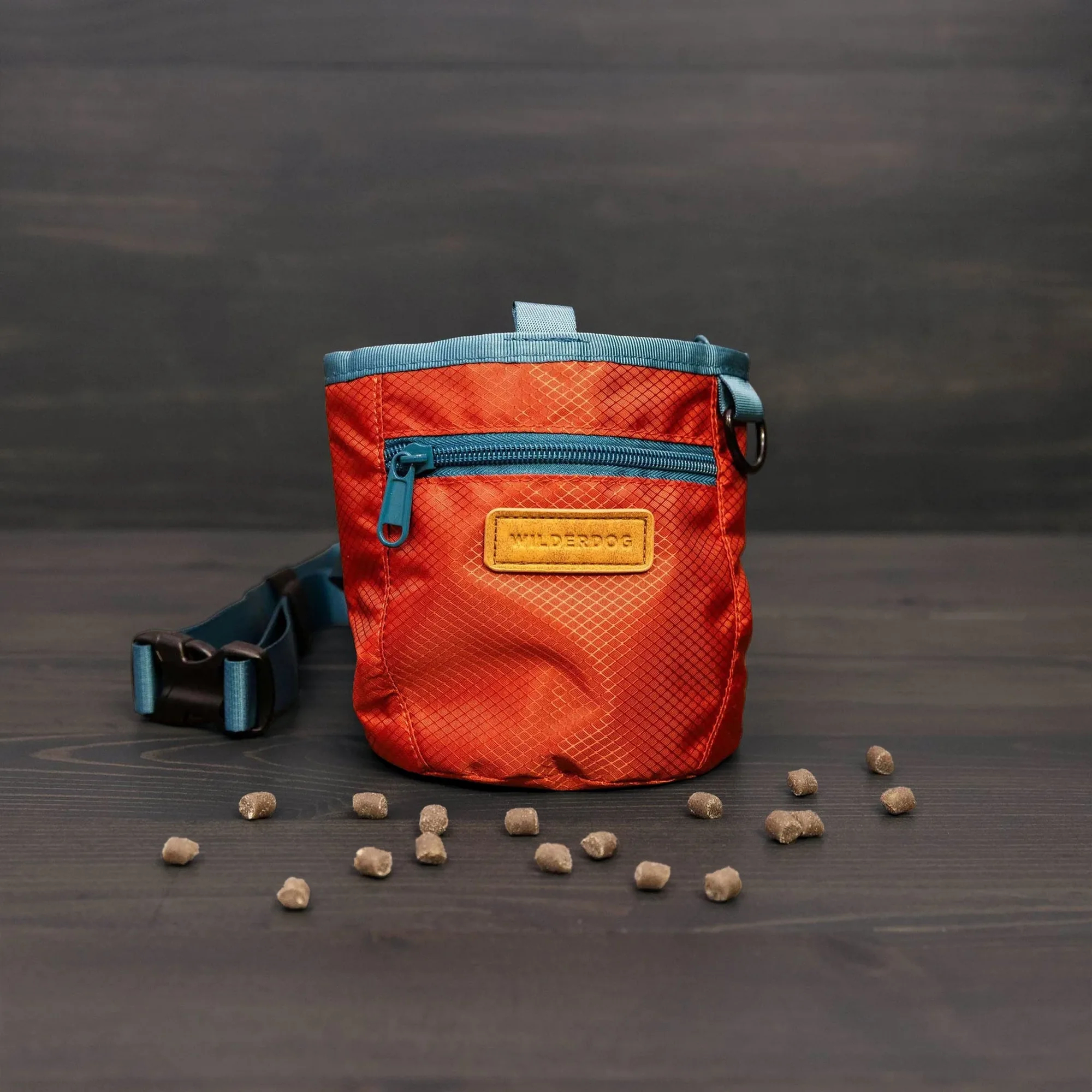
Dog Training Treat Pouch
Who this pouch suits
Best for
- Dog owners who want quick access to treats during training sessions.
- Hikers or walkers who need a secure pouch that can handle varied terrain.
Not for
- Those who prefer a minimalist approach and only carry a single pocket without extra compartments.