Quick answer
Introduce a rattle teether when your baby can hold a small object and bring it to their mouth, which usually happens around 3 to 4 months. Before that, they may enjoy watching and listening to it, but they won't yet use it to soothe their gums. Start with short, supervised sessions and let your baby set the pace.
Your baby is starting to swipe at toys, and you're wondering if a rattle teether is the right next step. The short answer is that most babies are ready between 3 and 4 months, but the better question is whether your baby is showing the signs. This guide walks you through a simple, step-by-step introduction that matches your baby's development, not a calendar.
We'll cover how to spot readiness, how to choose a rattle teether that fits small hands, and how to keep play safe. You'll also see how the rattle teether benefits go beyond teething, from hand-eye coordination to cause-and-effect learning. No rush, no pressure, just a clear process you can follow at your baby's pace.
Step 1: Look for readiness signs
Before you introduce a rattle teether, watch for a few cues. Your baby can hold their head steady, brings hands to mouth, and shows interest in toys by reaching or tracking them with their eyes. They may also start drooling more or gnawing on their fists, which are early teething signs. If your baby can grasp a small object and hold it briefly, they're likely ready for a lightweight rattle teether.
A common mistake is offering a rattle teether too early, before your baby can purposefully grasp. If they can't hold it, they may get frustrated. Instead, try holding the rattle near them and shaking it gently so they can watch and listen. That builds familiarity without pressure. Checkpoint: if your baby turns toward the sound and reaches, they're ready for a supervised introduction.
- Watch for hand-to-mouth motion and a deliberate grasp.
- Keep sessions short, 2-3 minutes, and follow your baby's cues.
Step 2: Choose a rattle teether that fits your baby's stage
Not all rattle teethers are the same. Look for one that is lightweight, easy to grasp, and has textured surfaces for chewing. The Twista Rattle Teether Toy | Colorful Rings is a good example: it has bright colors, fun sounds, and textured surfaces that provide relief. The rings make it easy for small hands to hold, and the rattle sound rewards your baby's movement, which encourages them to keep exploring.
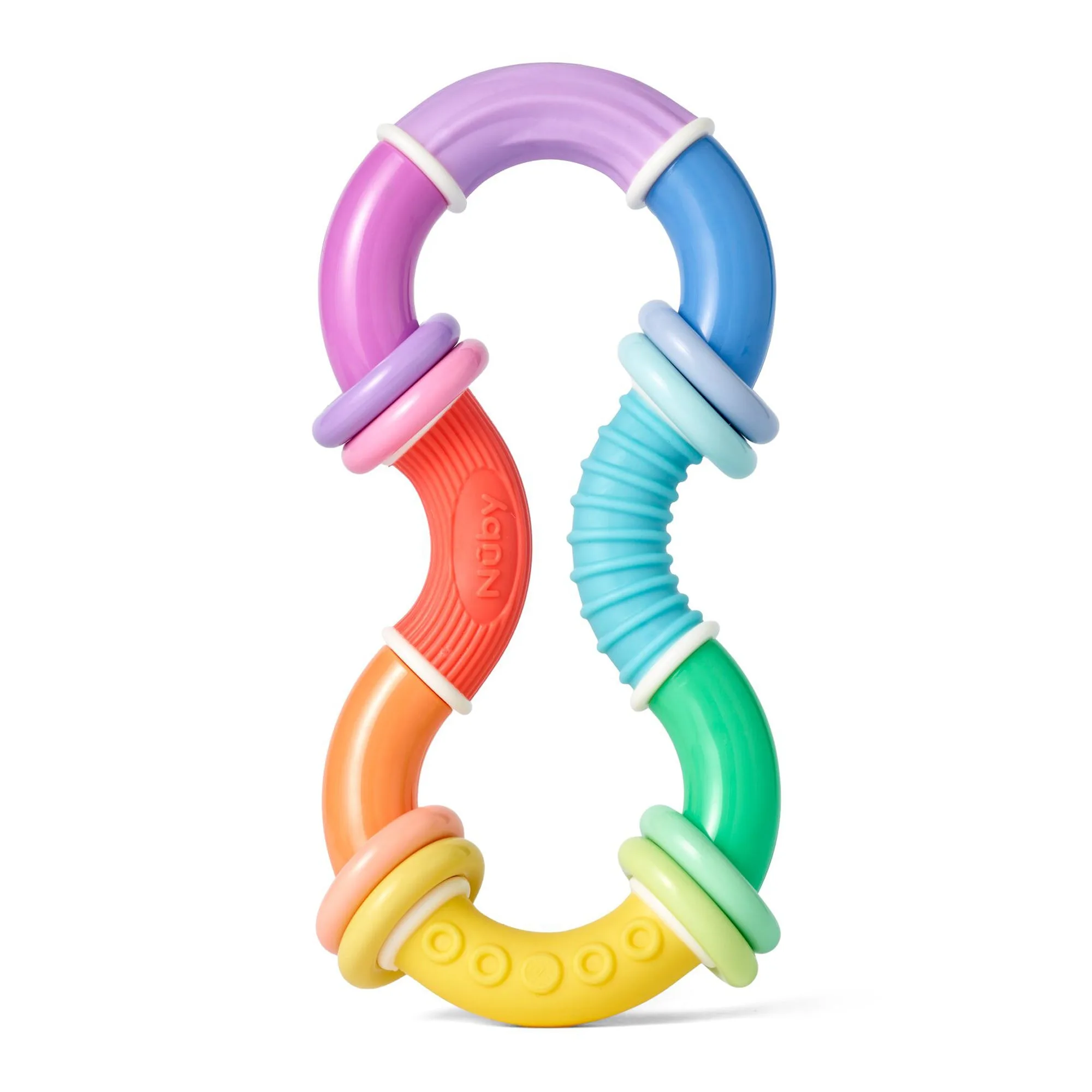
Twista Rattle Teether Toy | Colorful Rings
Another option is the Twist Ball Teether. It also features bright colors and fun sounds, and its textured surfaces soothe gums. Both are designed to engage fine motor skills and hand-eye coordination. A common mistake is choosing a teether that's too heavy or too big. If your baby drops it repeatedly or seems uninterested, try a smaller or lighter option. Checkpoint: your baby should be able to hold it for a few seconds and bring it to their mouth without help.
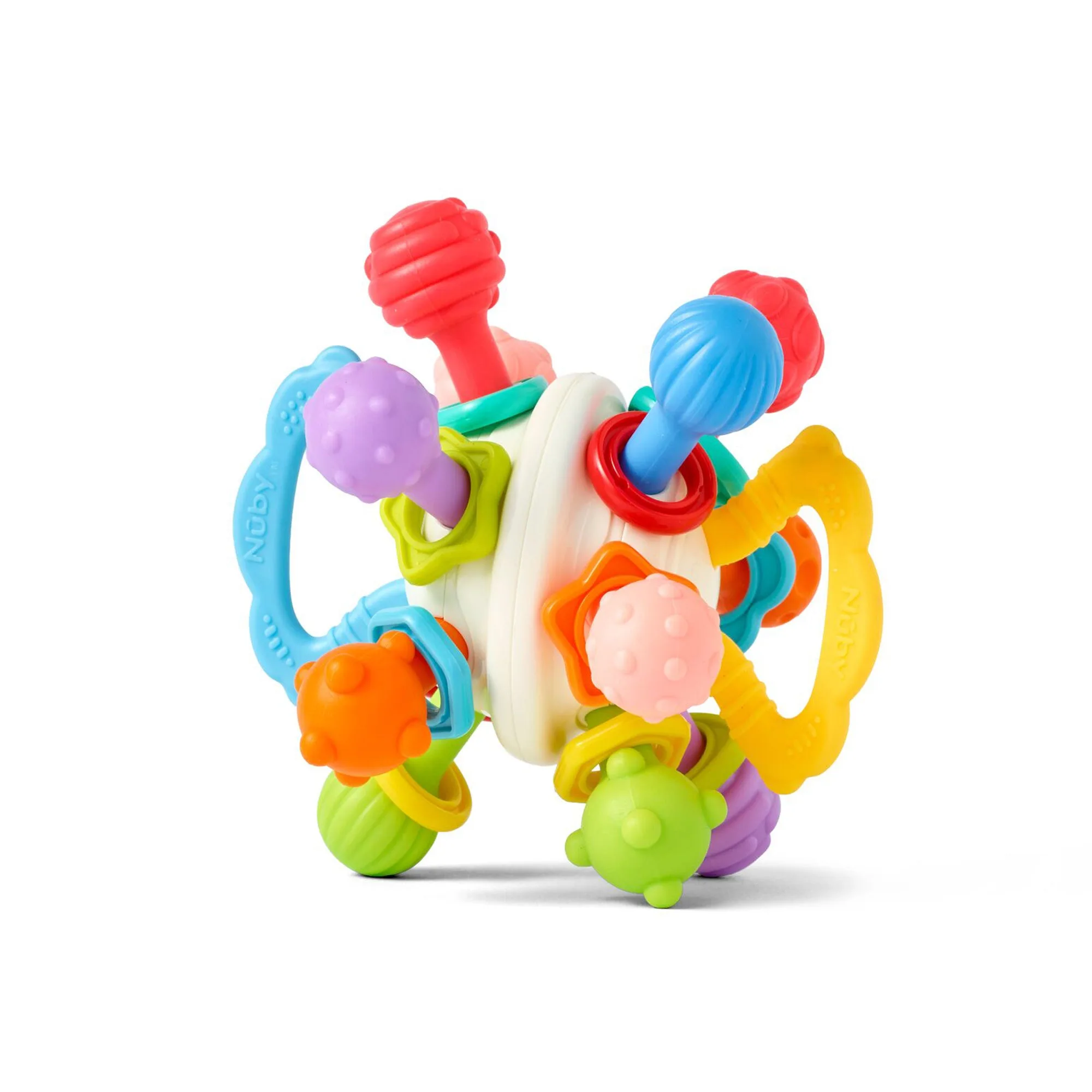
Twist Ball Teether
- Look for textured surfaces and a shape that's easy to grip.
- Avoid teethers with loose parts or that are too heavy for small hands.
Step 3: Introduce the rattle teether during a calm, alert moment
Timing matters. Introduce the rattle teether when your baby is fed, rested, and alert, not when they're fussy or overtired. Sit with them and hold the teether where they can see it. Shake it gently to create a soft sound, then offer it to them. Let them reach for it and explore. If they bring it to their mouth, that's a good sign. If they just wave it around, that's fine too; they're learning.
A common mistake is forcing the teether into your baby's mouth or expecting them to chew immediately. Let them lead. Some babies need a few exposures before they understand what to do. Checkpoint: if your baby smiles, coos, or reaches for the teether again, the introduction is going well. If they turn away or cry, stop and try again another day.
- Choose a time when your baby is calm and alert.
- Never force the teether; let your baby explore at their own pace.
Step 4: Use the rattle teether to support daily routines
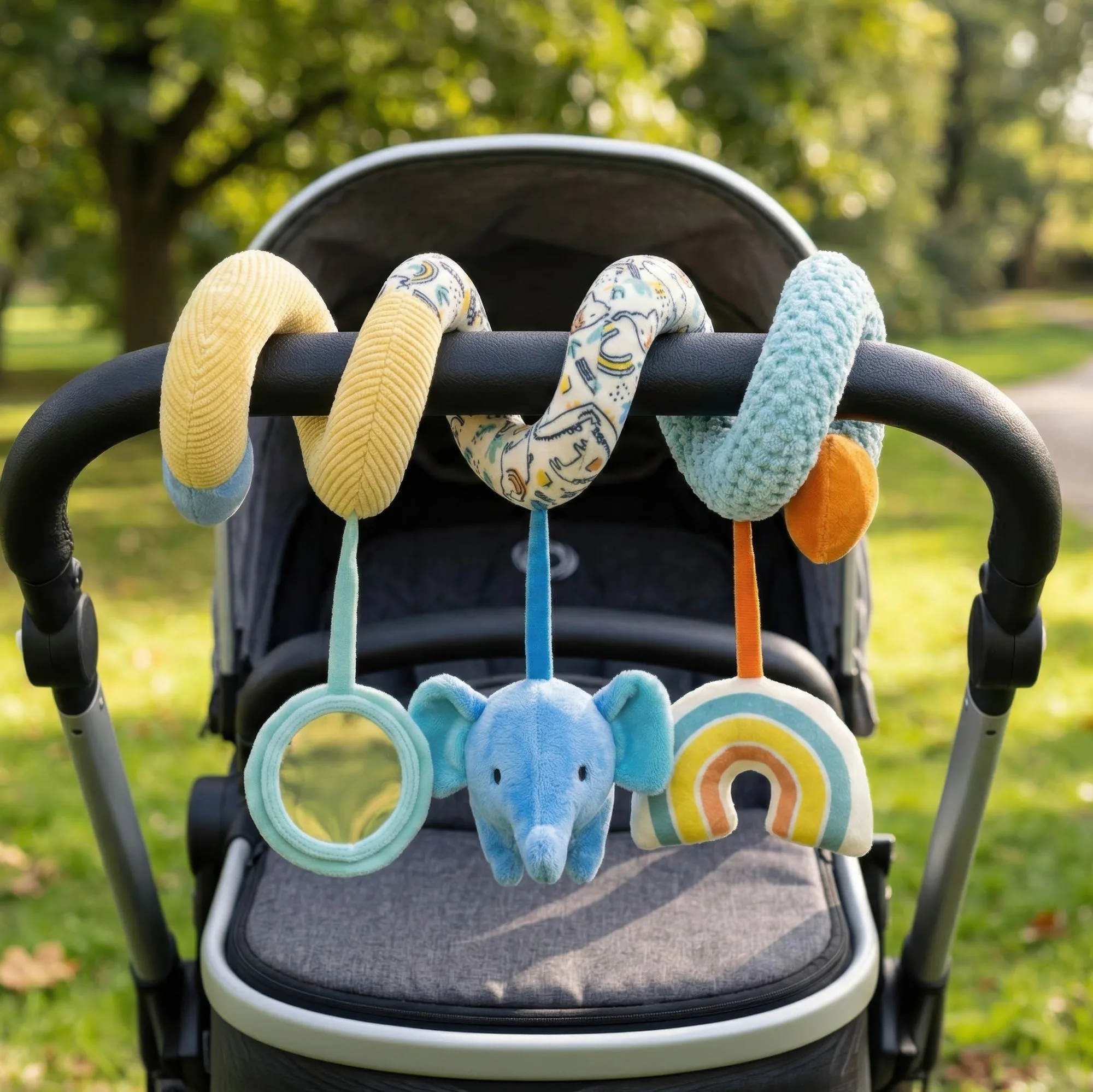
Once your baby is comfortable with the rattle teether, you can use it throughout the day. During tummy time, place it just out of reach to encourage stretching and reaching. In the stroller or car seat, attach a spiral activity toy like the Animal Adventures Spiral Activity Toy | Elephant to keep little hands busy. The rattle teether can also be a distraction during diaper changes or while you prepare a bottle.
The rattle teether benefits go beyond soothing gums. The cause-and-effect of shaking to make sound builds cognitive skills, while grasping and mouthing support fine motor development. A common mistake is leaving your baby alone with the teether. Always supervise, especially if your baby is new to holding objects. Checkpoint: if your baby can shake the rattle intentionally and bring it to their mouth, they've mastered the basics.
- Use the rattle teether during tummy time to encourage reaching.
- Always supervise; never leave a baby alone with a teether.
Step 5: Keep it clean and safe
Rattle teethers go into mouths, so clean them often. Wash with warm, soapy water and rinse thoroughly. Check the teether regularly for cracks or tears, and replace it if you see wear. Avoid attaching the teether to a string or ribbon around your baby's neck. If you use a clip, make sure it's short and secure. A common mistake is using harsh chemicals or boiling a teether that isn't boil-safe. Always follow the manufacturer's cleaning instructions.
As your baby grows, their needs change. Around 6 months, they may prefer a teether with more texture or a different shape. Keep an eye on their cues. If they lose interest, try a different teether or rotate toys. Checkpoint: a clean, intact teether that your baby enjoys is a safe one.
- Clean the teether after each use, especially if it's been dropped.
- Inspect for damage and replace when needed.
Your step-by-step rattle teether introduction
- Check for readiness signs: Look for steady head control, hand-to-mouth motion, and the ability to hold a small object briefly. If your baby can't yet grasp, hold the rattle near them and shake it gently instead. Checkpoint: your baby reaches toward the sound or tries to hold the teether.
- Pick a lightweight, graspable rattle teether: Choose one with textured surfaces and a shape that's easy for small hands, like the Twista Rattle Teether Toy | Colorful Rings or the Twist Ball Teether. Avoid heavy or oversized options. Checkpoint: your baby can hold it for a few seconds without help.
- Introduce during a calm, alert moment: Offer the teether when your baby is fed and rested. Shake it softly, then let them reach and explore. Don't force it into their mouth. Checkpoint: your baby shows interest by reaching, smiling, or bringing it to their mouth.
- Use it in daily routines: Incorporate the rattle teether during tummy time, stroller rides, or diaper changes. Pair it with other sensory toys like the Animal Adventures Spiral Activity Toy | Elephant for variety. Checkpoint: your baby can intentionally shake the rattle and mouth it.
- Clean and inspect regularly: Wash with warm, soapy water after each use. Check for cracks or tears and replace if damaged. Never tie it around your baby's neck. Checkpoint: the teether is clean, intact, and safe for your baby to use.
Rattle teethers that fit the milestones
- Twista Rattle Teether Toy | Colorful Rings: Features bright colors, fun sounds, and textured surfaces that provide relief during teething; the rings make it easy for baby to grasp. The rattle sound and easy-grip rings encourage your baby to shake, reach, and chew, supporting fine motor skills and hand-eye coordination.
- Twist Ball Teether: Has bright colors, fun sounds, and textured surfaces for teething relief; designed to be easy for baby to grasp. The ball shape offers a different grip than a ring, so it can be a good alternative if your baby prefers holding a round object.
- Animal Adventures Spiral Activity Toy | Elephant: Attaches easily to stroller or car seat handles; includes soft plush characters, squeaks, crinkles, and rattles that stimulate senses and teach cause and effect. Keeps baby entertained on outings and provides sensory feedback that supports cause-and-effect learning, a natural next step after rattle teethers.
Introducing a rattle teether is less about a specific age and more about your baby's readiness. Watch for the signs, choose a teether that fits their grasp, and let them explore at their own pace. With a little guidance, a rattle teether can become a favorite tool for soothing gums and building new skills.