Quick answer
You can introduce a tongue depressor tool once your baby shows readiness for oral exploration, typically around 4–6 months, but always under supervision and as part of a broader pre-feeding routine.
Why timing matters for oral development
Introducing a tongue depressor too early may overwhelm a baby who is not yet ready for oral motor challenges, while starting too late can delay the practice of munching and chewing patterns. The key is to watch for signs of oral exploration, such as mouthing objects, and to pair the tool with other pre-feeding activities.
Safety and supervision considerations
Always supervise your baby during tongue depressor use. The tool is designed for gentle sensory input, not for forceful insertion. Stop if your baby shows signs of gagging or distress. Clean the tool after each session to maintain hygiene.
Frequently asked questions
What is the earliest age to start tongue depressor use?
Most babies are ready around 4–6 months, once they can hold objects and bring them to their mouth. Start with gentle, brief sessions and watch for acceptance.
How do I know my baby is ready for a tongue depressor?
Look for signs like mouthing toys, drooling more than usual, or showing interest in your food. These indicate oral motor readiness. If your baby is not yet mouthing objects, wait a few weeks and try again.
Can I use a tongue depressor alongside other pre-feeding tools?
Yes. Rotate the tongue depressor with other tools like the Loop and Smile from the Oral Development Tools set to provide varied sensory input and prevent boredom. Variety in oral tools helps develop different muscle groups.
Product facts
-
Oral Development Tools (5-Pack): The Oral Development Tools (5-Pack) includes 3 sensorimotor devices (Loop, Smile and Stick) designed to help babies practice feeding, munching, biting, and chewing skills. The Stick tool in this set functions as a tongue depressor, giving babies a safe way to explore oral motor patterns that support later eating.
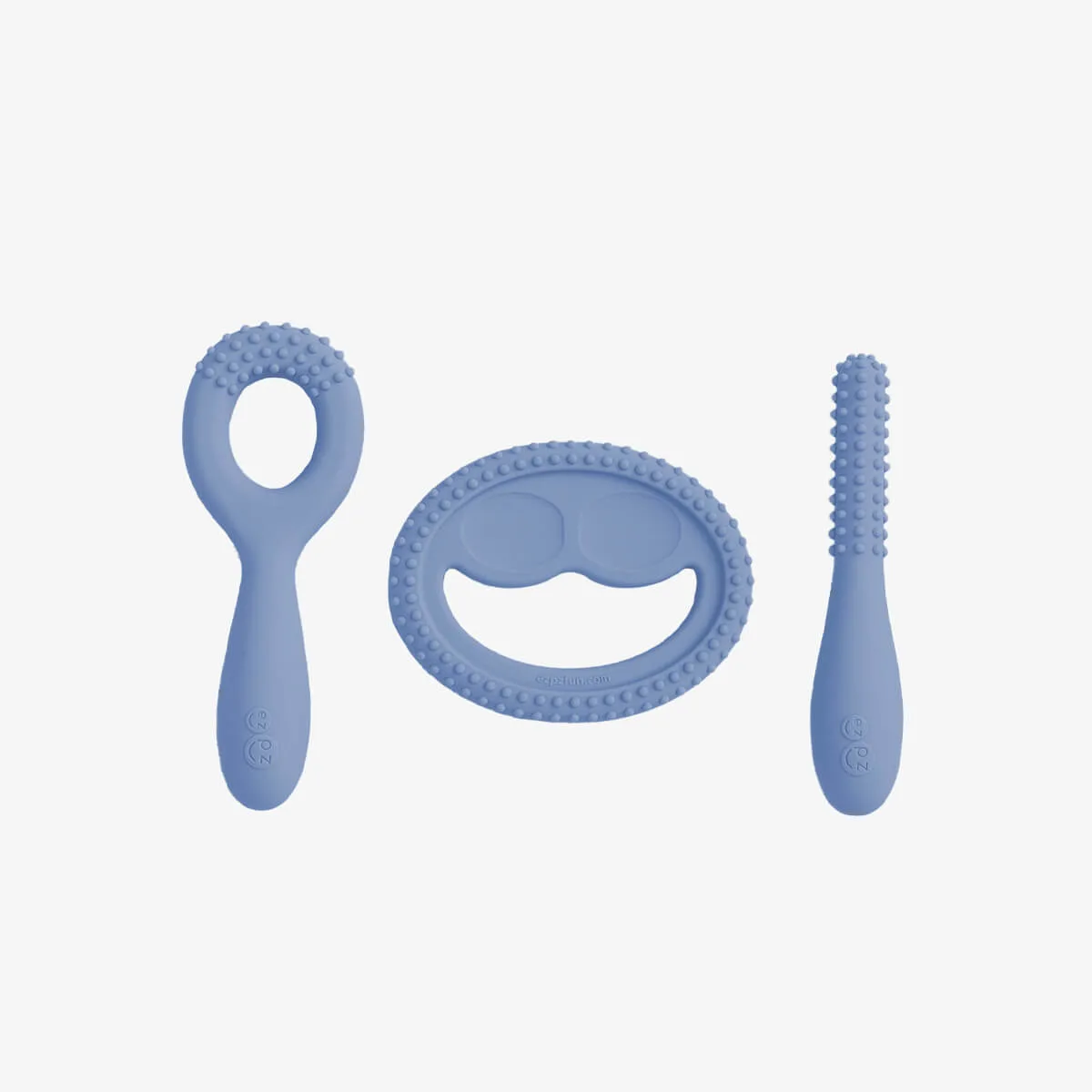
Oral Development Tools (5-Pack)