Quick answer
Choose a palette knife for spreading and smoothing batters or icing; a slotted spatula for flipping and draining foods; an offset spatula for easy lifting from pans and trays; and a gourmet spatula for versatile prep and presentation tasks.
Why blade shape and flexibility matter
The shape and flexibility of a spatula blade directly affect how well it performs specific tasks. A long, flexible blade works best for spreading and smoothing, while a thin, rigid blade with slots excels at flipping and draining. An angled handle gives extra knuckle clearance, making it easier to lift foods from flat surfaces. Understanding these differences helps you pick the right tool for your cooking and baking needs.
Material and care considerations
All WÜSTHOF spatulas feature stainless-steel blades, which offer durability and precision. However, stainless steel can scratch non-stick coatings, so use these spatulas with care on non-stick pans. For delicate non-stick cookware, consider a silicone or nylon alternative. The metal blades are ideal for stainless steel, cast iron, and oven-safe dishes.
How to choose your spatula
- For baking and spreading: If you frequently ice cakes, smooth batters, or lift delicate baked goods, choose a palette knife or gourmet spatula with a long, flexible blade.
- For flipping and draining: If you cook pancakes, eggs, fish, or meats that release fat, choose a slotted spatula. The slots let grease drain away while the thin blade slides under food easily.
- For lifting from pans and trays: If you often lift foods from hot pans, baking sheets, or oven dishes, choose an offset spatula. The angled handle keeps your hand away from heat and makes lifting more comfortable.
- For versatility in prep and presentation: If you want one tool for both spreading and lifting, a palette knife or gourmet spatula can handle both tasks, though neither is ideal for flipping greasy foods. Consider your most common kitchen task first, then match the spatula shape to that job.
Spatula options at a glance
-
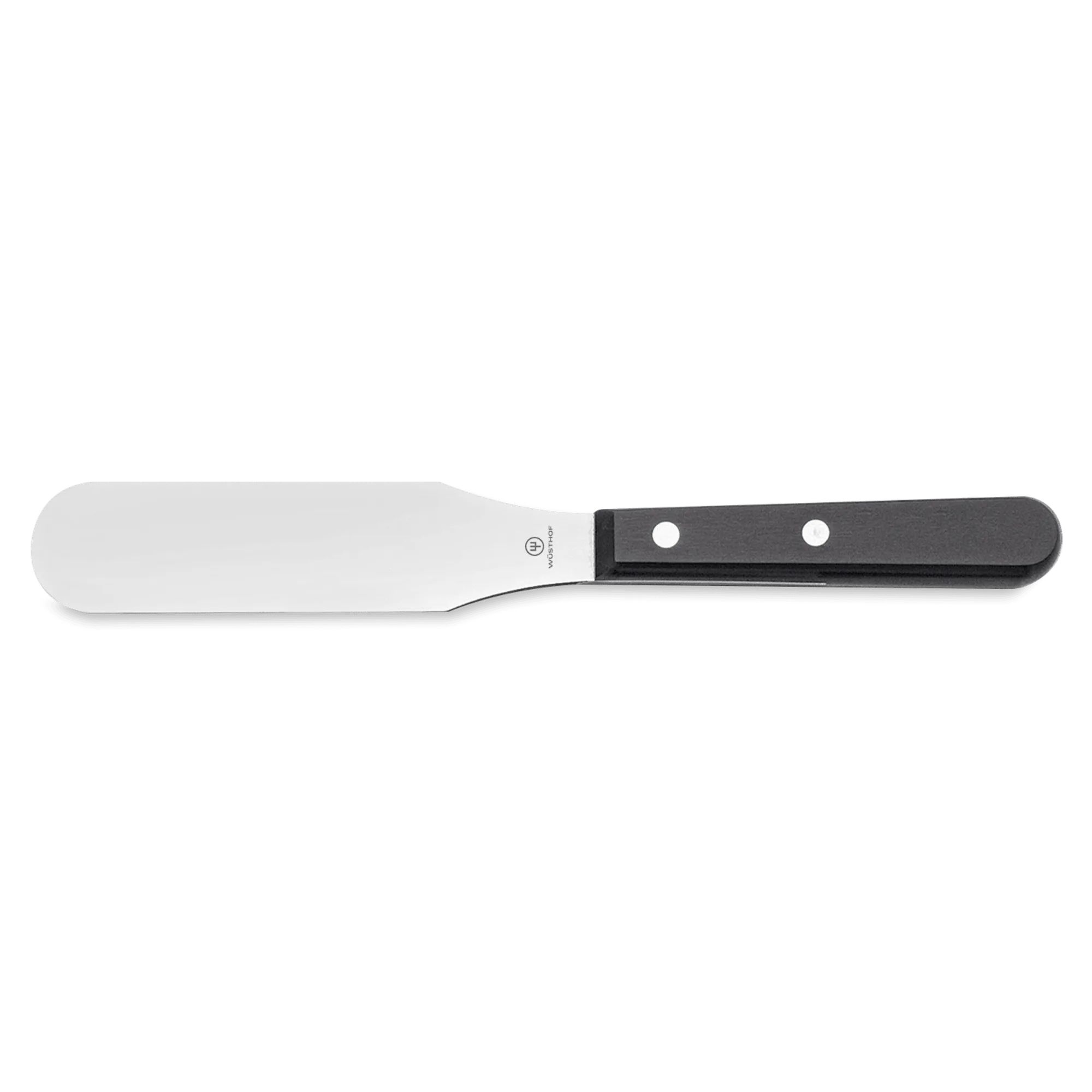
Palette Knife: The WÜSTHOF Palette Knife has a long, flexible blade designed for smoothing batters, icing, and cream, and also for lifting cakes and biscuits. Its flexibility gives you control for spreading and leveling, making it a top choice for bakers and pastry work.
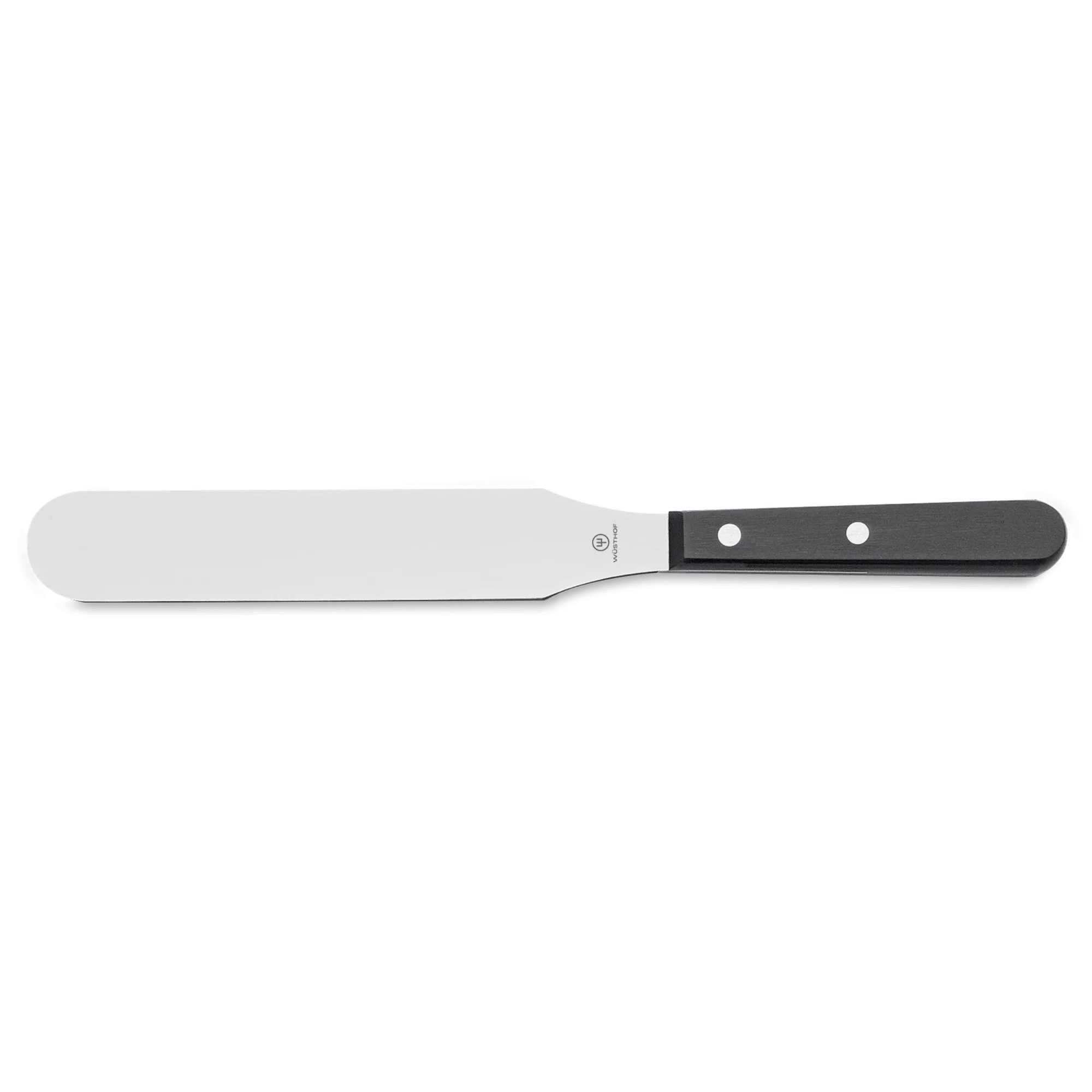
Palette Knife
-
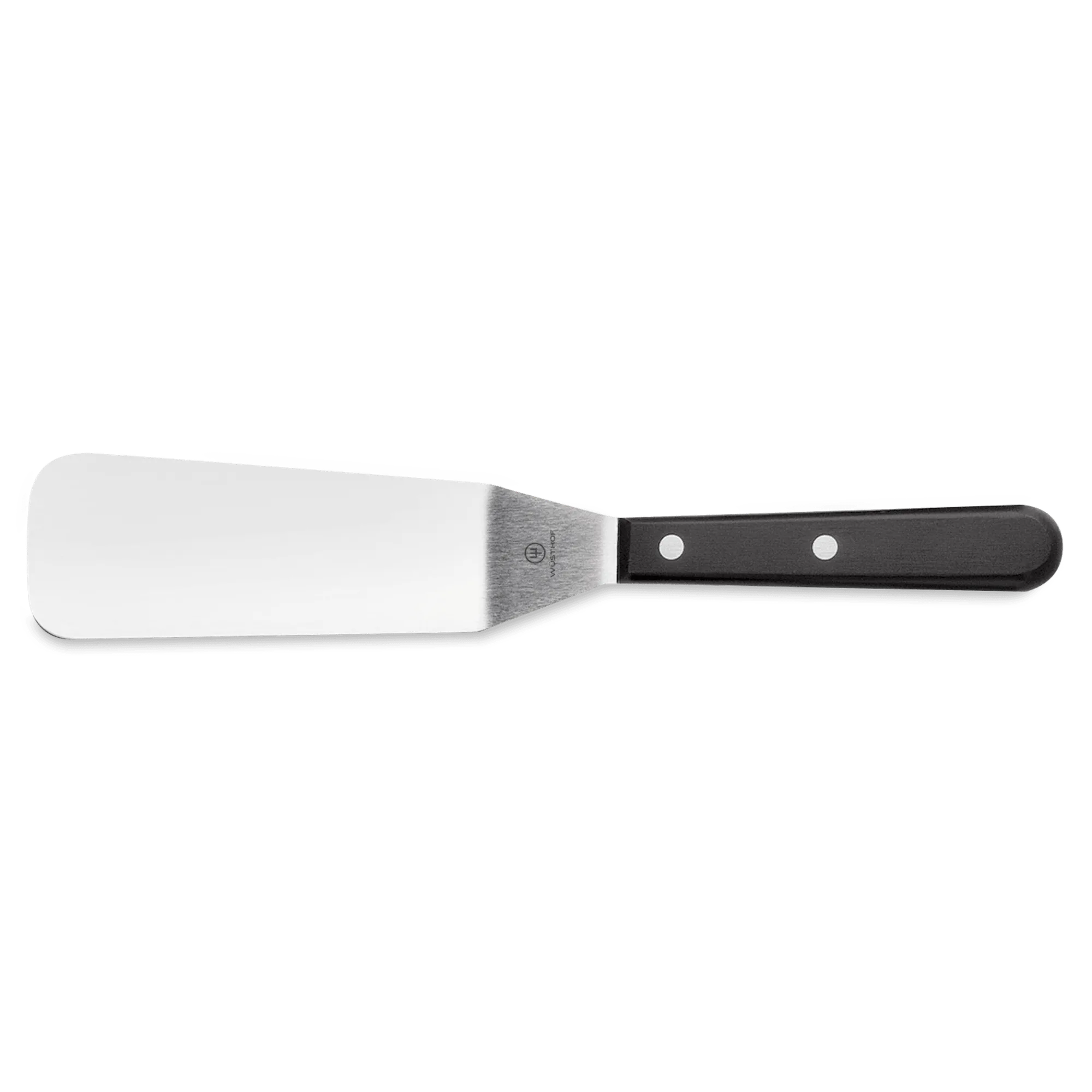
4 1/2" Slotted Spatula: The 4 1/2" Slotted Spatula features a very thin blade that slides easily under foods, with slots that drain fats and liquids away. The thin profile and slots make it excellent for flipping pancakes, eggs, or fish while keeping them from sitting in grease.
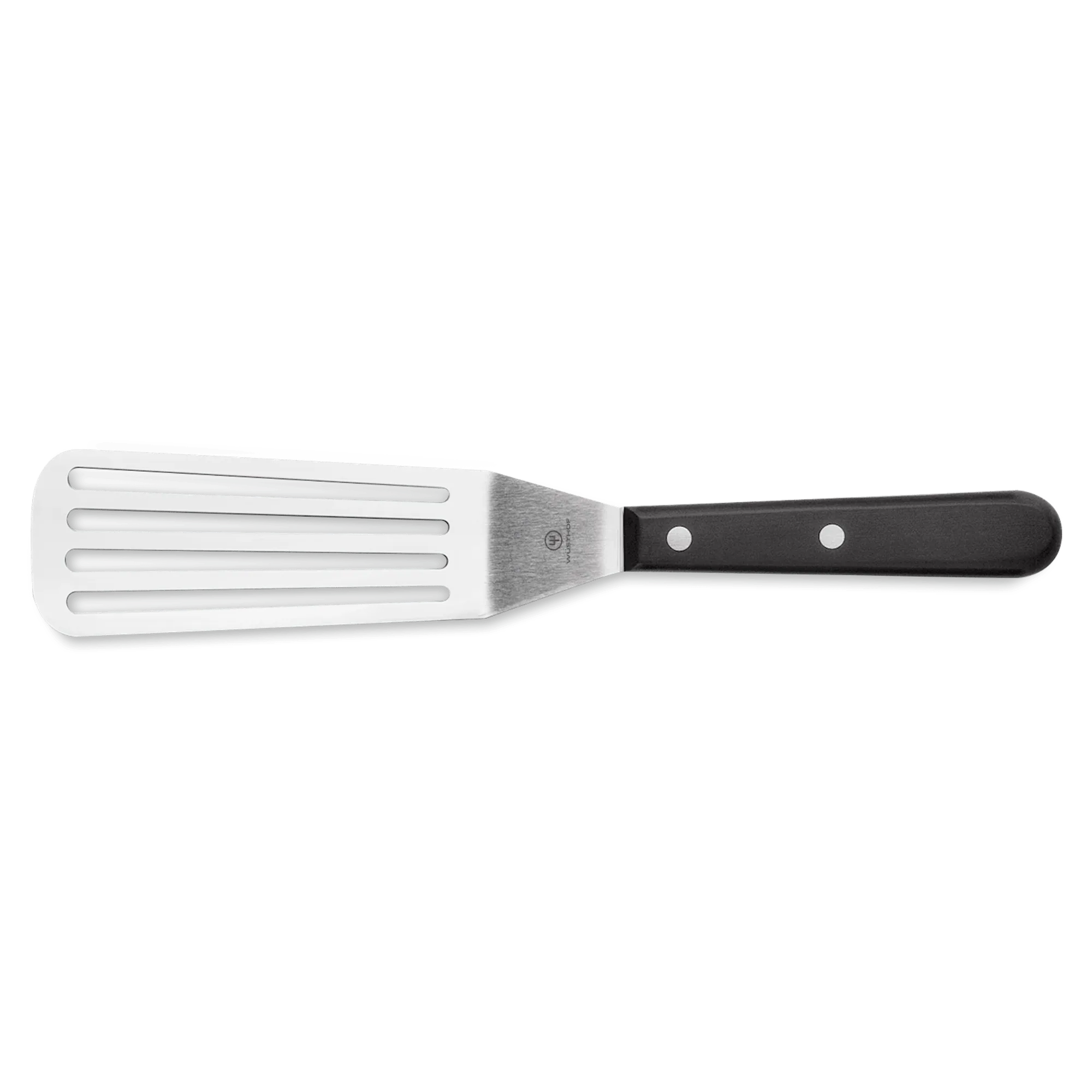
4 1/2" Slotted Spatula
-
4 1/2" Offset Spatula: The 4 1/2" Offset Spatula has an angled handle that leaves more room for your hand, making it easier to lift foods from pans, baking trays, or oven dishes. The offset design reduces knuckle contact with hot surfaces, improving comfort and safety when lifting or transferring food.
-
Gourmet Spatula: The Gourmet Spatula combines a long flexible blade for smoothing batters, icing, and cream, and is also suitable for lifting cakes and biscuits. It offers similar versatility to the palette knife but with a slightly different handle design, giving you another option for prep and presentation.
Which spatula fits your kitchen?
Best for
- Bakers who need to spread and smooth icing or batters (palette knife or gourmet spatula)
- Home cooks who frequently flip and drain foods like pancakes, eggs, or fish (slotted spatula)
- Anyone who lifts food from hot pans or baking trays and wants extra hand clearance (offset spatula)
Not for
- Non-stick cookware users who need a silicone or nylon spatula to avoid scratching
- Someone who wants one spatula for all tasks (consider buying two: a slotted for flipping and a palette for spreading)