Quick answer
A toilet lock that keeps coming loose is almost always a surface problem, not a product defect. Clean the mounting spot with isopropyl alcohol, let it dry completely, and press the lock firmly for 30 seconds. If it still lifts, the adhesive has failed and needs to be replaced with fresh mounting tape. If the toilet surface is textured, oily, or constantly damp, no adhesive lock will hold reliably and you should switch to a hardware-mounted option.
Why the adhesive fails in the first place
Adhesive mounting depends on a clean, dry, smooth surface. Bathrooms work against all three. Humidity softens the bond over time, cleaning sprays leave a slippery film, and many toilet tanks and lids have a subtle texture that gives the tape very little to grab. Even a brand-new lock can pop loose within days if it is pressed onto a residue-coated surface.
Temperature swings matter too. A toilet near a shower or a sunny window expands and contracts slightly, and the tape flexes with it. Each cycle weakens the grip a little more until the lock lifts on one corner and then releases entirely.
How to reattach a toilet lock so it actually holds
Start by removing the lock and peeling off every trace of old tape. Residue left behind will sabotage the new bond. Wipe the mounting area and the back of the lock with isopropyl alcohol on a lint-free cloth, then wait a full two minutes for the surface to dry.
Press the lock into place and hold steady pressure for at least 30 seconds, then leave it undisturbed for 24 hours before your child tests it. Avoid cleaning that spot with sprays for the first few days, and never slide the lock sideways once it is seated. If you are reusing the original tape, expect a shorter lifespan; fresh tape is the more reliable fix.
- Clean both surfaces with isopropyl alcohol, not soapy water.
- Let the surface dry completely before applying the lock.
- Hold firm pressure for 30 seconds, then wait 24 hours before use.
- Skip spray cleaners near the mounting area for the first few days.
When to stop trying and choose a different approach
If the lock has failed three or more times on the same surface, stop reapplying tape. Repeated failures usually mean the surface is unsuitable: textured, painted with a glossy finish, or located where moisture sits constantly. In that case, a hardware-mounted toilet lock or a different childproofing method is the honest answer.
If your toilet has an unusual shape or the lid does not sit flush, an adhesive lock may never seat properly. Check the lock's contact points before buying a replacement. A lock that does not sit flat cannot hold, no matter how good the tape is.
Diagnose your loose toilet lock
- Symptom: lock lifts within hours of applying: The surface was likely not clean or dry. Cleaning sprays, soap film, and lingering moisture prevent the tape from bonding. Remove the lock, clean with isopropyl alcohol, dry fully, and reapply with firm pressure.
- Symptom: lock held for weeks, then slowly peeled: This is normal adhesive fatigue in a humid bathroom. The tape has aged and lost its grip. Replace the mounting tape rather than pressing the old tape back down.
- Symptom: lock will not sit flat on the toilet: Curved or unusual toilet shapes can leave gaps under the lock, so only part of the adhesive makes contact. If the lock does not sit flush, an adhesive design is the wrong fit. Choose a hardware-mounted option instead.
Product facts that matter for this fix
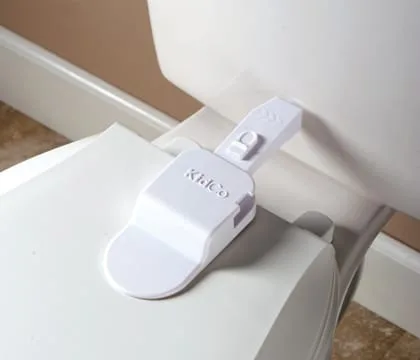
- Adhesive Toilet Lock: The KidCo Adhesive Toilet Lock attaches with adhesive and includes a disengage option so you can turn locking off when it is not needed. The disengage feature means you can leave the lock installed and simply disable it, which reduces how often you pry at the adhesive and helps the bond last longer.