Quick Answer
Your baby likely prefers the heart rattle because it offers a multi-sensory experience—grasping, shaking, and chewing—while the teether is designed specifically for soothing sore gums. Both are valuable, and the preference often signals your baby's current developmental focus.
The Rattle Offers More Than Sound
The Heart Wooden Toy Rattle is not just for shaking. Its solid cherry wood construction and soft curves make it easy for little hands to grasp, and the gentle rattling sound stimulates your baby's senses. When your baby chews on the rattle, it also provides a firm surface for gumming, which can feel satisfying during teething.
In contrast, the ASL I Love You Wood Teether is specifically shaped for teething, with a slim design that reaches back molars. But if your baby is more interested in exploring cause and effect—like shaking to make noise—the rattle naturally becomes the favorite.
Developmental Stage Matters
Around 4-6 months, babies are often more captivated by toys that respond to their actions. The rattle's sound reward encourages repeated shaking, which builds motor skills. Teething discomfort may not be the primary focus if your baby is in a playful, exploratory mood.
If your baby is actively drooling, chewing on fingers, or showing signs of gum pain, they may be more receptive to a dedicated teether. But if they are simply enjoying the sensory feedback, the rattle will win every time.
Diagnosing the Preference
- Symptom: Your baby consistently reaches for the heart rattle, even during teething discomfort, and may chew on it but also enjoys shaking it.
- Likely Cause: Your baby is in a sensory-exploration phase, finding the rattle's sound and movement more engaging than the teether's stationary texture. Observe whether your baby is more interested in noise-making or gum relief.
- Corrective Action: Offer the rattle during playtime and the teether when you notice teething signs like drooling, flushed cheeks, or finger chewing. Keep both clean and within reach. Rotate toys based on your baby's cues to support both development and comfort.
- When to Stop or Choose Another Option: If your baby shows no interest in the teether even when clearly in pain, try a chilled (not frozen) teether or consult your pediatrician. If the rattle becomes a choking hazard due to wear, replace it immediately. Always inspect wooden toys for splinters or cracks, and prioritize safety over preference.
Product Facts
-
Heart Wooden Toy Rattle: Handcrafted with solid cherry wood, this keepsake wooden heart rattle will delight little ones learning to grasp, shake, and chew. The rattle supports multiple skills at once, making it a versatile choice for play and mild teething relief.
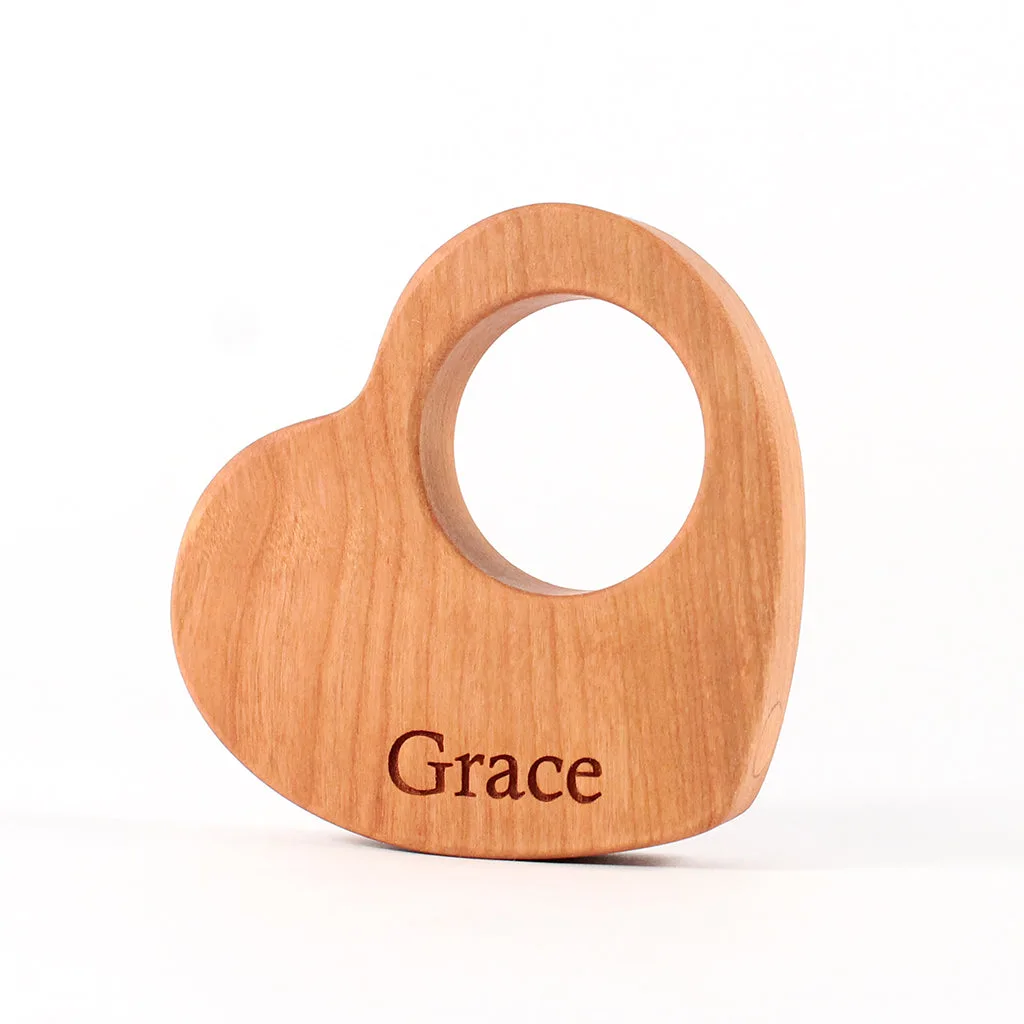
Heart Wooden Toy Rattle
-
ASL I Love You Wood Teether: Smiling Tree wood teethers offer safe and all natural teething, with sustainably harvested hardwood in its natural form, without any oils or other finishes. The teether is a pure, uncoated option for focused gum relief, ideal when your baby is clearly in teething mode.
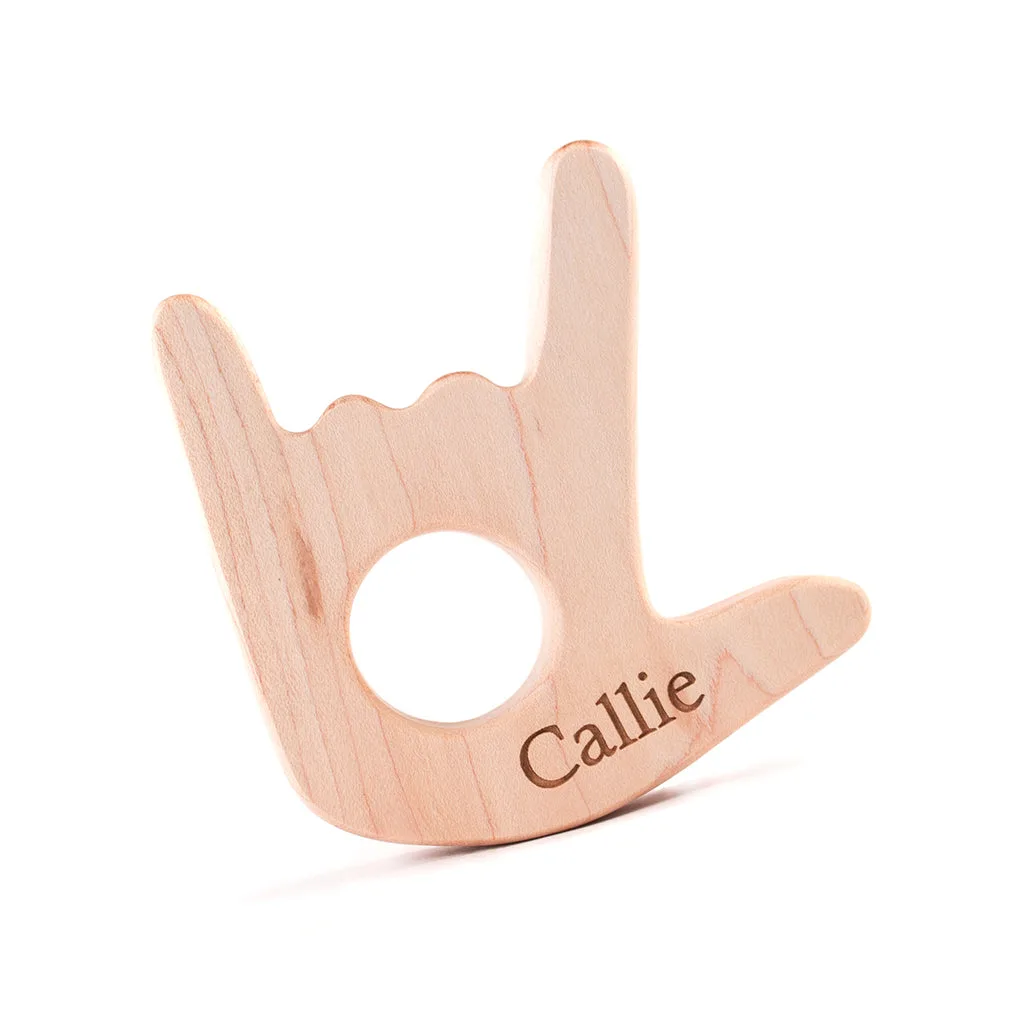
ASL I Love You Wood Teether