Quick answer
If your bralette straps dig in, stop loosening them first. Tightening the band and checking cup coverage solves most cases, because a band that rides up forces the straps to carry weight they were never meant to hold. Adjust the straps only after the band sits level and snug.
Check the band before you touch the straps
A bralette band should sit level all the way around your ribcage and stay put when you raise your arms. If it rides up in back, the band is doing too little work and the straps are doing too much, which is what creates that digging pressure on your shoulders. Fasten the band on a tighter hook or move down a size, then re-check the straps.
This matters more in wire-free styles because there is no underwire to anchor the cups. A bralette relies on the band and the stretch of the fabric to hold shape, so a loose band immediately transfers load to the straps.
Confirm the cup is not too small
When the cup runs short, the top edge cuts into breast tissue and pushes the whole garment upward, which pulls the straps tight against your shoulders. Look for spillover at the top or sides, or lace that flattens rather than lies smooth against the skin. If you see either, the cup size is the problem, not the strap length.
Stretch lace can mask a too-small cup for the first hour, then relax and reveal the fit issue. Judge the fit within the first ten minutes of wearing, before the fabric has time to stretch out.
Adjust straps last, and adjust them evenly
Once the band is snug and the cup covers fully, set both straps to the same length and slide the adjusters to sit flat against your shoulder, not twisted or folded. A strap that is even on both sides distributes pressure instead of concentrating it on one shoulder.
If a strap still digs after this, the strap itself may be too narrow for your frame. Wider, adjustable straps spread the same tension over more surface area, which is the practical reason full-bust designs use them.
Diagnose your strap problem in three checks
- Band rides up in back: Fasten on a tighter hook or size down. The band should sit level and stay level when you lift your arms. If the band still rides up at the tightest setting, the bralette is the wrong size for you.
- Spillover at the top or sides of the cup: Size up in the cup. A short cup pushes the garment up and drags the straps tight against your shoulders. Stop adjusting straps and change size instead.
- Band fits but straps still cut in: Even out both straps and check that the adjusters lie flat. If pressure remains, look for a style with wide adjustable straps. Choose a wider-strap design rather than continuing to loosen a narrow one.
Bralettes built to reduce strap pressure
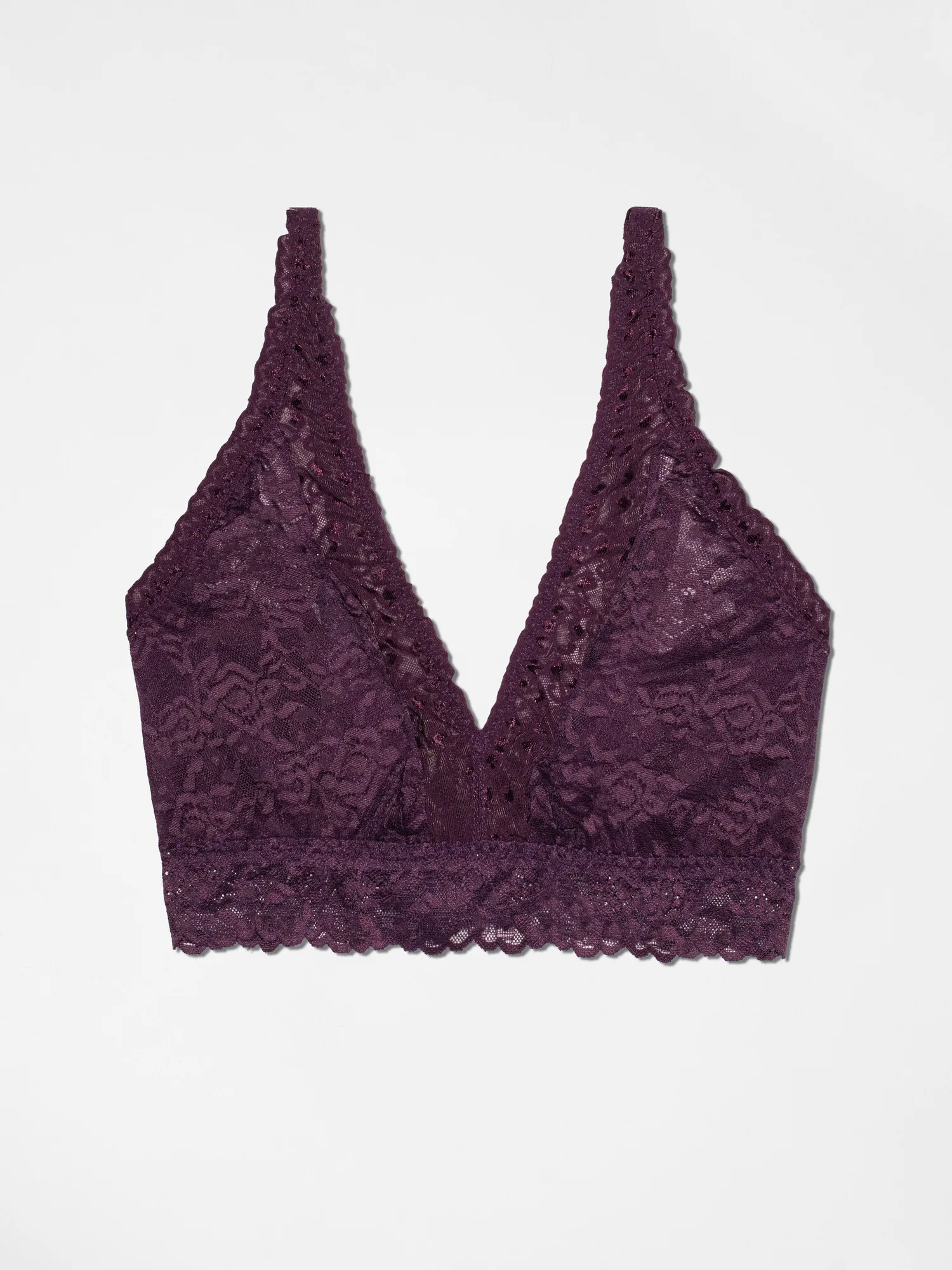
- Curvy Lace Bralette - Italian Plum: Featuring wide, adjustable straps and power mesh lining for extra bust support. Wider straps spread tension across the shoulder, and the mesh lining helps the band carry more of the weight so the straps do not have to.
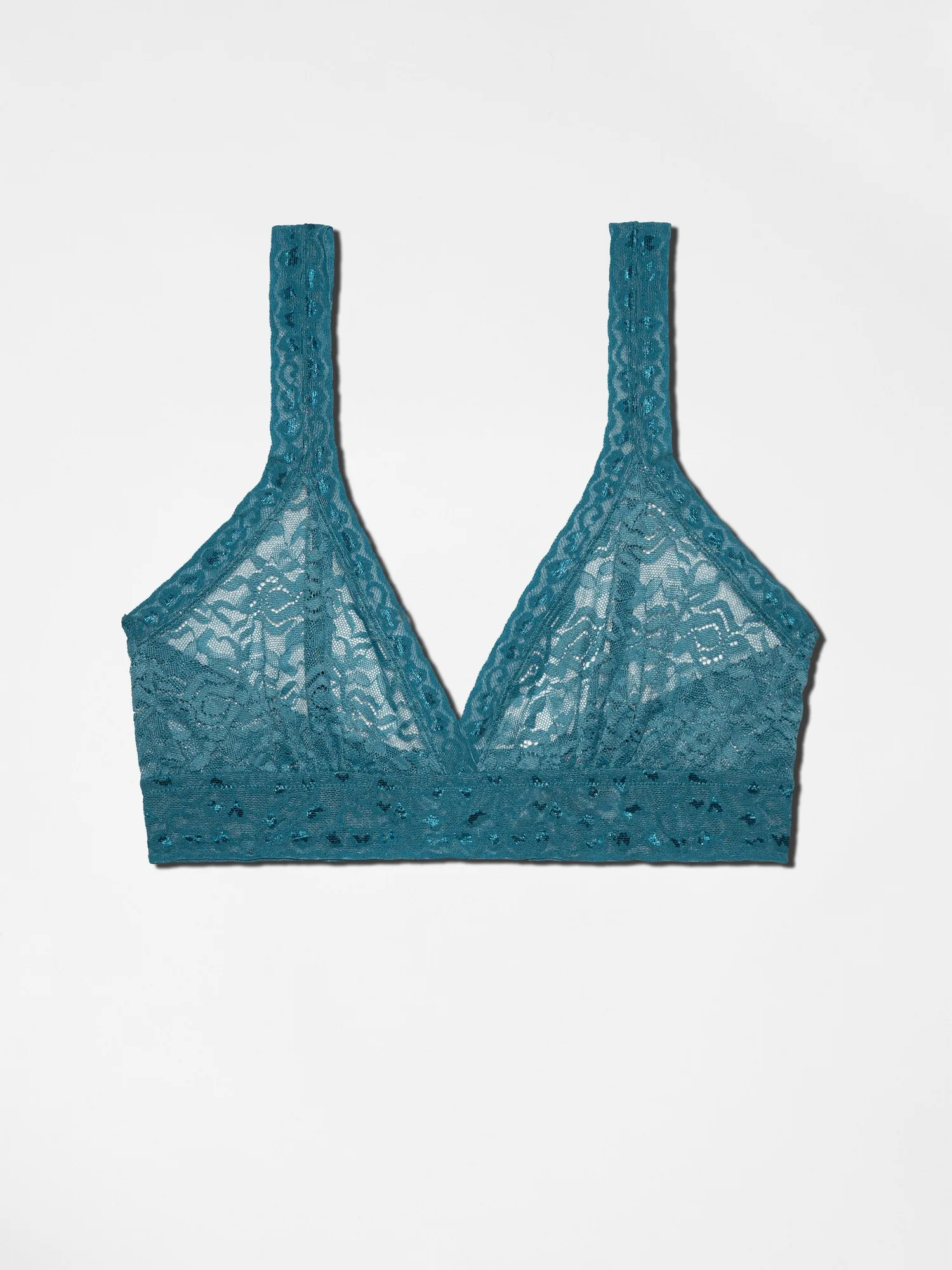
- Lace Bralette - Teal Tide: Stretches up to 150% for barely-there comfort and support, with adjustable straps and a back clip on the elastic band. The high stretch lets the band conform to your ribcage, and the back clip gives you a second adjustment point beyond the straps themselves.