Quick answer
Most dry contact lens discomfort comes from one of four things: a weak tear film, a lens that does not fit or move correctly, a material that does not hold moisture on your eye, or an environment that pulls moisture away. Start by matching your symptom to the cause, then change one thing at a time. If the dryness continues after fit and material changes, or if your eyes are red and painful, stop wearing the lenses and see an eye care professional.
Dry contact lenses are not a single problem. Two people can describe the same gritty, tired feeling at 4 p.m. and need completely different fixes. One may need a lens with higher oxygen flow and a different replacement schedule; another may simply need to stop using a solution that irritates their eyes.
That is why guessing wastes money. The useful approach is to separate the symptom from the likely cause, take one corrective action, and know the point where you should stop and get professional help. The steps below follow that order so you can narrow down what is actually happening on your eye.
Start with the symptom pattern
When your contacts feel dry, the timing tells you a lot. Dryness that builds through the day and peaks in the evening usually points to tear film or lens material. Dryness that appears within minutes of insertion often points to the lens itself, the solution, or a fit problem. Dryness that shows up only in air conditioning, on flights, or at a screen for hours points to environment and blink rate.
Write down when it starts, how long it lasts, and whether removing the lens brings instant relief. That short log makes the next steps much faster, and it gives your eye doctor something concrete to work with if you need an exam.
- Evening dryness: look at tear film, lens material, and replacement schedule first.
- Immediate dryness: check solution, lens orientation, and fit before blaming your eyes.
- Situational dryness: address environment, blinking, and screen breaks.
Cause 1: your tear film is not holding moisture
A contact lens sits on a layer of tears, and that layer has to stay stable for the lens to feel comfortable. If your tear film breaks up quickly, the lens surface dries in patches and you feel it as burning or grittiness. This is common in dry indoor air, with certain medications, and as we get older.
The corrective action here is usually supportive rather than a new prescription. Preservative-free rewetting drops, more frequent blinking breaks, and a humidifier in your workspace often make a measurable difference. If those do not help, the next step is a tear film assessment rather than another lens purchase.
- Use preservative-free rewetting drops, not the multi-purpose solution in your case.
- Blink fully and often during long screen sessions.
- Keep a humidifier near your desk or bedside in dry months.
Cause 2: the lens fit or material is wrong for you
A lens that is too tight does not move enough, so tears cannot flow underneath it and the surface dries out. A lens that is too loose can also feel dry because it never settles. Material matters too: some lenses are designed to hold water well, while others rely more on oxygen flow and can feel drier by the end of the day.
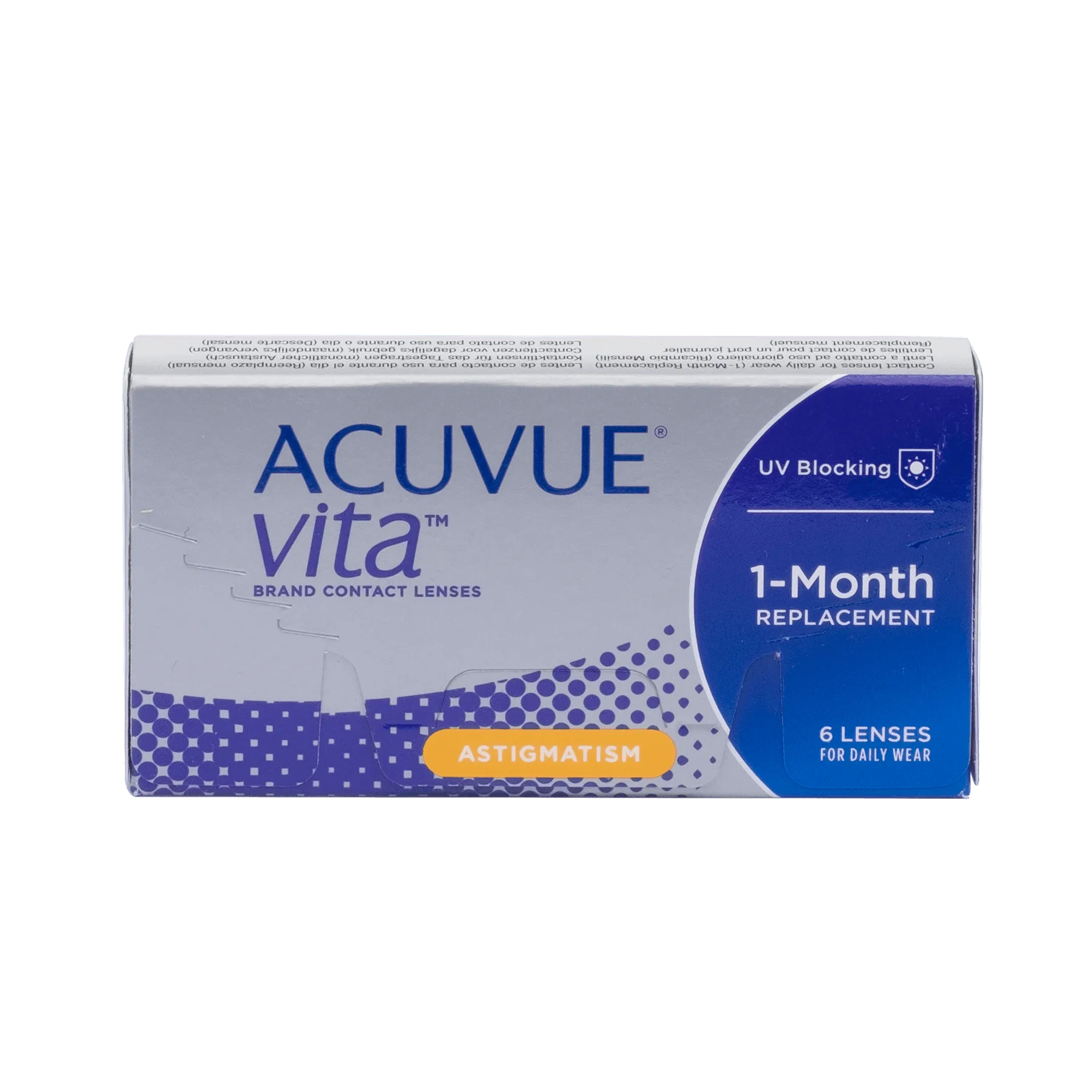
This is where a change in lens type can genuinely solve the problem. For example, https://lensabler.com/products/vcs-acuvue-vita-astigmatism-6-pack-7cd1ba7b886002699b942939-1701966Acuvue Vita Astigmatism - 6 Pack is a monthly disposable soft lens made with 59% methyl ether cellulose and supplied six lenses per box, with an annual supply of four boxes. If you wear toric lenses and your dryness started after switching brands, a monthly lens with a different material is a reasonable conversation to have with your fitter.
- Ask your eye doctor to check lens movement and centering, not just your prescription.
- If dryness began after a brand change, note the exact product and date.
- Never extend a monthly lens past its replacement schedule to save money.
Cause 3: your care routine is working against you
Solutions, cases, and habits cause more dryness than most people expect. Some wearers react to preservatives in multi-purpose solutions. Others reuse solution, top off an old case, or sleep in lenses not approved for overnight wear. Each of these leaves deposits or irritants on the lens that dry your eye out.
Change one variable at a time. Switch to a preservative-free or peroxide-based system, replace your case monthly, and never use tap water. If your lenses are weekly or monthly, rub and rinse them even when the label says no-rub, unless your eye doctor specifically told you otherwise.
- Replace your lens case at least every month.
- Never top off old solution or store lenses in water.
- If you wear monthly lenses, keep a written replacement date.
Cause 4: environment and screen habits
Heating, air conditioning, wind, and long stretches of focused screen work all reduce how often you blink completely. When blinking drops, the lens surface dries and the lens can even stick slightly to the eyelid. This is the easiest cause to test because the fix is behavioral and free.
Try the 20-20-20 rule: every 20 minutes, look at something 20 feet away for 20 seconds. Add a conscious full blink a few times per session. If you wear glasses some days, swapping to them during heavy screen blocks gives your eyes a genuine break without changing your prescription.
- Position screens slightly below eye level to reduce tear evaporation.
- Use a humidifier and avoid sitting directly under an air vent.
- Alternate glasses on high-screen days if your eyes need recovery time.
When to stop troubleshooting and get help
Stop self-adjusting and book an exam if you have pain, light sensitivity, discharge, blurred vision that clears when you blink, or a red eye that does not settle. Those signs point to something beyond ordinary dryness, and continuing to wear lenses can make it worse. Remove the lenses and keep them out until you are seen.
Also stop if you have tried a material change, a solution change, and environment fixes for two to three weeks with no improvement. At that point the answer is a professional evaluation of your tear film and fit, not another online purchase.
- Remove lenses immediately if you have pain or sudden vision changes.
- Do not restart wear until an eye care professional clears you.
- Bring your symptom log and current lens details to the appointment.
Dry lens diagnosis: match the symptom to the fix
- Dryness builds through the day: Likely tear film or lens material. Try preservative-free rewetting drops and a humidifier first, then ask about a lens material change at your next exam. If evening dryness persists after two to three weeks, request a tear film and fit evaluation.
- Dryness starts right after insertion: Likely solution, lens orientation, or fit. Check that the lens is not inside out, switch to a preservative-free or peroxide system, and have the fit verified. Instant dryness that does not improve with a solution change needs a fit check, not a new brand.
- Dryness only in certain places: Likely environment and blink rate. Use the 20-20-20 rule, add a humidifier, and avoid direct air vents. Behavioral fixes are free, so test them before spending on new lenses.
- Pain, redness, or vision changes: Stop wearing lenses, keep them out, and see an eye care professional promptly. This is the stop point. Do not troubleshoot further on your own.
Lens and eyewear details that matter for dryness
- Acuvue Vita Astigmatism - 6 Pack: Monthly disposable soft contact lenses, six lenses per box in buffered saline containing methyl ether cellulose, made with 59% methyl ether cellulose by Johnson & Johnson, with an annual supply of four boxes. A monthly toric lens with a stated material gives your fitter a concrete alternative to compare if your current lens dries out by evening. Six lenses per box and four boxes per year is the schedule to plan around, so you are not stretching lenses past replacement.
- https://lensabler.com/products/anti-reflective-coating-df16a69c5b961e469eb29591-1703682Anti-Reflective Coating: Lensabl offers anti-reflective coatings to reduce glare and improve visual clarity, including Standard, Premium, Premium with Anti-Fog, Crizal Prevencia, and Blue-Light Blocking options. If screen glare makes you squint and blink less, a coating on your backup glasses can reduce the strain that contributes to dry-feeling eyes during long work sessions.
Dry contact lenses are usually solvable once you know which cause you are dealing with. Work through tear film, fit, material, care routine, and environment in that order, change one thing at a time, and give each change a fair trial. If the dryness does not improve, or if you have pain or vision changes, stop and get your eyes examined.