Quick Answer
Your baby dropping the rattle is usually a sign of cause-and-effect discovery, not rejection. It's a normal developmental stage where they learn that letting go makes the toy fall and sound stop.
Why Dropping Is a Milestone, Not a Problem
Around 6 to 12 months, babies begin to understand that their actions have consequences. Dropping a rattle and watching it fall—or hearing the sound stop—is one of the first cause-and-effect experiments they run. It's the same reason they drop food from the high chair: curiosity, not defiance.
This behavior is also tied to developing grasp-and-release motor skills. Your baby is learning to voluntarily open their hand, which is a precursor to pointing, stacking blocks, and eventually using utensils.
When Dropping Might Signal Discomfort
If your baby drops the rattle and fusses immediately without reaching for it again, they might be teething. A hard plastic or wooden rattle can feel uncomfortable on sore gums. In that case, the drop is a sign they want something gentler to chew on.
A rattle that doubles as a teether can bridge this moment—offering both sound play and gum relief. If your baby consistently drops the toy and refuses to pick it up, try offering a dedicated teether instead.
How to Respond When Baby Drops the Rattle
- Observe the reaction: Watch your baby after they drop the rattle. Do they look at it, smile, or wait for you to pick it up? That's cause-and-effect play. Do they cry or turn away? That may signal discomfort or overstimulation.
- Respond with curiosity, not correction: If it's cause-and-effect play, pick the rattle up and hand it back with a cheerful "uh-oh!" or "you dropped it!" This reinforces the game and builds language skills. Avoid scolding or removing the toy—this is healthy exploration. If your baby drops the rattle more than 5 times in a row and seems frustrated, move on to a different activity.
- Check for teething signs: If your baby is drooling more than usual, chewing on fingers, or has red gums, teething may be the real issue. Offer a teether toy or a rattle-teether combo. If they refuse the teether too, try a cold washcloth or consult your pediatrician. If your baby consistently drops every toy you offer and shows no interest in cause-and-effect games, consider a hearing or vision screening with your pediatrician.
A Rattle That Grows With Your Baby
-
rattle-teether - heart: A unique combination of a teether and a rattle, designed for delicate gums and curious little hands. When your baby drops the rattle due to teething discomfort, this toy gives them a safe surface to chew on while still offering the sound that encourages cause-and-effect play.
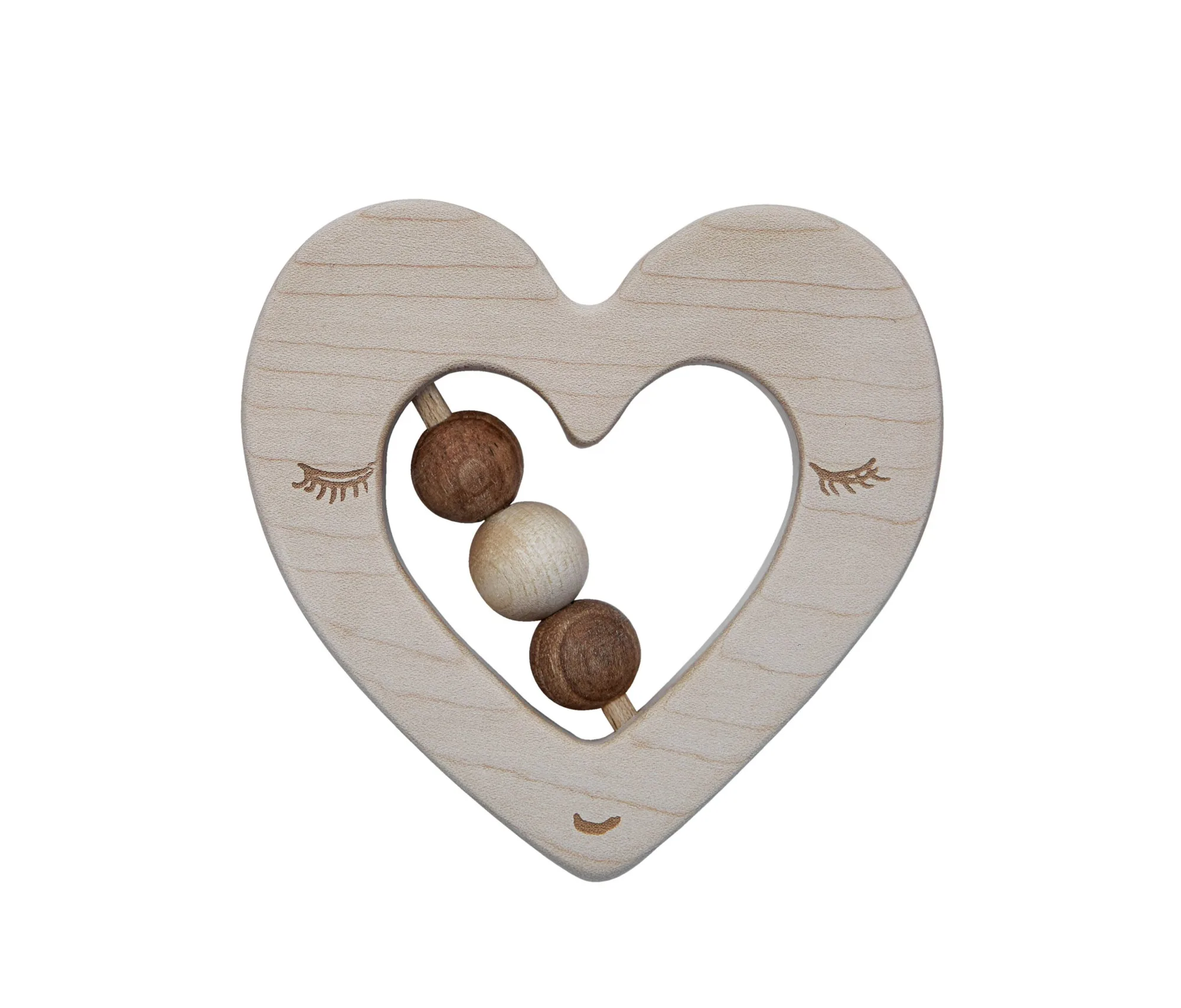
rattle-teether - heart