Quick answer
Your cat scratches furniture to mark territory, stretch muscles, and maintain claw health. The most effective solution is to provide appealing alternatives like a sturdy scratching post or cat stairs with built-in scratching surfaces, then make the furniture less attractive.
Why scratching is normal (and not naughty)
Scratching is an innate feline behavior, not a sign of spite. Cats have scent glands in their paws, so scratching leaves both a visual mark and a chemical signal that says "this spot is mine." It also helps them shed the outer sheath of their claws and stretch their back and shoulder muscles. Punishing your cat for scratching can damage your bond and increase stress, which often makes the behavior worse.
What makes furniture so tempting
Sofas, armchairs, and carpeted cat steps share two qualities cats love: a stable, vertical or horizontal surface that gives good resistance, and a texture that allows claws to sink in and strip off the old claw sheath. Upholstery fabrics like tweed, velvet, and linen are especially satisfying because they shred under pressure. If your cat already uses a piece of furniture, the scent left from previous scratching acts as a permanent invitation.
Trade-off: not all scratching posts work equally
A flimsy post that wobbles or is too short will be ignored in favor of the sturdy couch. Cats prefer posts that are at least as tall as their full stretch length and made of sisal rope or natural carpet. Some cats also prefer horizontal scratching surfaces. If you have a senior or small cat, a low cat scratching post combined with a carpeted cat stair step can serve double duty—giving them a scratching outlet and helping them reach the bed or sofa without jumping.
How to diagnose and fix furniture scratching
- Symptom: Your cat scratches the arm or corner of a sofa, chair, or carpeted stairs. You find shredded fabric or loose threads.
- Likely cause: Your cat is marking territory, maintaining claw health, and stretching. The furniture's texture and stability make it more appealing than any current alternative.
- Corrective action: Place a sturdy scratching post or cat stairs with scratching posts next to the favored furniture. Rub catnip on the post to attract your cat. Cover the furniture temporarily with a smooth material like double-sided tape or a plastic carpet runner (nub side up) to make it less satisfying. Praise and treat your cat when they use the post instead. If your cat ignores the post after one week, try a different texture (sisal vs. carpet) or orientation (horizontal vs. vertical).
- When to stop or choose another option: If your cat continues scratching the same spot despite having an appealing alternative, consider a soft nail cap application or consult a veterinary behaviorist. Never declaw—it's painful and can cause long-term behavioral issues. For multi-cat households, provide at least one scratching surface per cat plus one extra.
Products that help redirect scratching
-
Cat Scratching Post 25 4-Step Carpeted Pet Stairs High Beds Sofas: This cat steps is made for everyday lounging without cluttering your space. Multilevel design with 4 steps and 8 posts promotes your cat's natural desire to scratch, climb, and play while saving your furniture from destruction. Instead of a single scratching post, this gives your cat multiple vertical posts to scratch plus carpeted steps—covering both vertical and horizontal scratching preferences in one compact unit.
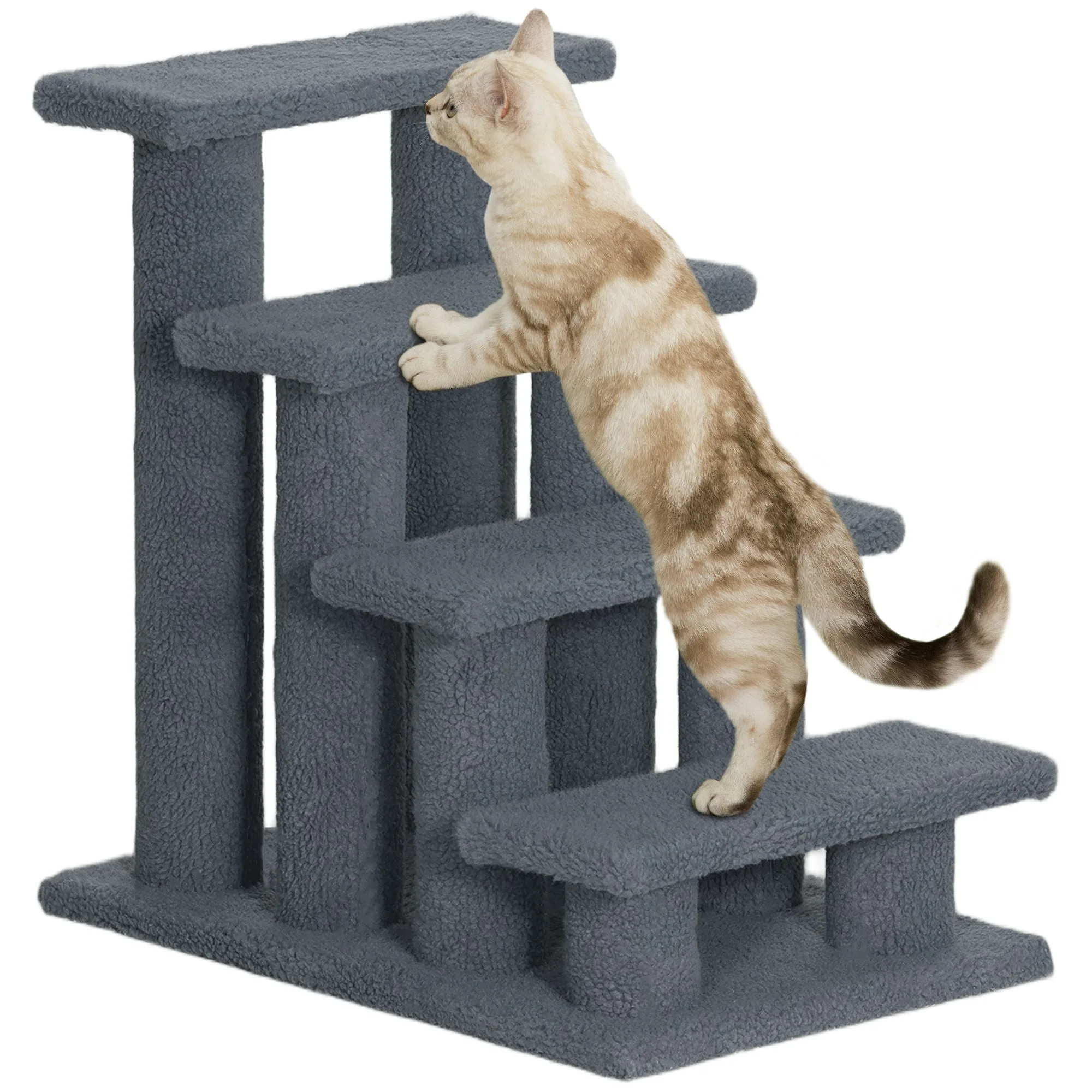
Cat Scratching Post 25 4-Step Carpeted Pet Stairs High Beds Sofas