Quick answer
Most harness chewing is either stress, a fit or comfort problem, or plain under-stimulation. Fix the cause before you replace the harness: check the fit and padding, add a chew outlet and more exercise, and separate the harness from idle chewing time. If your dog has damaged straps or shows real distress, stop using that harness and talk to your vet or a trainer.
Symptom: What harness chewing actually looks like
Chewing shows up in different forms, and the form tells you a lot. Some dogs gnaw the chest strap while it is on, twisting their head down mid-walk. Others wait until the harness is off and then chew the straps on the floor. A third group nibbles at the buckles or webbing only when left alone. Watch which part gets chewed and when. Strap chewing during wear points to fit or comfort. Chewing an off-body harness points to boredom or a chew habit. Chewing only when alone points toward anxiety.
Likely cause 1: the harness does not fit or feel right
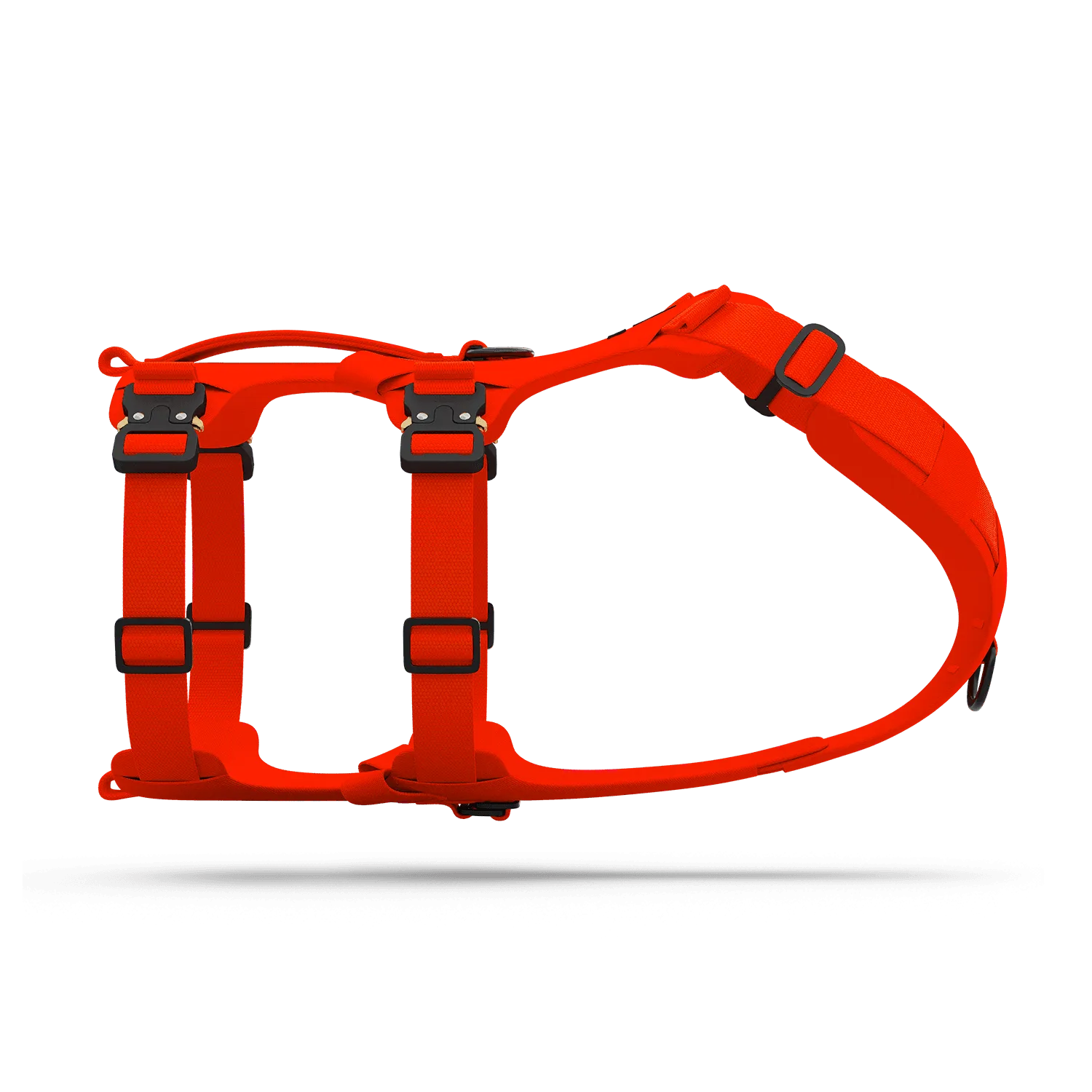
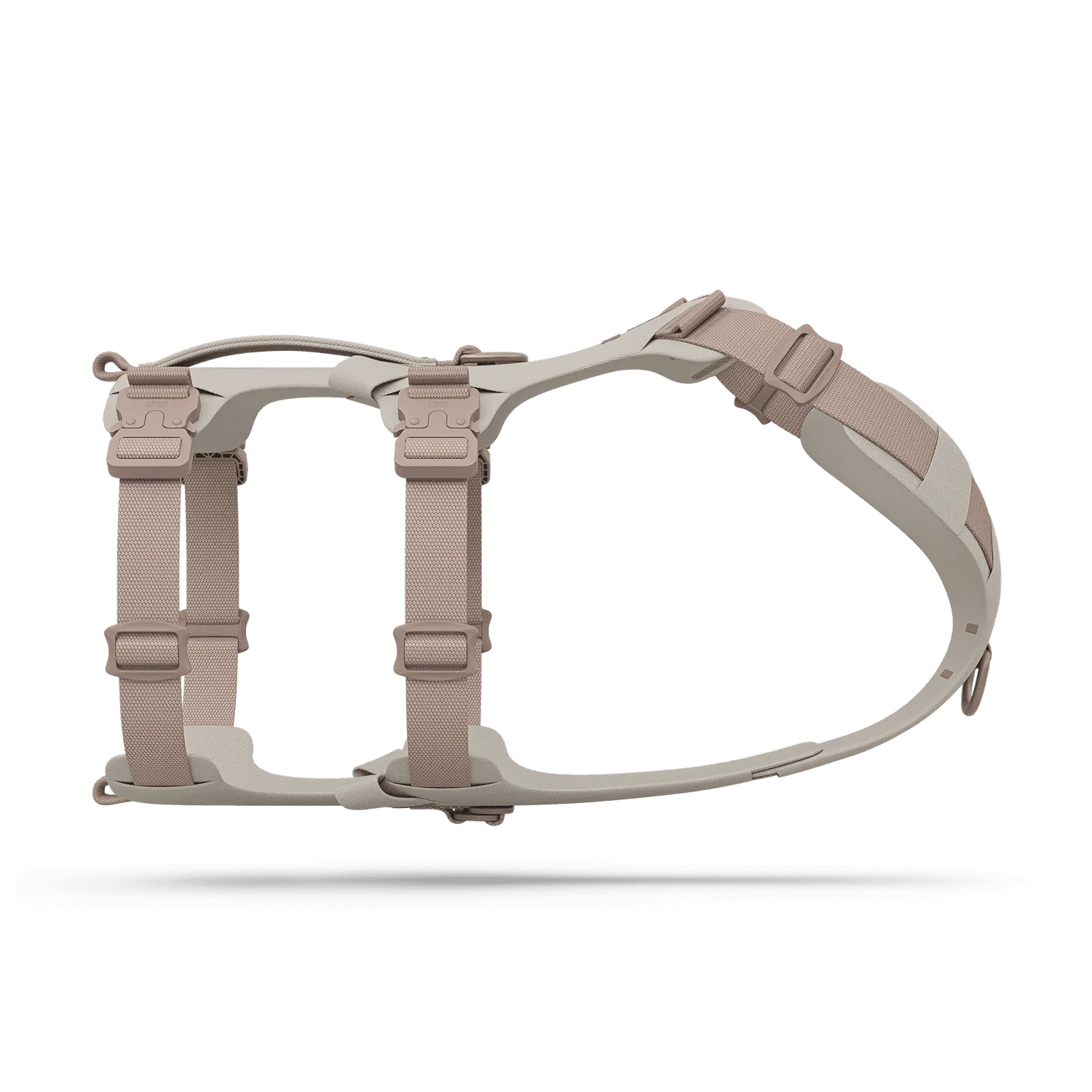
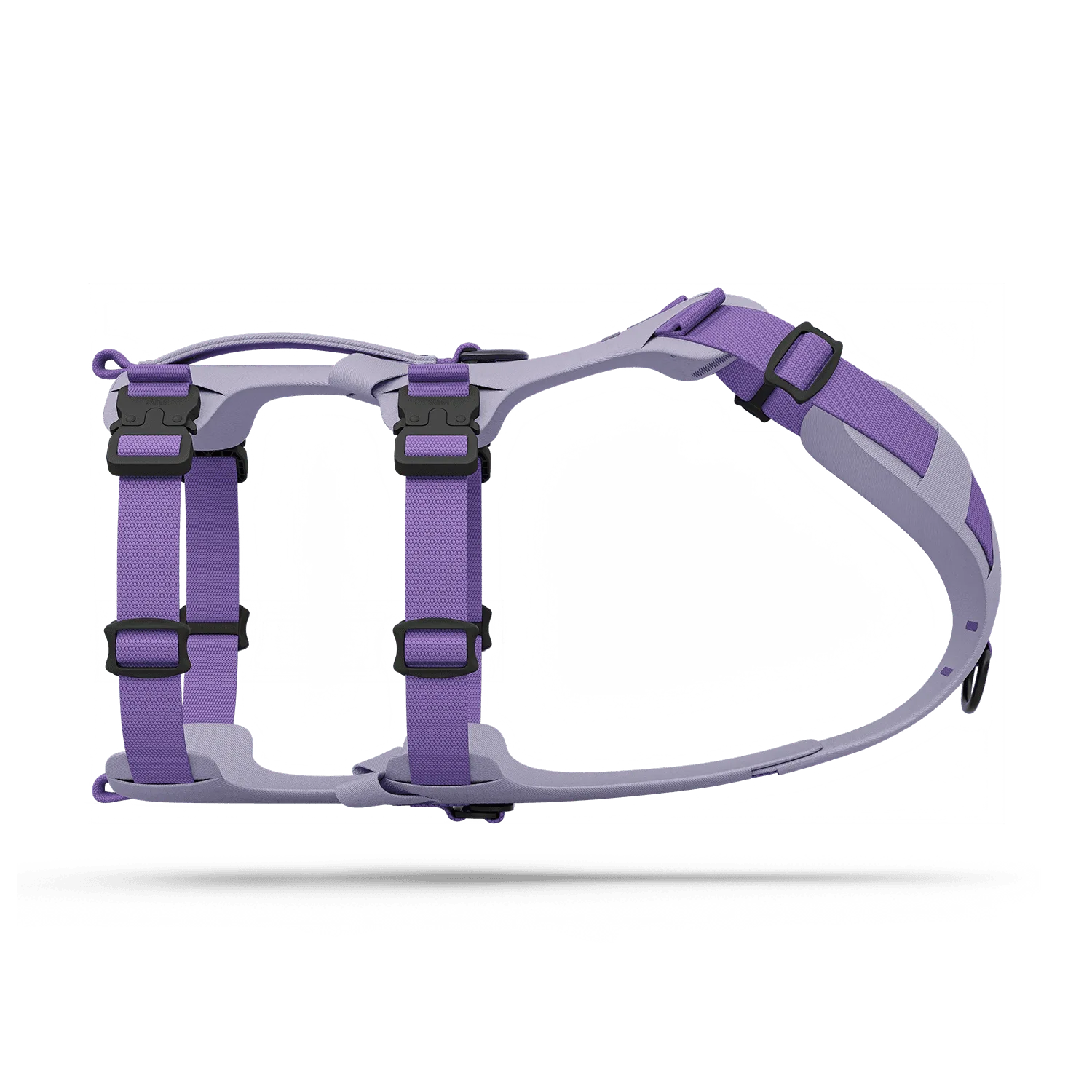
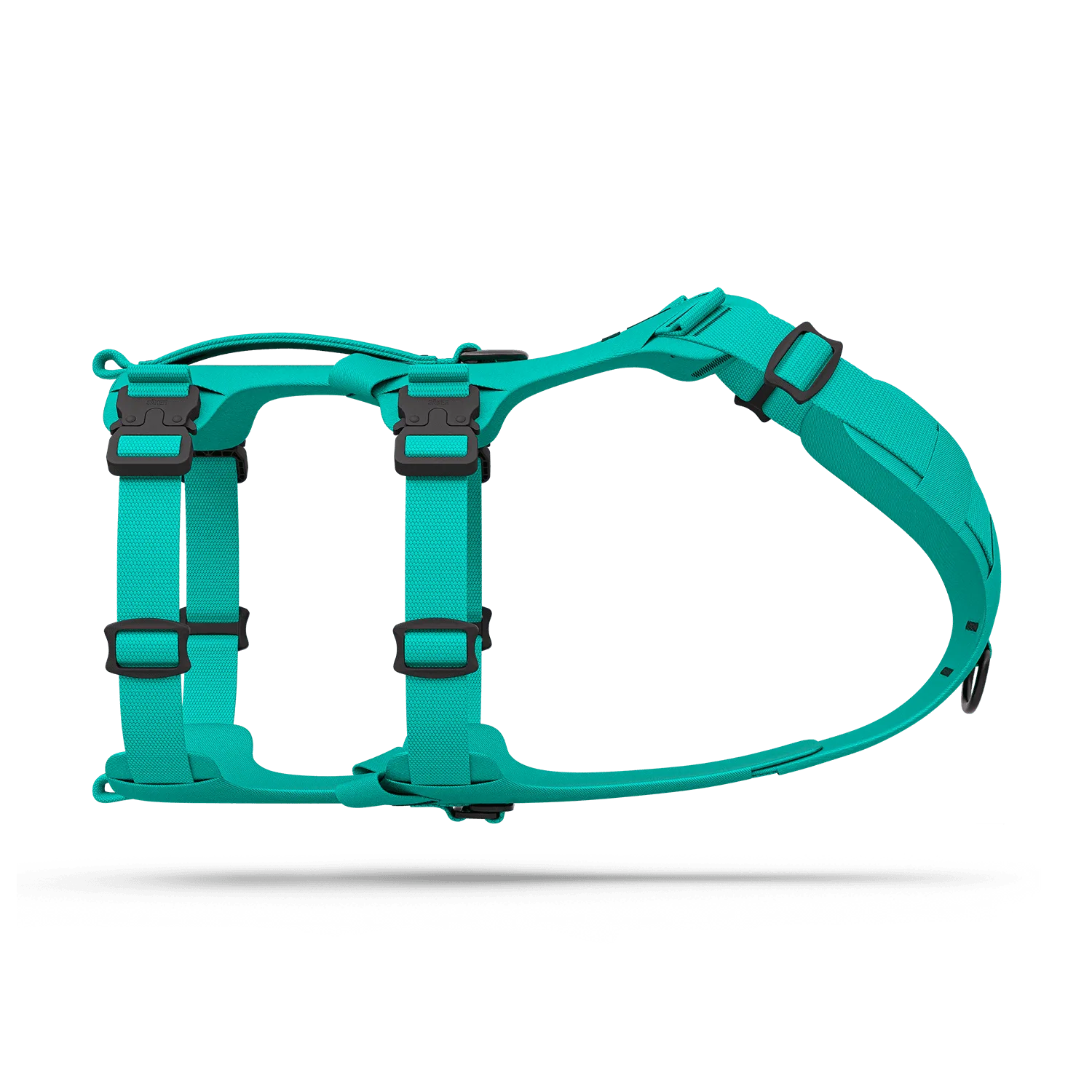
A harness that rubs, pinches, or shifts can trigger chewing as a self-soothing or removal attempt. Check for chafing behind the front legs, tightness over the shoulders, and straps that slide when your dog moves. If the chest strap sits too low or the girth is too tight, your dog may mouth at it. A modular, low-profile harness like the Muse harness is designed to sit close without bulk, which reduces the chance of a strap catching your dog's attention. Adjust it so you can fit two fingers under each strap, then re-check after a few minutes of walking.
Likely cause 2: boredom and not enough chew outlet
Dogs that chew harness straps often have plenty of energy and not enough to do. If the harness is the most interesting textured thing within reach, it becomes a chew toy. Give your dog legal chews and puzzle feeders, and add sniff-heavy walks or training games. Keep the harness stored out of reach when it is not in use so the habit does not get rehearsed. If your dog needs to carry something, the https://sakercaninefpz.com/products/or-2005-72ba202dd26a9cb5fab76105-515037https://sakercaninefpz.com/products/tt-2005-c97bcac74a1ef362a35eafb5-515039https://sakercaninefpz.com/products/pl-2005-c81ec1706d9cd789ea05e744-515040https://sakercaninefpz.com/products/es-2005-2d28f3ec5abe25db6cda2832-515043Pouches 001 add-on gives a job to do on walks and can redirect mouthy energy into a task rather than the straps.
Likely cause 3: anxiety or stress chewing
Destructive chewing that happens mainly when your dog is alone, crated, or in a new place is often anxiety-driven. In that case the harness is a target, not the cause. Pair the harness with calm, positive sessions: put it on, feed treats, take it off. Build duration slowly. If your dog pants, paces, drools, or tries to escape the harness, that is beyond a training fix. Talk to your vet or a certified trainer before you keep pushing.
Corrective actions that work in order
Work through this sequence rather than trying everything at once. First, refit the harness and check for rubbing. Second, remove the harness from free access and give your dog appropriate chews. Third, add daily exercise and mental work. Fourth, practice short harness training for chewers: treat, put on, walk a few steps, treat, take off. Fifth, if chewing continues, switch to a different harness style or material that your dog cannot easily mouth. If your dog is destroying harnesses repeatedly and shows stress signs, stop and get professional help.
When to stop and choose another option
Stop using a harness if straps are frayed, buckles are cracked, or stitching is pulled. A damaged harness can fail under load. If your dog has chewed through a harness more than once, the gear is not the main problem and a new harness alone will not fix it. Choose a different option when the current harness causes rubbing, limits movement, or triggers immediate chewing every time it goes on. For paw or nose irritation that shows up alongside chewing, the Dog Paw Balm moisturizes and conditions paw pads and is safe to lick, so it can help with dry, cracked skin on the nose, elbows, or pads.
Chewing diagnosis: match the pattern to the fix
- Chews only while wearing the harness: Check fit, padding, and strap position first. Refit so two fingers fit under each strap and there is no rubbing behind the front legs. If chewing stops after refitting, the harness was the problem, not your dog's behavior.
- Chews the harness when it is off or left alone: This is usually boredom or a chew habit. Store the harness out of reach, add chews and puzzle feeders, and increase daily exercise and sniff time. If chewing continues on other items too, the harness is not the real target.
- Chews and shows stress signs: Panting, pacing, drooling, or escape attempts around the harness point to anxiety. Stop forcing sessions and get vet or trainer support. Do not keep replacing harnesses if your dog is distressed; fix the stress first.
Gear facts that matter for chewers
- Muse™ harness: Light on weight, big on versatility. The Muse harness is modular, low-profile, and ready for whatever the day throws at you. A low-profile, modular fit sits closer to the body and gives fewer loose straps for a dog to mouth, and you can adjust the size and color to your dog.
- Pouches 001: Pouches 001 require a Muse or Bomber harness, come in pairs, and use the harness page size chart to determine the required pouch size. Giving your dog a carrying job can redirect mouthy energy on walks, but only if you already use a compatible harness and pick the correct pouch size.
- Dog Paw Balm: Handmade in Canada, this balm moisturizes and conditions paw pads and protects them from what they walk through. Made with just 5 ingredients and safe to lick. Also works on the nose, elbows, or any dry patch of skin. If chewing comes with dry or cracked paw pads, nose, or elbows, this balm addresses the skin side without adding ingredients your dog can't lick.