Quick answer
Most leash chewing is a training gap, not a gear failure. First, identify whether your dog is teething, bored, over-aroused, or trying to start a game. Then redirect to a toy, reward four paws on the ground, and only change the leash if the material itself is reinforcing the habit. For puppies and high-energy dogs, a training lead and a shock-absorbing leash often remove the trigger better than a standard flat leash.
Separate the symptom from the trigger
The leash is rarely the real problem. Watch the moment your dog's mouth closes on the lead: is it the first 30 seconds of the walk, right after a passing dog, or when you stop to talk? Puppies often chew to relieve teething discomfort, while adolescent and adult dogs usually chew to release arousal or restart a paused walk. If the chewing starts only when you stand still, the leash has become your dog's way of saying 'go.' If it starts when you tighten the leash, the pressure itself is the trigger.
- Chews at the start of every walk: likely excitement or a delayed start.
- Chews when you stop moving: likely frustration with the pause.
- Chews when the leash goes tight: likely pressure sensitivity or poor loose-leash skills.
- Chews the same spot on the leash every time: likely a texture or material habit.
Fix the habit with redirection, not punishment
Yanking the leash or shouting 'no' usually adds excitement and can make mouthing worse. Instead, carry a toy your dog can hold and chew, and offer it the instant you see the mouth open toward the leash. Reward the moment your dog takes the toy or drops its head. Keep sessions short and end on a calm note. For puppies, a frozen toy before the walk can take the edge off teething discomfort so the leash is less appealing.
- Say 'toy' in a cheerful tone and push the toy gently into your dog's mouth before the leash reaches it.
- Reward four paws on the ground and a loose leash every few steps.
- If your dog grabs the leash, stop moving and hold the handle still until the mouth opens, then resume.
- Practice in a low-distraction space first, then add distance and distractions.
Change the gear only when the gear is the problem
If your dog chews only one leash, the material may be reinforcing the behavior. A flat nylon leash can feel like a tug toy, especially when it's the only thing moving. A training lead gives you more distance to practice recall and tracking without the leash staying tight, which removes the pressure that triggers some dogs. A shock-absorbing leash reduces the sudden jolt that can make a dog grab the lead in the first place. Neither replaces training, but both can break the loop while you build better habits.
- Use a longer training lead for recall and tracking practice so the leash stays slack.
- Choose a shock-absorbing leash if your dog grabs the lead after sudden pulls.
- Avoid rope-style leashes if your dog treats them like tug toys.
- Keep a dedicated toy on every walk so the leash is never the only option.
When to stop and try a different approach
If your dog is drawing blood, damaging teeth, or showing aggression when you reach for the leash, stop leash training and talk to a veterinarian or certified behavior consultant. If your dog chews through a leash, replace it before the next walk; a chewed leash can fail under load. If you've practiced redirection for two weeks with no change, the trigger is probably environmental or medical, not the leash itself. In that case, a different tool or a professional assessment is the better next step.
- Stop if the behavior escalates to biting you or breaking skin.
- Stop if the leash shows deep chew damage; replace it immediately.
- Stop and get help if your dog is otherwise healthy but the habit is getting stronger.
- Stop using any tool that causes pain or fear; it usually makes mouthing worse.
Leash-chewing diagnosis
- Puppy under 6 months, chews everything: Teething is the likely cause. Offer a frozen toy before walks and redirect to a chew toy when the mouth heads for the leash. If the puppy also chews furniture and shoes, treat it as teething plus supervision, not a leash problem.
- Adult dog chews only when the leash goes tight: Pressure sensitivity or poor loose-leash skills. Practice in a low-distraction area with high-value rewards for a slack line. If the leash is tight more than it is loose, the walk is too hard for your dog's current skill level.
- Dog chews the leash right after a sudden pull: The jolt is the trigger. A shock-absorbing leash can reduce the surprise, but you still need to reward slack-leash walking. If your dog grabs the leash every time you change direction, shorten sessions and reward more often.
- Dog destroys every leash within days: The material itself may be reinforcing the habit. Switch to a training lead for distance work and keep a toy in your hand. If a new leash is chewed through in one walk, stop and consult a trainer before buying another.
- Chewing stops when you carry a toy: The habit is redirectable. Keep the toy visible and reward your dog for holding it instead of the leash. Once your dog chooses the toy three walks in a row, start fading the toy to every other walk.
Gear that supports leash-training fixes
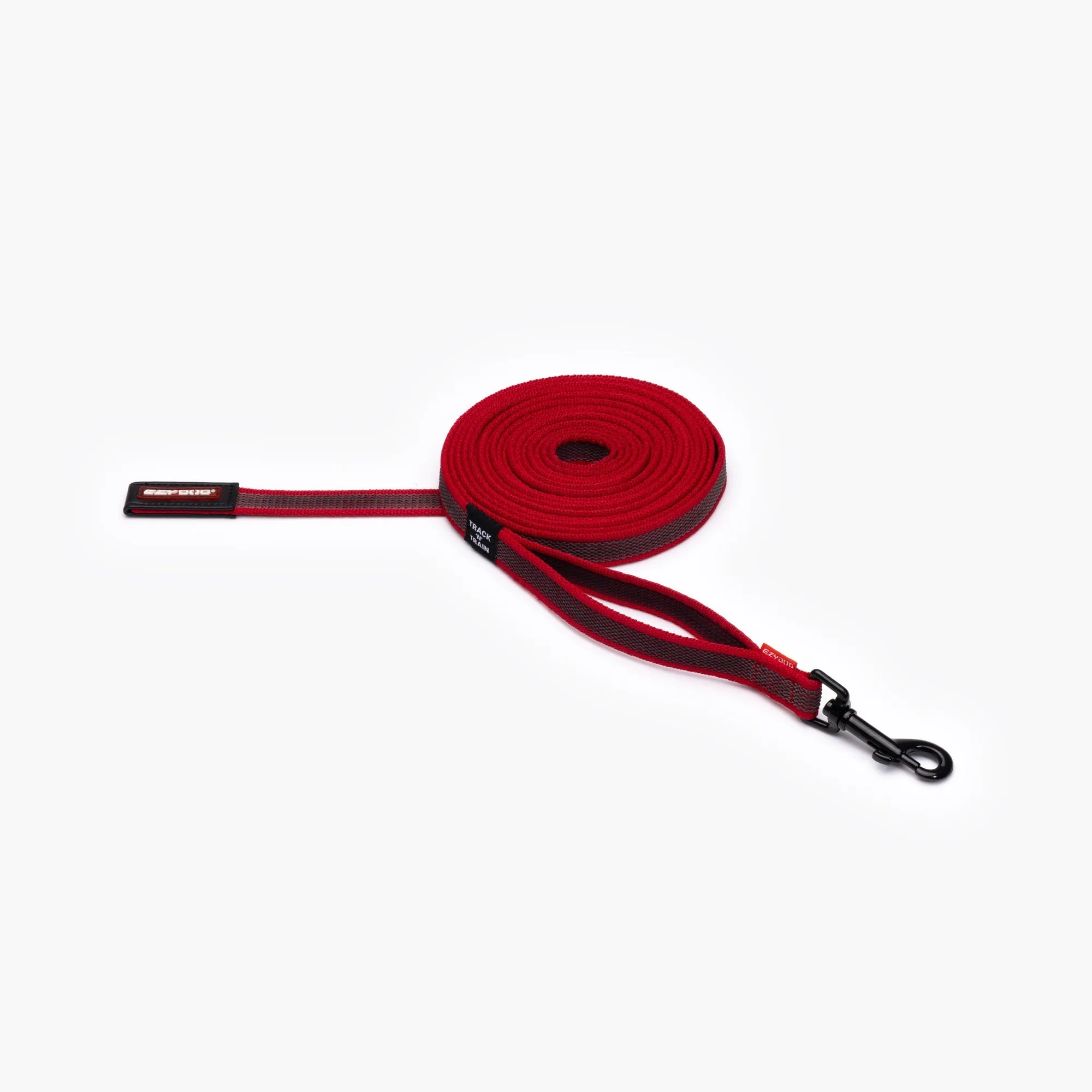
- Track 'N' Train™ Leash: The EzyDog Track 'N' Train Leash features an extra-long 16-foot lead with ultra-grippy webbing, designed for general training, recall training, and tracking. The extra length lets you practice recall and tracking with a slack line, so your dog has less reason to grab a tight leash.
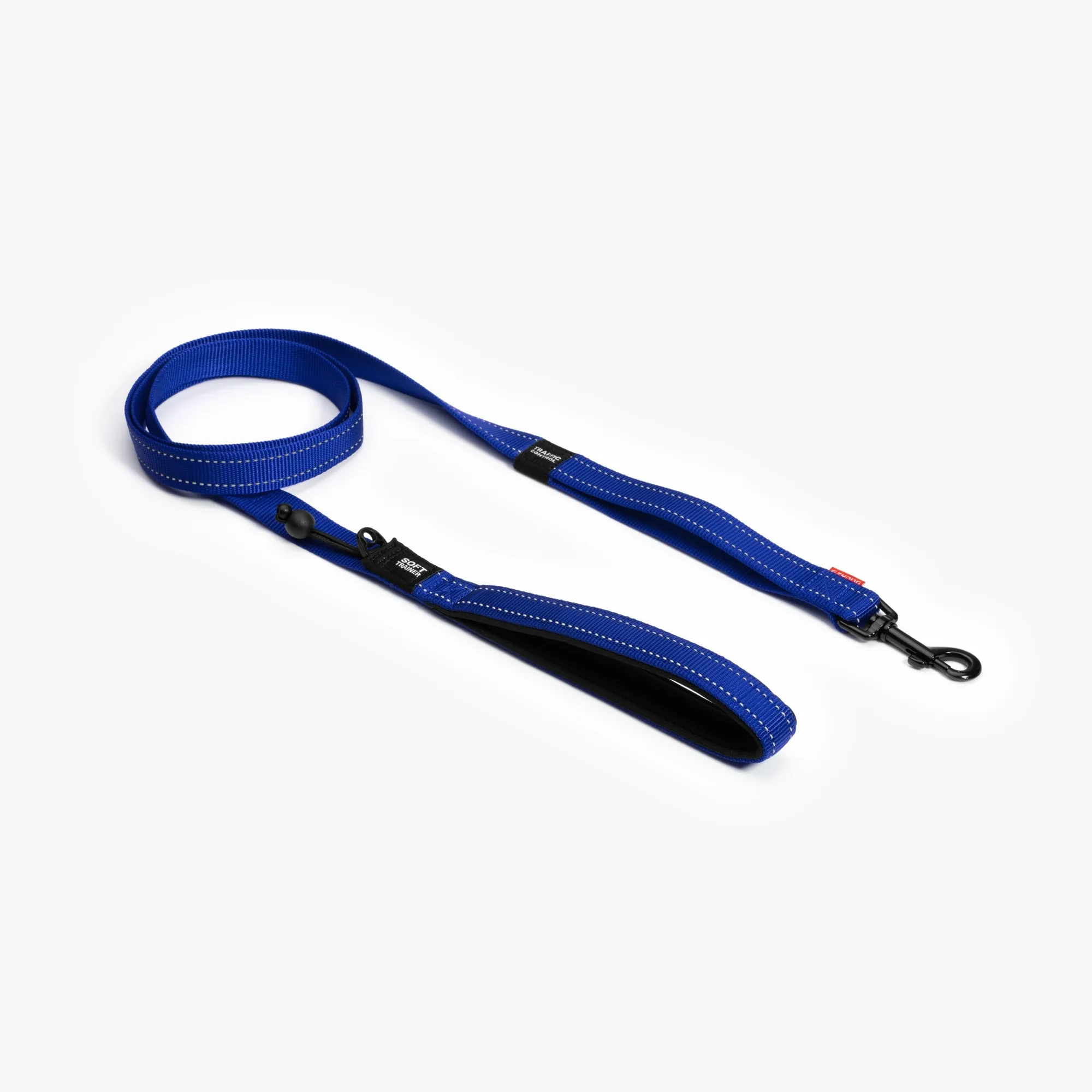
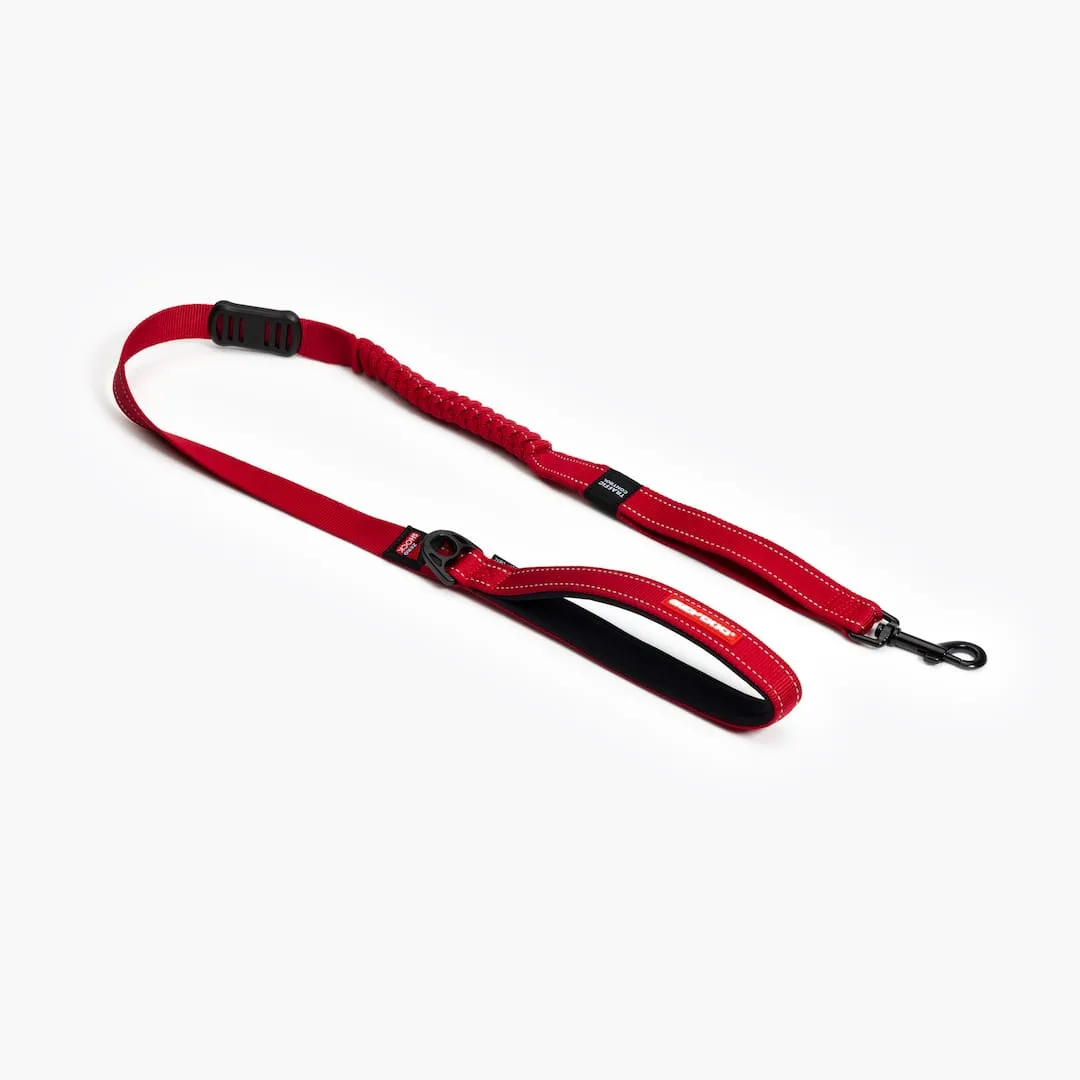
- Soft Trainer™ Leash: The EzyDog Soft Trainer Leash includes a traffic handle near the collar, giving you quick and secure control in built-up areas. The second handle helps you keep your dog close without yanking, which reduces the pressure that can trigger leash biting.
- Zero Shock™ Leash: The EzyDog Zero Shock Leash uses a shock-absorbing core to reduce sudden pulls and jarring leash tension. Less jolt means fewer surprise tugs that can make a dog turn around and mouth the leash.