Quick answer
Most harness rubbing comes from one of three things: a harness that shifts because it is the wrong size or shape for your dog, straps that sit on thin skin or bony points, or grit and moisture trapped under webbing. Fix the fit first, then check the harness style against the activity. If rubbing continues, the harness is probably not the right match for your dog's build or your sport.
Where harness rubbing usually starts
Rubbing rarely happens all over. It concentrates where the harness moves against skin that has little protection: the armpits, the front of the chest, the shoulder blades, and along the ribcage behind the front legs. When you find a red patch, look at what strap sits there and whether that strap can slide. A strap that stays put under load is far less likely to chafe than one that rocks side to side with every stride.
How to check fit in under a minute
Put the harness on, then watch your dog walk and trot on a loose leash. You want two fingers of clearance under each strap, but not so much that the harness rotates. Next, gently pull the harness side to side and front to back. If it shifts more than about a thumb's width, tighten the nearest adjustment point. Finally, check the girth strap behind the ribcage and the chest strap in front. Both should sit flat, not twisted, and clear of the armpit crease.
- Two fingers under every strap, no more.
- No strap should cross the armpit crease.
- The harness should not rotate when you tug the leash attachment point.
- Recheck fit after the first ten minutes of activity, when the coat settles.
Debris, moisture, and coat type
Sand, burrs, and ice balls work their way under webbing and act like sandpaper. Short-coated dogs show irritation quickly because there is less fur cushioning the strap. Long or double coats hide debris until it has already rubbed. After every run, lift the harness and brush out the contact areas. If your dog swims or runs in wet snow, dry the harness before storing it, because damp webbing stiffens and grips the coat.
When the harness itself is the problem
A harness designed for casual walks may not hold up to pulling sports. Pulling harnesses distribute load differently and use padding and strap geometry meant to stay stable under tension. If your dog rubs only during canicross or skijoring, the harness is likely shifting under pull rather than sitting badly at rest. In that case, changing the adjustment will not solve it. You need a harness built for the load direction of your sport.
What to do about an active hot spot
Stop using the harness on the irritated area until the skin is calm. Clean the spot with plain water, keep it dry, and let your dog rest from pulling activities. If the skin is broken, oozing, or your dog resists being touched there, contact your vet. Once healed, reintroduce the harness for short sessions and check the contact points immediately afterward so you can catch a repeat problem early.
FAQ: harness rubbing and fit
Why does my dog's harness rub only on one side?
One-sided rubbing almost always means the harness is sitting crooked. Check that both sides are adjusted to the same length and that the chest strap is centered. A dog who naturally drifts to one side on the trail can also load one strap harder. Measure both sides, not just the side that rubs.
Can I pad the harness instead of replacing it?
Padding can help if the rub is mild and the harness fits well otherwise. It will not fix a harness that is the wrong size or shape, because the underlying movement is still there. Padding also adds bulk, which can change the fit you already dialed in. Treat padding as a test, not a permanent repair.
How tight should a pulling harness be?
Snug enough that it does not rotate under load, but loose enough that you can still slide two fingers under the straps. A pulling harness will feel firmer than a walking harness. If it leaves deep pressure marks after ten minutes, it is too tight. Recheck after the warm-up, not just before you start.
How long should I wait before using the harness again?
Wait until the skin looks normal and your dog does not flinch when you touch the area. For mild redness that is usually a day or two. For broken skin, follow your vet's advice before returning to pulling sports. No harness on damaged skin, even for a short session.
Gear that reduces friction
- Friction long line: A dog long line with rubber inserts for excellent grip. Still, the line glides easily through the terrain when your dog is tracking. A line that glides instead of snagging keeps sudden jerks out of the harness, which reduces the shifting that causes chafing during tracking or free-roam sessions.
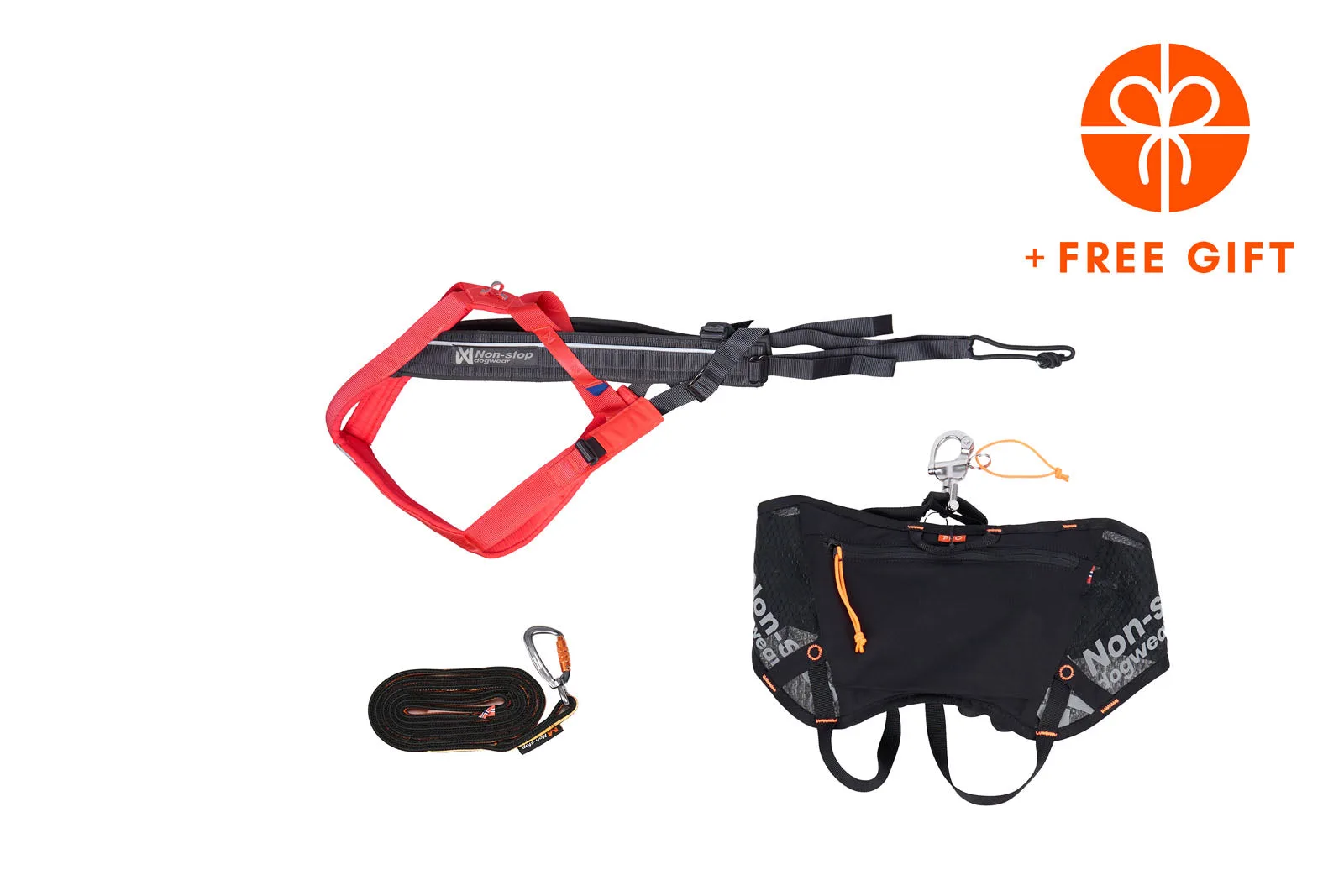
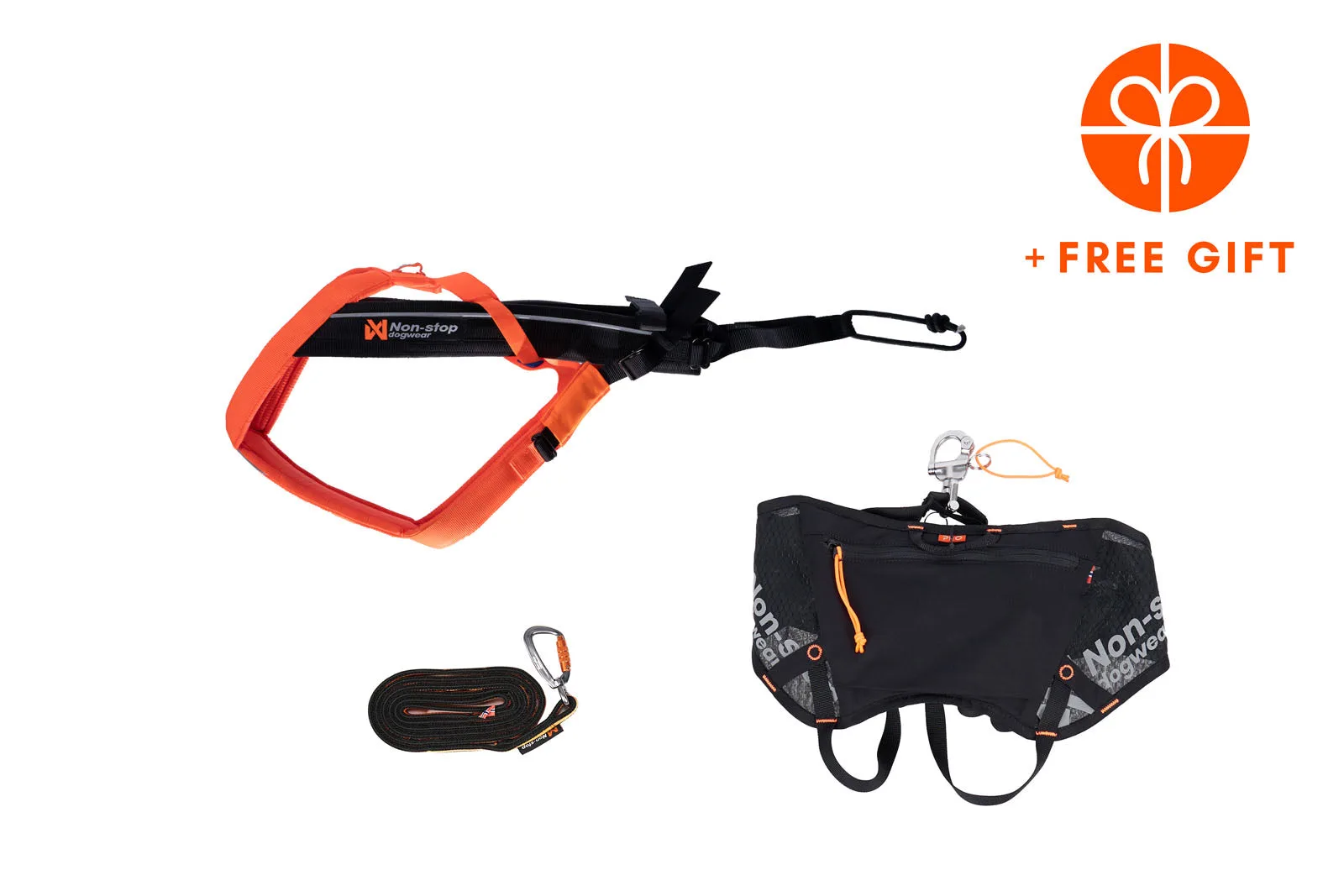
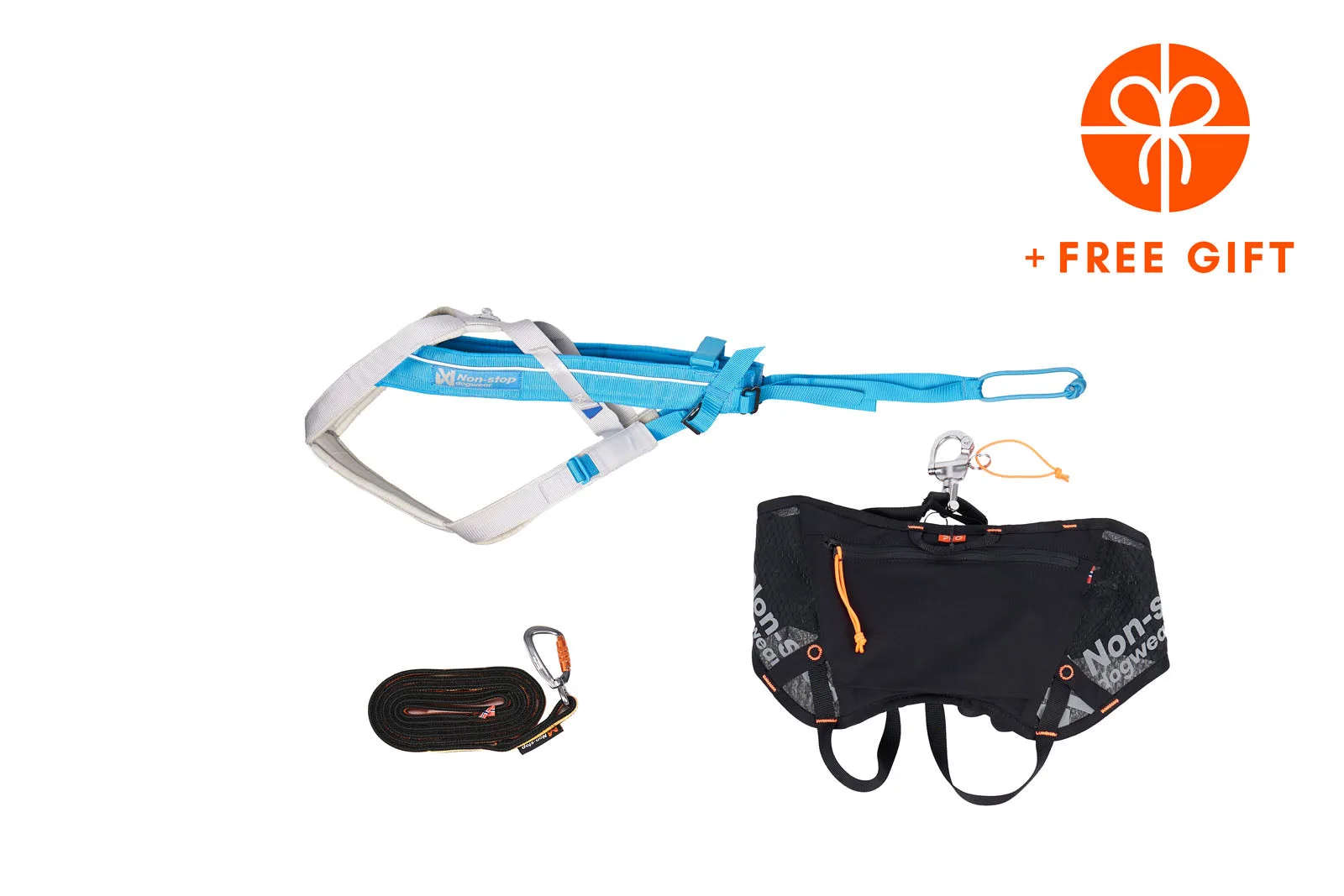
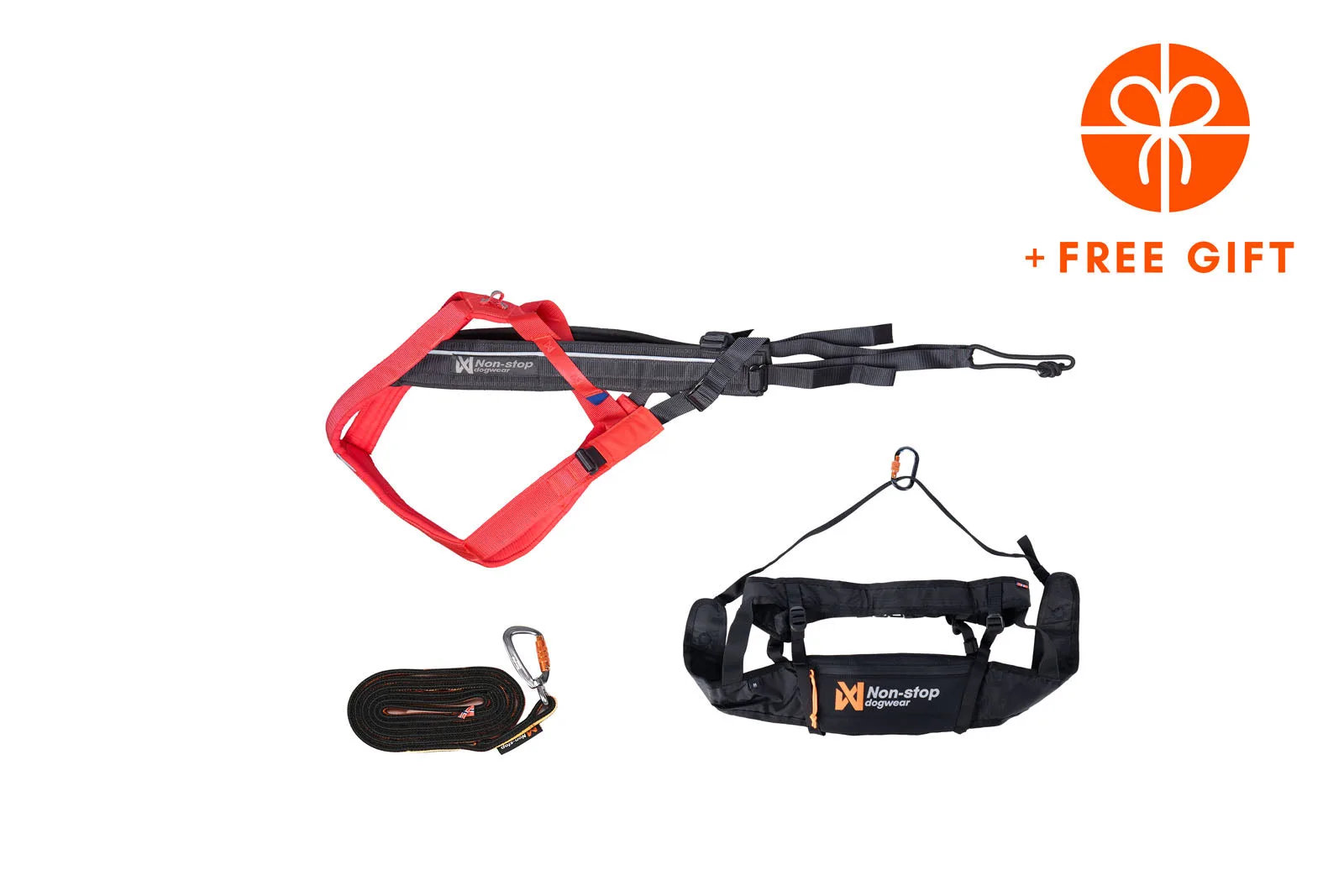
- Skiing kit Pink/gray: A complete set for skijoring with your dog, containing https://nonstopdogwearoz.com/products/freemotion-harness-5-b3aec08d83ae6df2d3cd936d-582049Freemotion harness 5.0, Bungee leash, https://nonstopdogwearoz.com/products/loype-belt-pro-35bcd8f059326f4c2c9442e3-582006Løype belt pro and a free gift. If your dog rubs only when pulling, matching the harness to the sport is the fix. A bungee leash also absorbs shock so the harness stays settled instead of snapping against the shoulders.