Quick answer
Your oolong tea tastes bitter because of one or more of these brewing mistakes: water that is too hot, steeping too long, or using too many leaves. For most oolongs, aim for water between 185°F and 195°F, steep for 3 to 4 minutes, and use about 1 teaspoon of leaves per 8 ounces of water.
Water temperature is the most common culprit
Oolong tea leaves are partially oxidized, which makes them more delicate than black tea but heartier than green tea. If you pour boiling water (212°F) directly onto oolong leaves, you will extract bitter tannins and polyphenols too quickly. The sweet spot is 185°F to 195°F. If you do not have a temperature-controlled kettle, bring the water to a boil and let it sit for about 30 seconds before pouring.
A practical test: if your oolong tastes harsh or astringent, lower the water temperature by 10°F on your next brew. This single change often solves the bitterness problem entirely.
Steeping time and leaf ratio matter
Even with the right water temperature, leaving the leaves in too long will produce bitterness. Start with 3 to 4 minutes for the first steep. For subsequent steeps (oolong leaves can be re-steeped 3 to 5 times), reduce the time by 30 seconds to 1 minute.
Using too many leaves is another common mistake. A good rule of thumb is 1 teaspoon of loose oolong per 8-ounce cup. If you are using a very large or tightly curled oolong, start with 1 heaping teaspoon and adjust from there. You can always add more leaves next time, but you cannot remove bitterness after it has steeped.
Not all oolongs brew the same
Oolong is a broad category that includes green oolongs (less oxidized) and dark oolongs (more oxidized). Green oolongs are more sensitive to heat and time, while dark oolongs can handle slightly hotter water and longer steeps. If you are switching between different oolong varieties, adjust your brewing parameters accordingly.
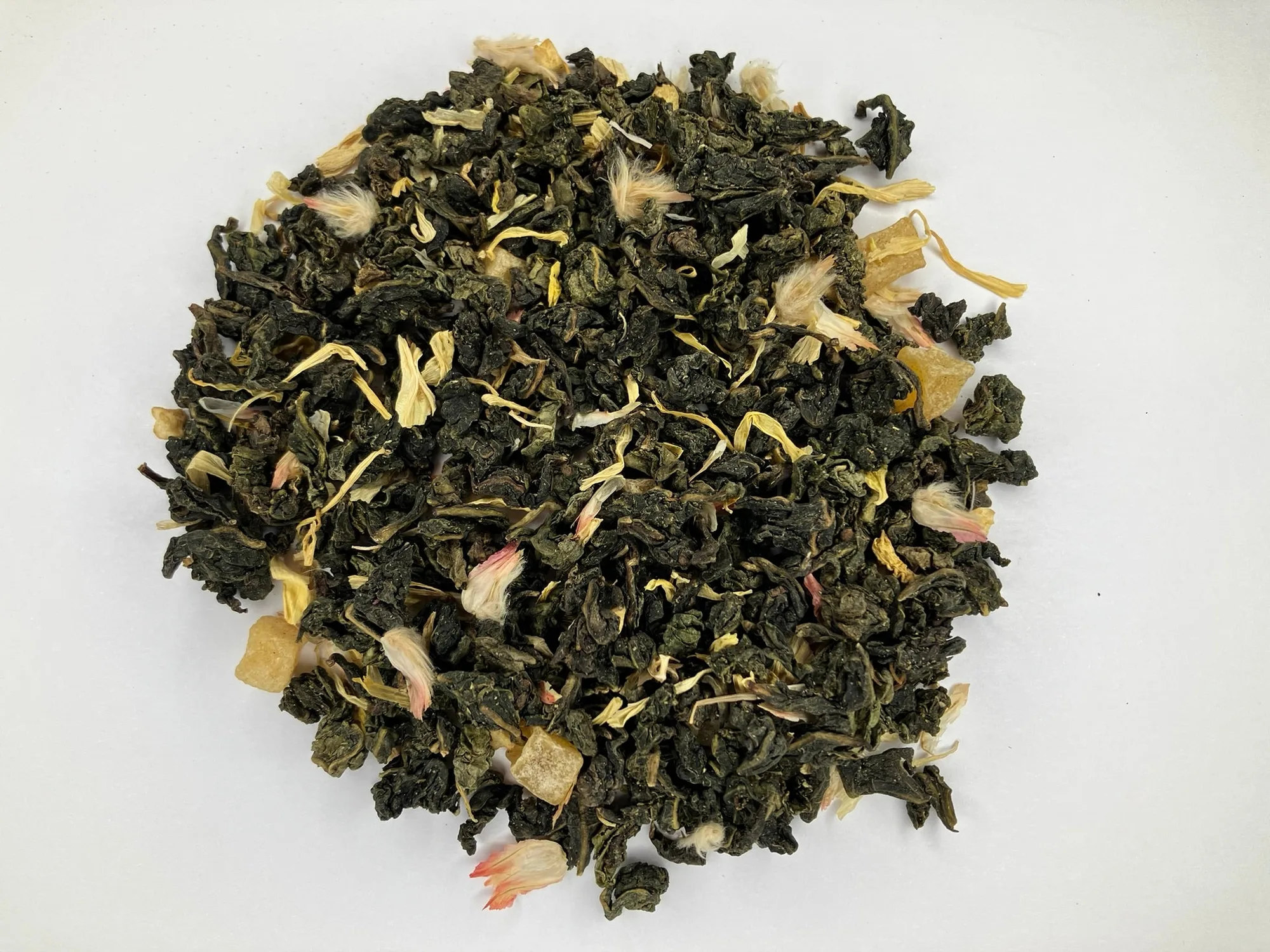
For example, Peach Oolong from The Georgia Tea Company is a green oolong with natural peach pieces and petals. It benefits from the lower end of the temperature range (around 185°F) to keep the delicate fruit notes forward and the earthiness balanced. Overheating it will mute the peach and bring out astringency.
Diagnosis: Is it your brew or your tea?
- Symptom: Sharp, puckering bitterness: The tea feels dry and astringent on your tongue, and the flavor disappears quickly. Check water temperature first. If it is not that, reduce steeping time by 30 seconds.
- Symptom: Dull, flat bitterness with no fruit notes: The tea tastes muddy or overly earthy, and you cannot taste the intended flavor (like peach). Your water is likely too hot. Lower it by 10°F and try again. Also check that your leaves are fresh.
- Symptom: Bitterness that gets worse on the second steep: The first cup was okay, but the second steep is undrinkable. You are likely steeping the second steep for the same length as the first. Reduce subsequent steeps by 30 to 60 seconds.
Product facts
- Peach Oolong: Ingredients: Oolong tea with natural peach pieces; calendula, sunflower, and marigold petals. Caffeine Content: ~50mg per 8 oz cup. The peach pieces and petals are delicate; using water that is too hot will scorch them and make the tea taste harsh instead of fruity.