Quick answer
Most slipping comes from two things: a clipper that rotates in a dry hand, and a work surface that slides instead of the tool. Fix the hand first with a silicone grip sleeve, then fix the surface with an anti-skid mat, and only then look at your technique. If the tool still walks after both, the problem is usually how you're holding it, not what you're holding.
Symptom: the clipper twists in your palm mid-pass
This is the most common complaint, and it usually shows up about ten minutes into a groom, not at the start. Your hand is dry, your grip has loosened, and the clipper body rotates a few degrees every time you change direction. You compensate by squeezing harder, which is exactly what creates the ache that shows up the next morning.
A grip sleeve changes the equation because it adds a high-friction layer between your palm and the clipper housing. The Clipper Grip is molded silicone that fits firmly around the clipper and, per the catalog, does not loosen once seated. That matters more than thickness: a sleeve that shifts on the housing just adds a second slipping surface.
- If the clipper twists but the surface stays put, treat it as a hand-grip problem.
- If your fingers ache before your forearm does, you are over-gripping to compensate.
- Clean the housing before fitting any sleeve; oil and hair defeat the silicone.
Symptom: the tool slides across the table when you set it down
A clipper that skates across a smooth table is a surface problem, not a grip problem. You reach for it, it has rotated or moved, and you grab it at an awkward angle. Over a long groom that small reach happens dozens of times, and each one costs you a clean starting position.
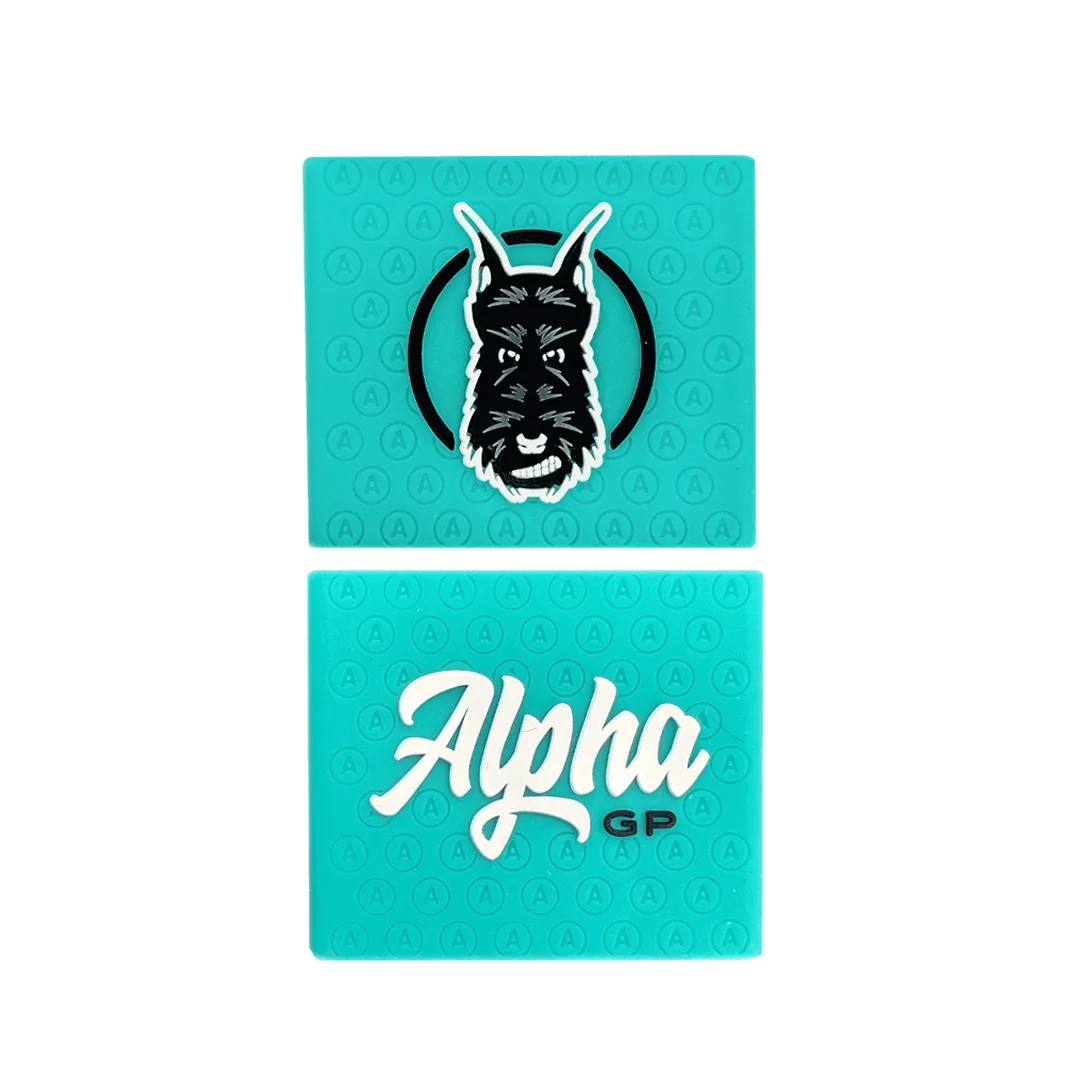
An anti-skid mat solves this by holding the tool where you left it. The Alpha Mat is a heavy-duty anti-skid mat at roughly 12 by 18 inches, and it carries four strong magnets that let you stand clippers upright for grab-and-stow access. Standing a clipper up is the underrated part: a tool that sits vertically is already oriented for your hand, so you stop repositioning mid-grab.
- Check whether the mat itself moves. If it does, the mat is the problem, not the tool.
- Magnets only help if the clipper has a metal body or clip that will hold.
- Keep the mat clear of loose hair; buildup is what kills the anti-skid face over time.
Symptom: the tool slips only on certain coats or certain angles
If slipping happens on one dog but not another, the tool is not the variable. Curly or dense coats change how much resistance you feel, and resistance pushes the clipper back into your hand. That is a technique signal, not an equipment failure.
The corrective action here is to slow down and let the blade do the work rather than pushing through the coat. Shorten your passes, keep the blade flat to the skin, and reset your grip at the end of each pass instead of carrying tension across the whole dog. If you are already using a grip sleeve and an anti-skid surface and the tool still fights you, the blade is likely dull or the coat is not clean and dry enough for the clipper you are using.
- Reset your grip at every pass boundary rather than holding one grip for the whole groom.
- A dull blade feels like a slipping tool because you push harder to compensate.
- If only one coat type causes it, change your technique before buying anything.
The stop point: when to fix your setup instead of your hands
There is a limit to how much a grip or a mat can do. If your hands ache after every groom even with a sleeve fitted and your tools staying put, the issue is cumulative hand fatigue from tool time, not a slipping tool. A sleeve reduces how hard you have to squeeze, but it does not reduce the number of hours you spend squeezing.
At that point the honest answer is to change your session structure: shorter grooming blocks, more breaks, and rotating between tasks so the same grip pattern is not repeated for an hour straight. If you are choosing between buying a grip and buying a mat, buy the grip first. It addresses the cause that hurts you physically, while the mat addresses the cause that costs you time.
Diagnose your slipping problem
- Tool twists in your hand, surface is stable: The clipper housing is rotating against a dry palm. Fit a silicone grip sleeve so the friction is between the sleeve and your hand, not the bare housing and your hand. Fix this first; it is the cause that also produces hand fatigue.
- Tool moves after you set it down: The work surface is the problem. Use an anti-skid mat and stand the clipper upright in a magnet so it is oriented for your hand before you reach for it. Fix this second; it saves time and prevents awkward re-grips.
- Tool slips only on one coat or one angle: Resistance from the coat is pushing the clipper back into your hand. Shorten your passes, keep the blade flat, and reset your grip at each pass boundary. If it persists with a grip and a mat in place, check blade sharpness and coat prep before buying more gear.
- Hands ache after every groom despite both fixes: This is cumulative fatigue, not slipping. Break grooming into shorter blocks and rotate tasks so the same grip pattern is not repeated for long stretches. Stop buying equipment here; change the session structure instead.
Products that address these two failure points
- Clipper Grip: Clipper Grip is a silicone sleeve that fits firmly around the clipper and does not loosen, designed to let you use a lighter grip and reduce hand fatigue. It targets the twisting-in-the-palm symptom directly and reduces the over-gripping that causes next-day hand soreness.
- Alpha Mat: Alpha Mat is a heavy-duty anti-skid mat, roughly 12 by 18 inches, with four strong magnets that let you stand clippers upright for easy grab-and-stow access. It keeps tools where you left them and holds them in a ready orientation, so you stop losing your starting position mid-groom.