Quick Answer
Most dogs that ignore the boundary signal are not outsmarting the fence; they are either getting too little warning before the correction, wearing a collar that does not fit or sit correctly, or they have never been taught what the warning tone means. Test the receiver on the boundary first, then check fit and contact points, then treat the next two weeks as training rather than punishment. If the dog still crosses after that, the system is the wrong tool for that dog.
Confirm the Boundary Is Actually Talking to the Collar
Before you change any training, prove the signal exists where it should. Walk the receiver collar out to the boundary on a non-metal leash and listen for the warning tone and watch for the correction. Do this without your dog attached so you are testing hardware, not behavior.
If the tone never sounds, the problem is the fence, not the dog. Check the transmitter power, the boundary width setting, and whether the receiver battery is seated. A weak or dead battery is the most common reason a collar appears to ignore a boundary that is working fine.
Check Collar Fit and Contact Before You Blame Training
A receiver that is too loose slides away from the contact points, so the dog feels nothing at the boundary and simply keeps walking. Two fingers should fit snugly under the strap, and the contact points need to touch skin, not sit buried in a thick coat.
Long-haired or thick-coated dogs often need longer contact points or a small trim at the contact area. If your dog has never reacted to a correction at any level, fit and contact are the first things to fix, not the correction level.
Teach the Warning Tone as a Real Cue
The tone is the part of the system your dog can actually learn from. If the first time your dog hears the beep is also the first time it feels a correction, the tone means nothing and the dog learns to sprint through the zone instead of turning back.
Spend several short sessions walking your dog toward the boundary on a long line, letting the tone sound, and guiding a turn back to you with praise and a treat before any correction happens. Repeat until the dog turns on the tone alone. Only then let the dog experience the boundary without your guidance.
Match Correction Level to the Dog, Not to Your Frustration
Start at the lowest level and work up only until you see a consistent ear flick, head turn, or pause. A dog that yelps or panics is over-corrected and may bolt, which looks exactly like ignoring the fence. A dog that shows no reaction at all is under-corrected and will keep crossing.
Some receivers offer tone-only mode, which is useful during the teaching phase and for dogs that respond to the beep alone. Use tone-only until the dog reliably turns, then add correction only if the dog blows through the tone.
Rule Out the Situations Where the System Cannot Win
High-value triggers beat low-level correction almost every time. If your dog only crosses when chasing a deer, a bike, or another dog, the boundary is competing with a drive that is stronger than the correction. That is not a training failure; it is a mismatch between the tool and the trigger.
The same applies to dogs that panic at the correction, dogs that are deaf or hard of hearing, and yards where the boundary runs along a fence line the dog can see through. In those cases, a physical fence or close supervision is the honest answer.
Boundary Signal Diagnosis
- Symptom: No tone or correction at the boundary: Test the receiver on the boundary without the dog. Check the transmitter, boundary width, and receiver battery seating. If there is still no tone, stop training and repair or replace the fence hardware.
- Symptom: Dog crosses but reacts at other times: Check collar fit and contact points. The strap should be snug with two fingers of slack and contacts touching skin through the coat. If fit is correct and the dog still shows no reaction, move up one correction level at a time.
- Symptom: Dog sprints through the boundary on every approach: The dog has learned that the tone predicts correction, not a turn. Go back to tone-only sessions on a long line and reward the turn before any correction. Give this two weeks of short daily sessions before you judge the system.
- Symptom: Dog only crosses for a specific trigger: The trigger is stronger than the correction. A deer, a bike, or another dog will beat a low-level static correction almost every time. Use a physical fence or supervision for that trigger instead of raising correction levels.
- Symptom: Dog panics or bolts at the correction: This is over-correction, not stubbornness. Drop back to tone-only or the lowest level and rebuild the turn. If the dog still panics, this system is not the right fit for this dog.
Receiver Collars That Fit This Diagnosis
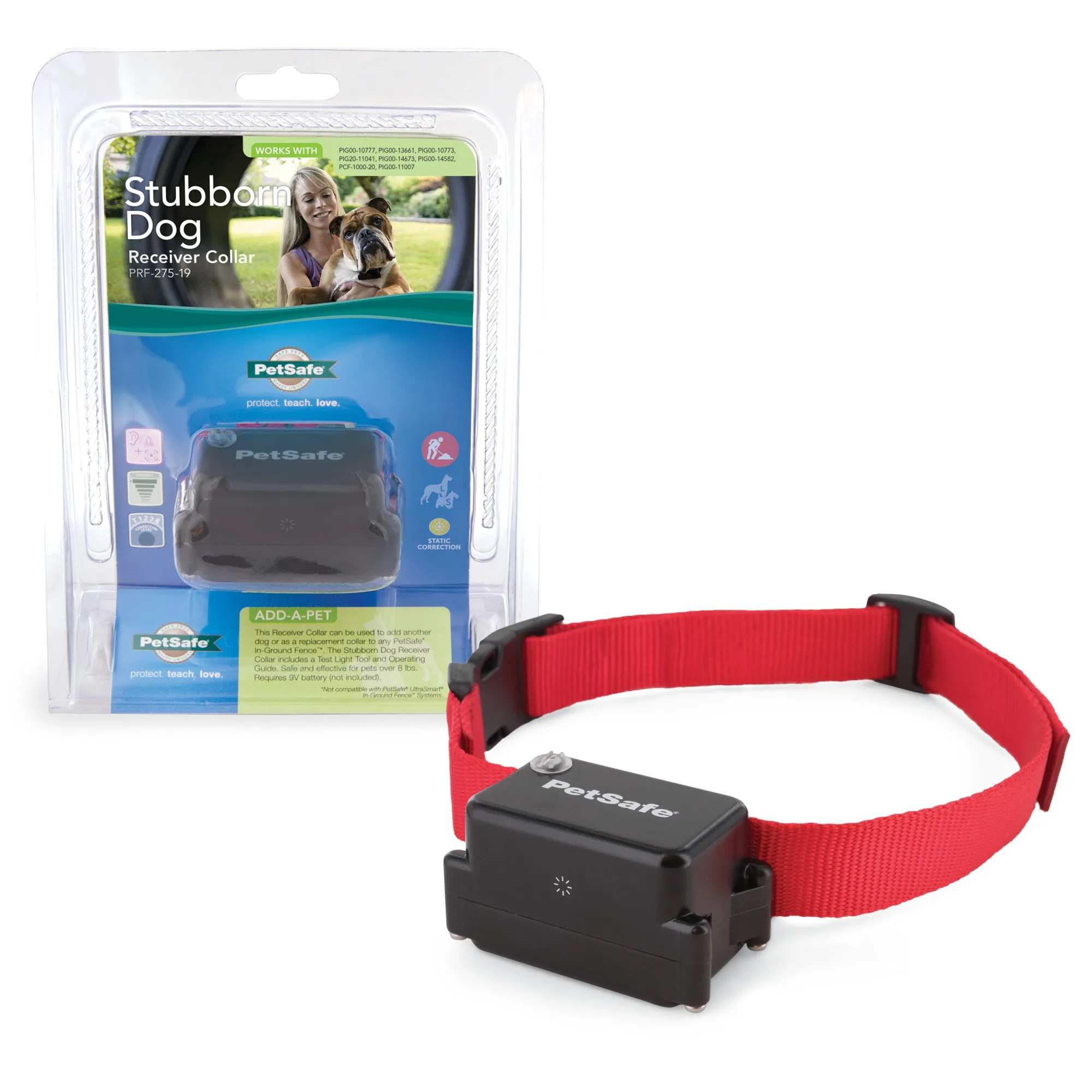
- PRF-275-19 Stubborn Dog In-Ground Fence™ Receiver Collar by PetSafe®: This extra receiver collar adds another dog to any PetSafe in-ground fence system or replaces the collar on the Stubborn Dog In-Ground Fence, and it offers 4 levels of static correction for stubborn or hard-to-train dogs. If your dog shows no reaction at the lowest settings on a standard receiver, this is the collar to test before you replace the whole fence.
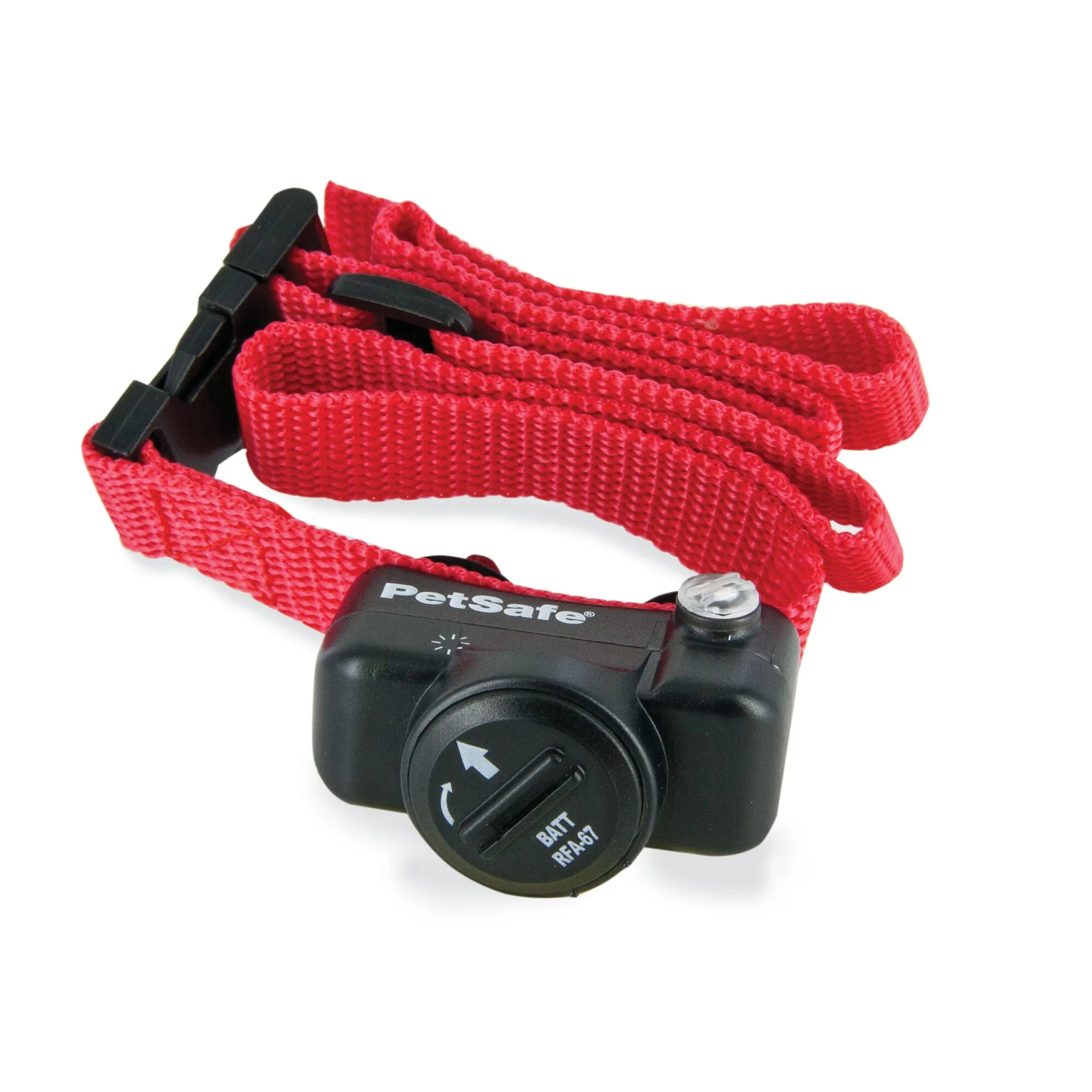
- PetSafe® Deluxe UltraLight™ Receiver Collar: This waterproof receiver weighs 2.5 ounces, fits dogs 8 pounds and up, and has four adjustable levels of correction plus a tone-only mode. Tone-only mode lets you run the teaching phase from this article without correction, then add static levels only if the dog ignores the beep.
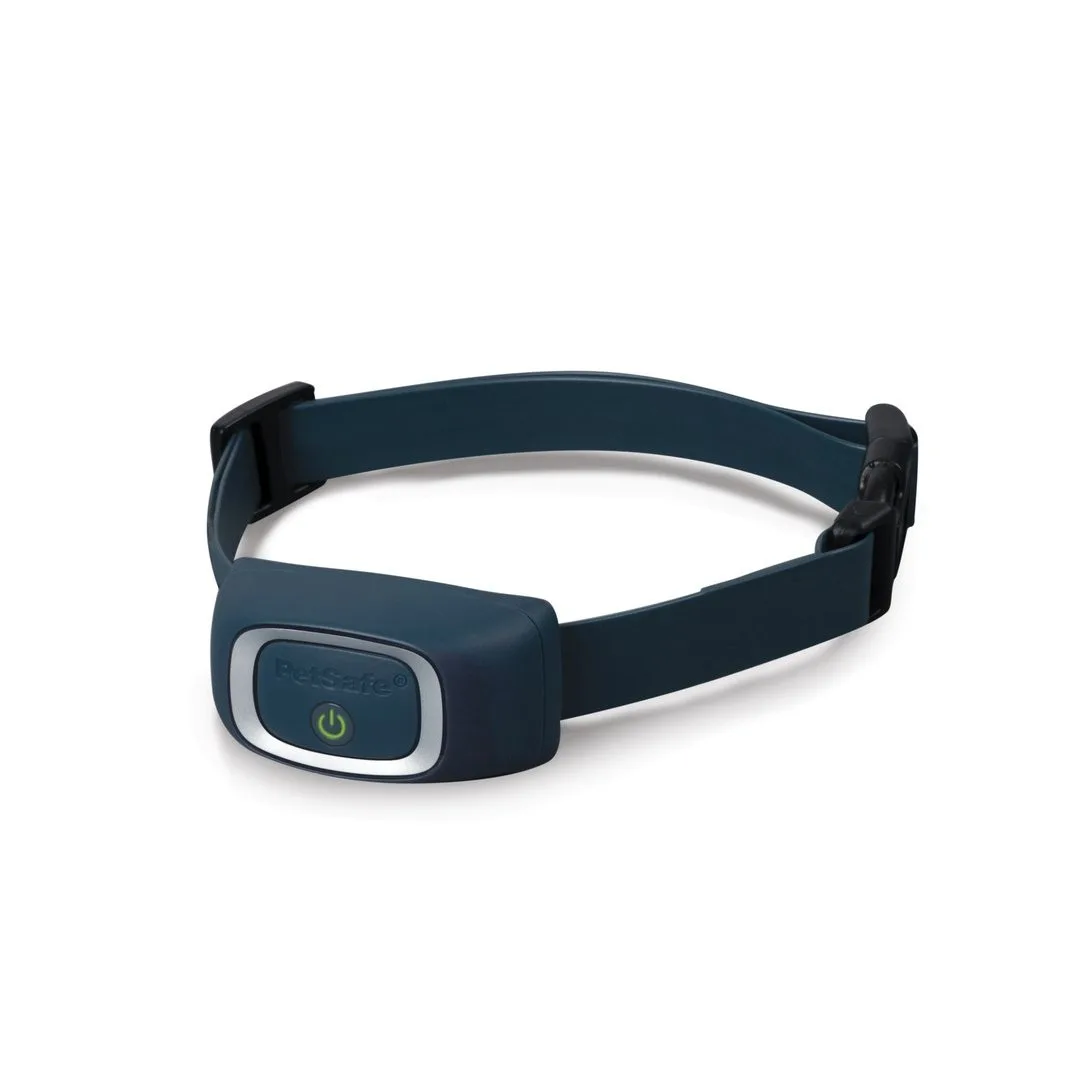
- PAC00-16163 PetSafe® Add-A-Dog Receiver Collar: This Add-A-Dog receiver collar is adjustable to fit a range of neck sizes and is designed for off-leash training and multiple-dog households. If the collar slides on your dog's neck, an adjustable receiver that fits properly is the cheapest fix for a boundary signal the dog never feels.