Quick answer
Most bitter Folgers comes from over-extraction: water above about 205°F, too little ground coffee for the amount of water, or a brew cycle that runs too long. Start by measuring your grounds and letting boiled water rest 30 to 60 seconds before it hits the coffee. If the same bag tastes bitter no matter how you brew it, the problem is the coffee itself, not your technique.
Symptom check: bitterness vs. strength vs. staleness
Bitterness is not the same as strength. A weak cup tastes thin and watery but not harsh; a bitter cup leaves a dry, astringent feeling on the sides of your tongue and back of your throat. Stale coffee tastes flat and papery rather than sharp. Naming the sensation correctly matters because each one has a different fix.
If your Folgers tastes bitter only in the last few sips, the issue is likely sediment continuing to extract in the cup. If it tastes bitter from the first sip, look at water temperature and ratio before you blame the beans.
Cause 1: Water temperature is too high
Water near a rolling boil scalds ground coffee and pulls out harsh compounds in seconds. For drip machines, the ideal range is roughly 195°F to 205°F at the brew basket. If you boil water in a kettle for pour-over or French press, let it sit 30 to 60 seconds after the switch clicks off before pouring.
Many budget drip machines run hot on the first cycle and cooler on the second. If your first cup is bitter but the second is fine, that's your machine, not your coffee. Pre-heating the machine with a plain water cycle before adding grounds is a cheap workaround.
Cause 2: Too little coffee for the water
A common bitter-coffee mistake is using a weak ratio and then over-brewing to compensate. Start with about 1 to 2 tablespoons of ground coffee per 6 ounces of water, then adjust by taste. If the cup tastes both bitter and weak, you are under-dosing and over-extracting at the same time.
Use a scale if you have one. Weighing grounds removes the guesswork that a scoop introduces, especially with a fine grind that packs tightly. For a 33.7-ounce bag of Folgers Classic Roast Ground Coffee, a kitchen scale also helps you track how many cups you actually get per bag.
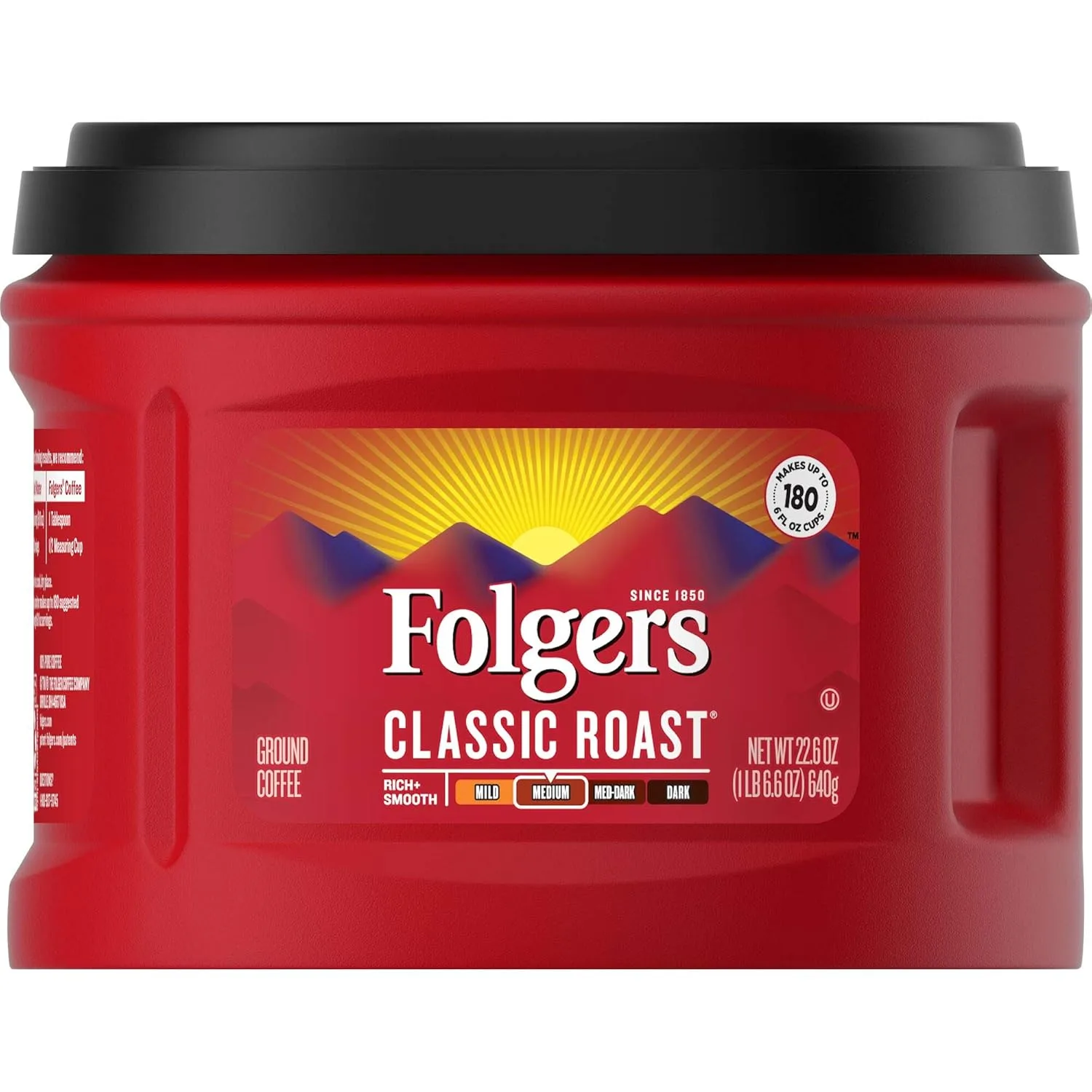
Folgers Classic Roast Ground Coffee
Cause 3: Grind and brew time are mismatched
Pre-ground coffee is sized for standard drip brewers. If you use it in a French press or a slow pour-over, the contact time is too long and the cup turns bitter. If you use it in an espresso machine, the grind is too coarse and the shot runs fast and sour, not bitter.
Match the method to the grind rather than forcing one grind into every brewer. For K-Cup pods, the pod controls both grind and dose, so bitterness there usually points to water temperature, a partially clogged needle, or brewing the same pod twice.
Cause 4: Dirty equipment and old grounds
Residue in a drip basket, French press, or reusable K-Cup filter turns rancid and adds a bitter edge that no ratio change will fix. Rinse daily and deep-clean with a mild detergent weekly. For Keurig systems, run a plain water rinse cycle after any flavored or dark roast pod.
Ground coffee also loses its best flavor within a few weeks of opening. Store the bag sealed, cool, and dark, and buy a size you will finish. The 33.7-ounce Folgers Classic Roast Ground Coffee is a good value for daily drinkers, but if you brew one cup a day, a smaller package will taste fresher.
When to stop adjusting and switch products
If you have corrected temperature, ratio, grind, and cleanliness, and the coffee still tastes harsh, the roast or the batch is the limiting factor. Darker roasts and some Colombian profiles read as more intense, which some drinkers describe as bitter. Switching to a milder roast is a legitimate fix, not a failure.
Folgers Morning Café Mild Roast Coffee in 72 Keurig K-Cup Pods is a practical test if you want a gentler cup without changing your brewing routine. If a mild roast still tastes bitter to you, your palate may simply prefer a lighter, fruitier coffee than Folgers makes, and that is worth knowing before you buy another large bag.
Bitter cup diagnosis
- Bitter from the first sip, every brew: Water is likely too hot or the ratio is too weak. Let boiled water rest 30 to 60 seconds and measure 1 to 2 tablespoons of grounds per 6 ounces of water. If the next cup improves, keep the new ratio and stop adjusting.
- Bitter only in the last third of the cup: Fine sediment is still extracting in the mug. Switch to a coarser grind or a paper filter, and avoid pressing the French press plunger all the way down. If sediment is the cause, the fix is mechanical, not a new coffee.
- Bitter and weak at the same time: You are under-dosing and over-brewing. Increase the grounds before you shorten the brew time, then re-taste. If it is still bitter after two ratio increases, the roast is the limit.
- Bitter only in K-Cup pods: Check for a clogged needle, run a plain water rinse cycle, and never brew the same pod twice. Pods fix the dose, so temperature and machine condition are the only variables left. If a rinse cycle does not help, try a milder roast pod.
- Bitter after fixing everything: Move to a milder roast or a smaller, fresher package. Bitterness that survives correct temperature, ratio, grind, and clean equipment is a roast characteristic. Stop troubleshooting and change the coffee, not the method.
Products that help you control bitterness
- Folgers Classic Roast Ground Coffee, 33.7 Ounce: Folgers Classic Roast Ground Coffee comes in a 33.7-ounce package with a balanced, medium-bodied flavor. A medium-bodied ground coffee is a forgiving base for dialing in ratio and temperature, and the large size keeps the cost per cup low while you experiment.
- Folgers Morning Café Mild Roast Coffee, 72 Keurig K-Cup Pods: Folgers Morning Café Mild Roast Coffee is a 72-count Keurig K-Cup Pod pack made with 100% pure coffee and roasted in New Orleans, Louisiana. If your current roast tastes bitter no matter how you brew it, a mild roast pod removes grind, dose, and temperature variables from the equation.