Quick answer
Kids love doctor kit pretend play because it turns a sometimes-scary experience into a game they control. It lets them act out grown-up roles, make sense of medical visits, and feel powerful and helpful.
Why role reversal feels so powerful
When children play doctor, they switch from being the passive patient to the one in charge. That reversal is a big part of the appeal—it gives them a sense of mastery over a situation that can otherwise feel intimidating. Holding the stethoscope or syringe puts them in the expert seat, which builds confidence and reduces anxiety about real checkups.
This kind of play also taps into a child's natural desire to imitate adults. Watching a pediatrician or family member use medical tools becomes something they can try out themselves in a safe, low-stakes setting. The repetition of the routine—listen, check, reassure—helps the scenario feel familiar and less mysterious.
More than fun: the learning behind the play
Doctor pretend play is packed with early learning moments. Kids practice vocabulary like 'stethoscope' and 'blood pressure,' follow sequences, and start to understand cause and effect. They also exercise empathy by caring for a stuffed animal or doll, which supports social-emotional growth.
Because the play is self-directed, children decide how the story unfolds. That open-ended quality keeps them engaged longer and strengthens problem-solving skills. It's one of those rare activities that feels purely like fun while quietly building a range of abilities.
Common questions about doctor kit play
How does doctor play help a child who is scared of checkups?
Let your child be the doctor while you or a doll is the patient. This puts them in control and lets them rehearse what happens during a visit. Over time, the routine becomes familiar and less frightening. Use the kit to act out a full checkup before the next real appointment.
What age is best for a doctor kit?
Most children start enjoying doctor role play around age 3, when they can hold tools and imagine scenarios. The Tiny Land Doctor Kit is designed for young kids, but always check the manufacturer's age recommendation for safety. Confirm the age range on the product packaging before purchase.
How can I keep doctor play interesting over time?
Introduce new 'patients' like stuffed animals or family members, and create different scenarios such as a dental checkup or a sick pet. You can also add simple props like a bandage or a notebook for writing prescriptions. Rotate the scenarios weekly to keep the play fresh.
How Tiny Land supports the play
-
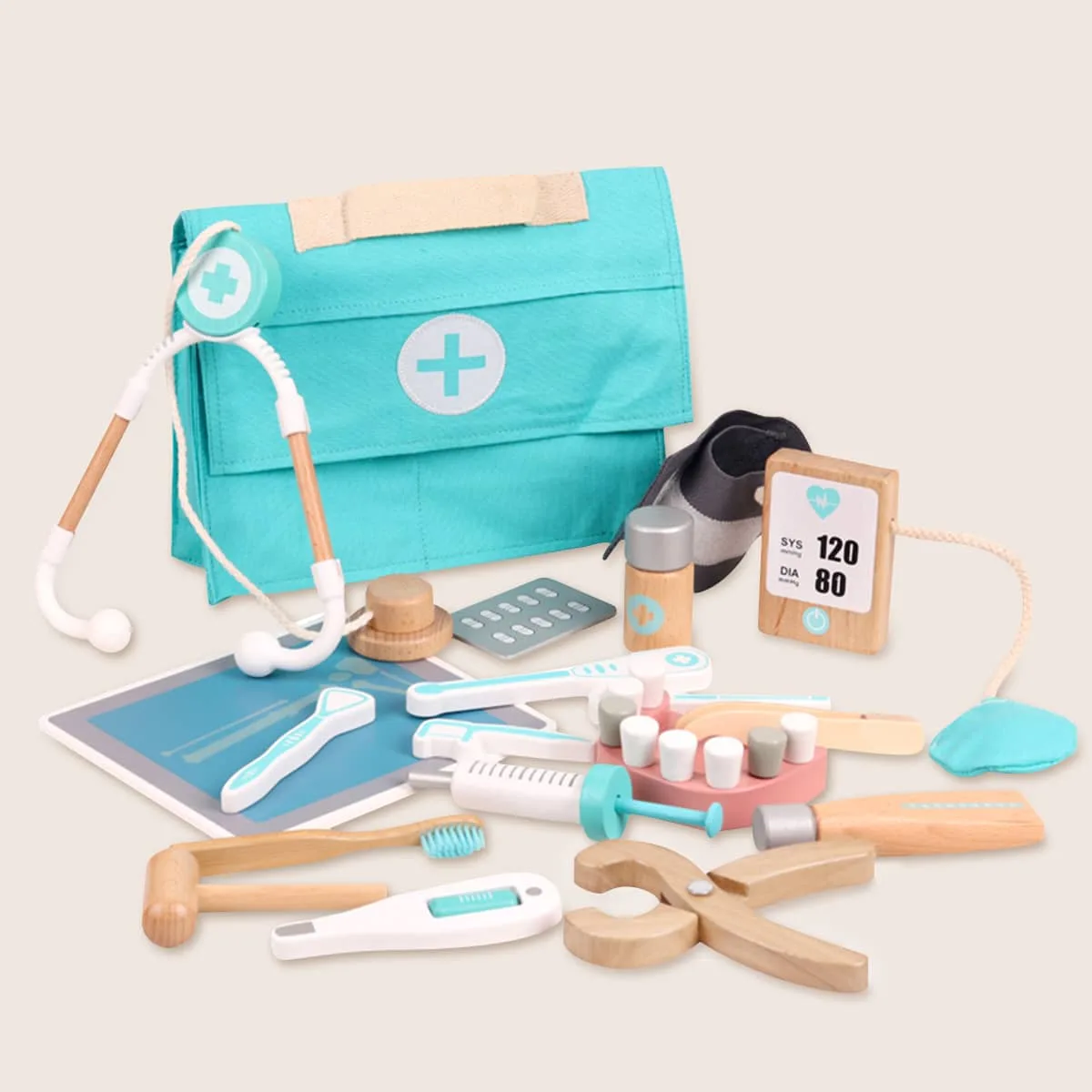
Tiny Land® Doctor Kit for Kids: This set includes 18 realistic medical tools, such as a stethoscope, syringe, dental instruments, and a blood pressure monitor. Having a variety of authentic-looking tools makes the role play more immersive and gives children more ways to explore and learn.
Tiny Land® Doctor Kit for Kids