Quick Answer
To stop your mattress pad from shifting, secure it with fitted straps or non-slip grippers, ensure it's the correct size, and smooth it out when making the bed. For persistent slipping, consider a pad with a fitted-sheet design or a waterproof backing that grips the mattress.
Why Mattress Pads Slip
A mattress pad shifts for a few common reasons. The most frequent culprit is a size mismatch: a pad that's too large has excess fabric that bunches, while one that's too small can't anchor properly. Another cause is the pad's underside—if it's smooth and slick against the mattress, it will slide with movement. Finally, daily use and tossing and turning gradually pull the pad out of place, especially if it lacks gripping features.
Understanding the cause is the first step to fixing it. Check if your pad has elastic straps or a fitted skirt—these are designed to hold it in place. If it doesn't, or if the straps are loose, the pad will shift no matter how carefully you make the bed.
Trade-offs: Grippers vs. Straps vs. Fitted Design
When choosing a mattress pad, consider how it stays put. Some pads use elastic straps at the corners, which are effective but can be fiddly to attach each time. Others feature a full fitted skirt that hugs the mattress like a fitted sheet—this is often the most secure option. Non-slip grippers on the underside are another solution, but they may wear out over time or feel rough against some mattress materials.
A waterproof mattress pad with a TPU backing can offer extra grip because the waterproof layer tends to be less slippery than smooth cotton. However, it's important to balance grip with breathability—a pad that's too grippy might trap heat. Look for a design that combines a fitted skirt with breathable materials to avoid overheating.
Diagnose and Fix: Step-by-Step
- Symptom: Your mattress pad bunches or slides after a night's sleep, leaving parts of the mattress exposed. Check if the pad is the correct size for your mattress depth.
- Likely Cause: The pad lacks sufficient anchoring—no fitted skirt, loose straps, or a smooth underside that slides on the mattress surface. Inspect the pad's underside and fasteners; if they're worn, consider a replacement with better grip.
- Corrective Action: Secure the pad with existing straps or add non-slip rug grippers between the pad and mattress. Smooth the pad when making the bed, and avoid pulling it taut, which can cause it to shift. Re-tighten straps weekly and re-smooth the pad after washing to maintain grip.
- When to Stop or Choose Another Option: If the pad still shifts after trying these fixes, it may be too large or too small for your mattress. Stop troubleshooting and invest in a pad with a fitted-sheet design or a waterproof backing that offers better grip. Measure your mattress and compare it to the pad's dimensions before purchasing a replacement.
Products That Help Keep Your Mattress Pad in Place
-
Waterproof Cotton Heated Mattress Pad: This heated mattress pad features 10 heating levels and 12 time-settings, with a 100% skin-friendly cotton top and advanced heating wire technology. Its cotton top and heating wires add weight and structure, helping the pad stay put while providing customizable warmth.
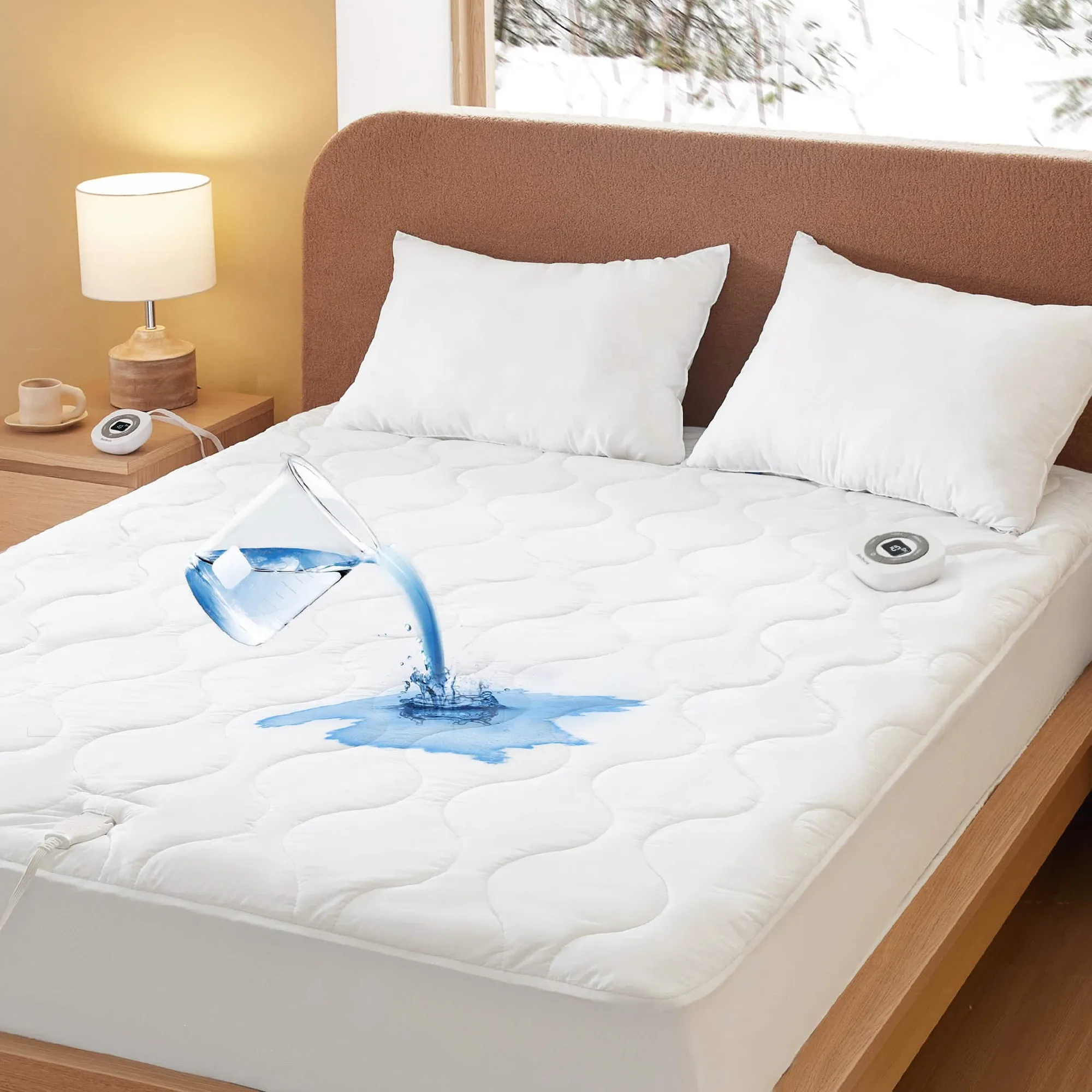
Waterproof Cotton Heated Mattress Pad
-
Three-Zone Waterproof Mattress Pad: The Three-Zone Waterproof Mattress Pad uses a five-layer design with a TPU waterproof barrier and 408g Blendtek fiber filling. The TPU barrier adds a non-slip grip against the mattress, reducing shifting while protecting against spills.
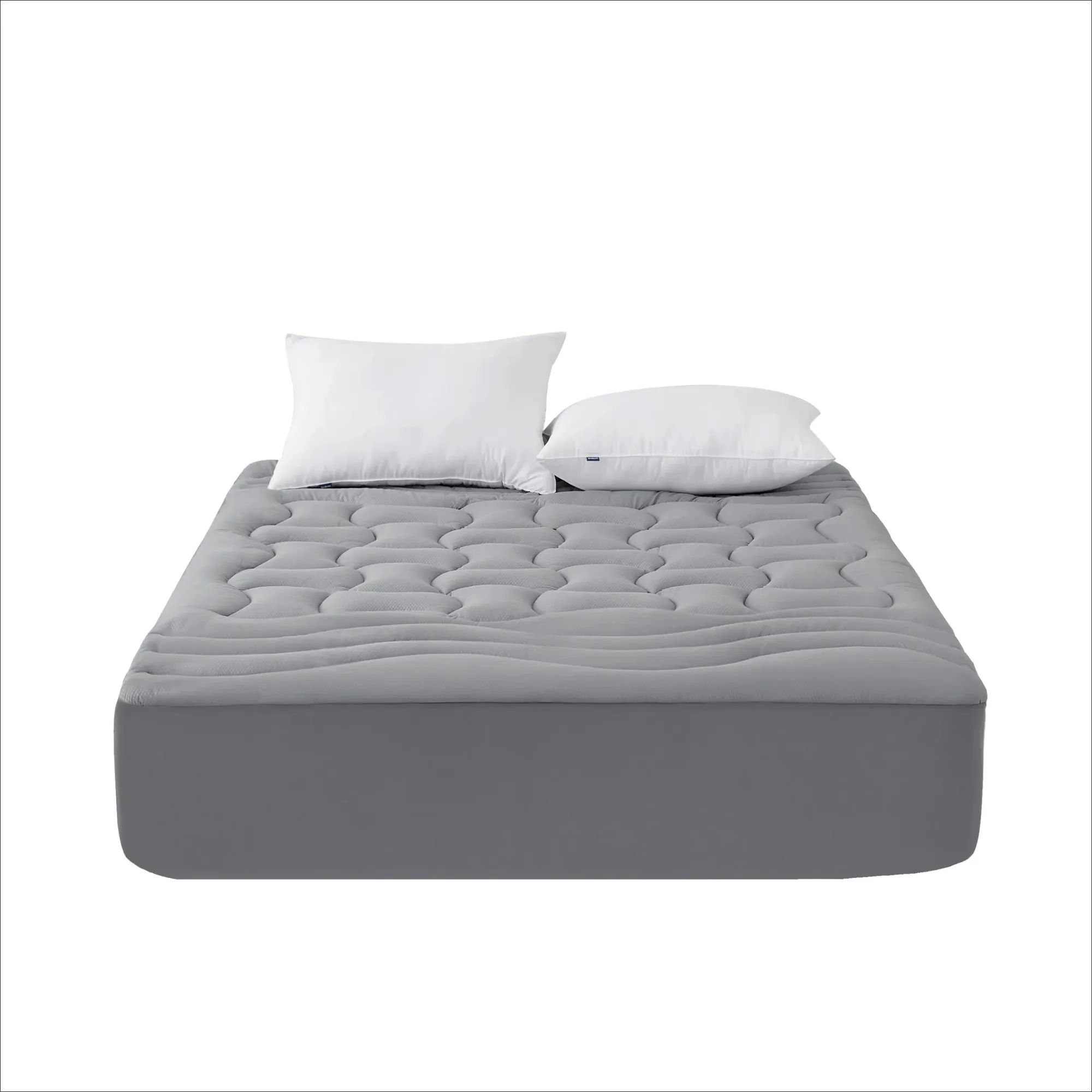
Three-Zone Waterproof Mattress Pad
-
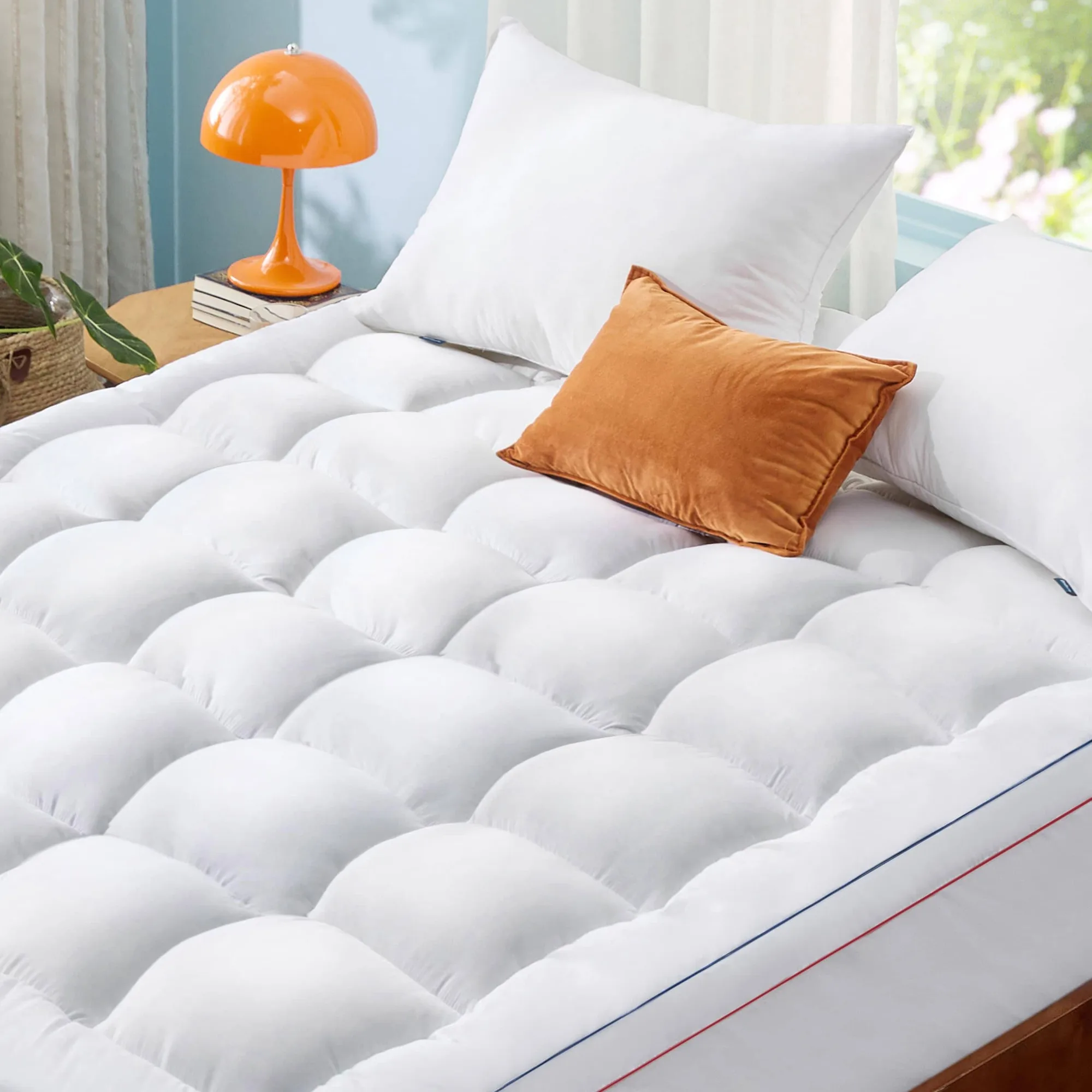
Thick Mattress Topper Pad Cover: This thick mattress topper pad uses snow down alternative filling and a brushed fabric cover for added softness and breathability. Its plush filling and noiseless fabric help it conform to the mattress, minimizing movement during sleep.