Quick answer
Most multivitamin queasiness comes from taking it on an empty stomach or from a tablet that sits undissolved and delivers its minerals all at once. Eat a meal with some fat and protein first, then take your multivitamin mid-meal rather than before or after. If that still leaves you queasy, a liquid formula you can measure and sip slowly is often easier to tolerate than a hard pill.
Why a multivitamin can upset your stomach
The minerals are usually the culprit, not the vitamins. Iron, zinc, magnesium, and calcium are the most common triggers of nausea, cramping, and that sour feeling in your throat. They are also the ingredients most likely to irritate an empty stomach because they dissolve and hit the gut lining quickly.
Form matters too. A hard tablet or capsule has to break down before you absorb anything, and if it breaks down slowly you can get a concentrated burst of minerals in one spot. Some people also react to the binders, coatings, and fillers used to hold a tablet together, especially if they take several pills at once.
The timing fix most people miss
The best time to take a multivitamin is with your largest meal of the day, not first thing in the morning on an empty stomach. Food buffers the minerals, slows their release, and gives fat-soluble vitamins like A, D, E, and K something to dissolve into. If breakfast is just coffee, that is often the whole problem.
If you take it in the morning and feel queasy by mid-morning, try moving it to lunch or dinner for a week before you blame the formula. Keep the meal consistent so you can tell whether timing actually helped.
- Take it mid-meal, not before or after.
- Pair it with food that contains fat and protein.
- Avoid taking it with coffee, tea, or a large glass of water on an empty stomach.
- Do not stack it with other supplements at the same sitting.
When a liquid formula is the better fit
If timing and food do not solve it, the delivery format is the next thing to change. A liquid multivitamin lets you measure a smaller starting amount and sip it slowly instead of swallowing a whole dose at once, which many people find gentler on the stomach. It also skips the tablet binders and coatings that some people react to.
Liquid formulas are not automatically easier for everyone. They still contain minerals, and they still need to be taken with food. The advantage is control: you can start with half a serving, see how you feel, and build up. For a nighttime routine, a liquid multimineral can be measured and taken after dinner rather than as a pill right before bed.
What to stop doing
Do not take a multivitamin on an empty stomach and then try to power through the nausea. Do not double up on doses to make up for a missed day, and do not take a multivitamin alongside a separate mineral supplement without checking the combined amounts. More is not better when the symptom is stomach irritation.
If you are taking a high-dose single nutrient like iron or zinc on top of a multivitamin, that combination is a common cause of nausea. Review the labels together and talk to your healthcare provider before stacking them.
Diagnose your nausea: symptom, cause, action, stop point
- Queasy within 30 minutes of taking it: This usually points to an empty stomach or a fast-dissolving tablet hitting the gut all at once. Eat a meal with fat and protein first, then take it mid-meal. If it still happens after a week, switch formats.
- Nausea plus cramping or loose stools: Magnesium and vitamin C are common triggers at higher amounts, especially when taken together. Lower the dose or split it across two meals. If symptoms continue, stop and talk to your healthcare provider.
- Nausea only with your morning dose: Coffee, tea, and a light breakfast do not buffer minerals well. Move the dose to lunch or dinner for one week and compare.
- Nausea with any form, any timing: Some people react to binders, fillers, or a specific mineral regardless of how they take it. Stop taking it and review the label with a healthcare provider before trying another product.
Product facts that matter for nausea-prone routines
- Liquid Nighttime Multimineral (Coconut) 15.22oz: Liquid Nighttime Multimineral (Coconut) is a liquid formula with seven minerals — magnesium, calcium, zinc, selenium, copper, manganese, and chromium — and no melatonin. If a tablet multimineral upsets your stomach, a liquid you can measure and take after dinner is easier to control, and the absence of melatonin means it will not make you drowsy on its own.
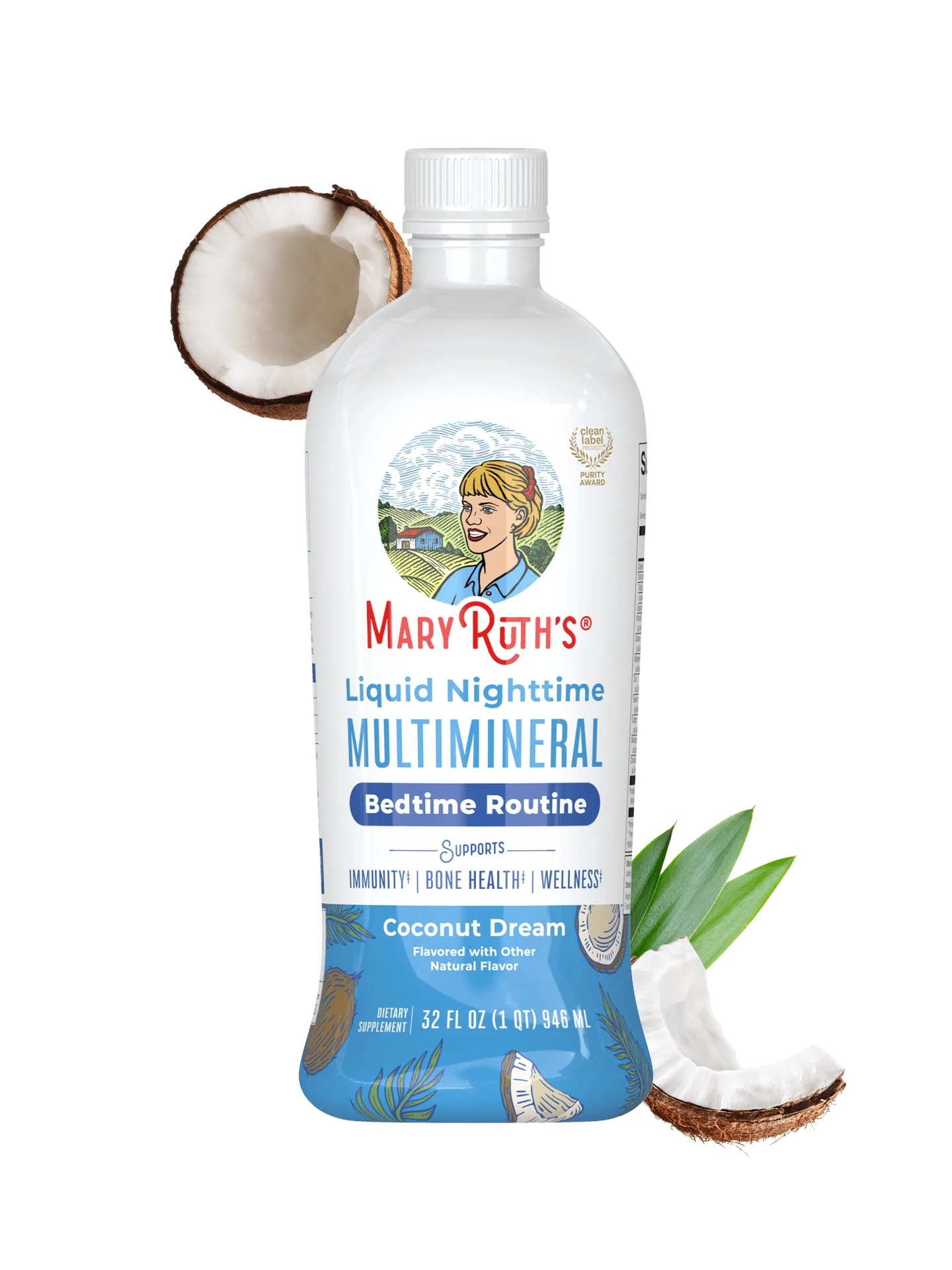
Liquid Nighttime Multimineral (Coconut)
- Liquid Morning Multivitamin + Hair Growth: https://maryruthorganicsto.com/products/liquid-morning-multivitamin-hair-growth-381795https://maryruthorganicsto.com/products/liquid-morning-multivitamin-hair-growth-381801https://maryruthorganicsto.com/products/liquid-morning-multivitamin-hair-growth-381825Liquid Morning Multivitamin + Hair Growth is a liquid multivitamin with Lustriva®, shown in women to support thicker, fuller hair and smoother skin, plus nutrients for energy metabolism and immunity. A liquid morning option lets you take your multivitamin with breakfast in a measured amount rather than swallowing a tablet on an empty stomach.
- Liquid Morning Multivitamin + Hair Growth Travel Pack: Liquid Morning Multivitamin + Hair Growth Travel Pack is an 8-pack of pre-measured 1 oz single-serving bottles with Lustriva® and no measuring required. Pre-measured servings make it easier to keep taking your multivitamin with a meal while traveling, when routine changes often trigger skipped doses or empty-stomach dosing.