Quick answer
Nail powder manicures peel most often because of surface oils, inadequate buffing, or a too-thick base layer. Fix each cause with targeted prep steps and product choices — and know when to start over instead of patching.
Why nail powder lifts at the edges
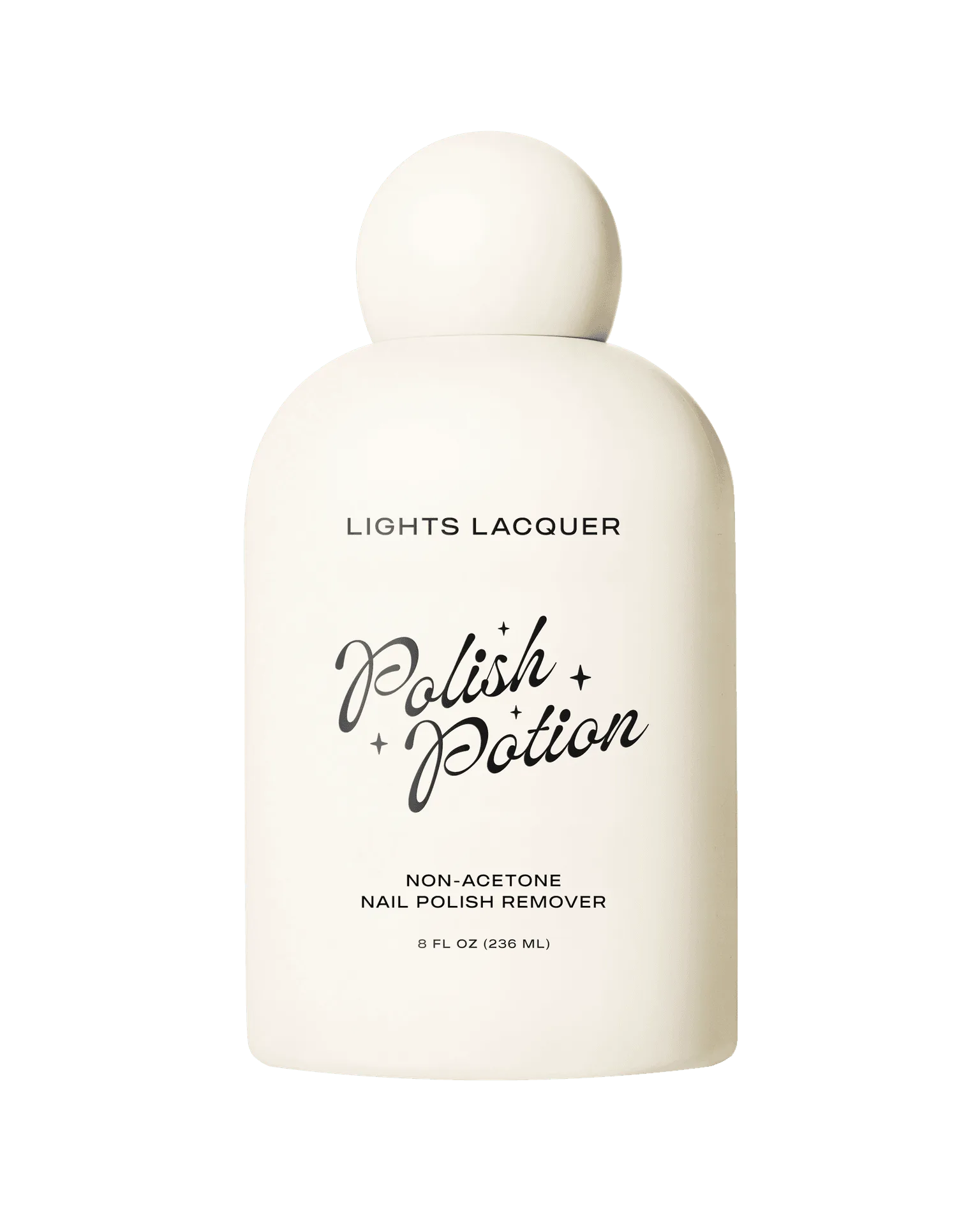
Peeling usually starts at the free edge or sidewalls. The most common culprit is residual oil or moisture on the natural nail. Even a trace of cuticle oil, hand cream, or natural sebum prevents the base from bonding. Wipe each nail with a lint-free pad soaked in a gentle, non-acetone remover like Polish Potion before you start — its Sweet Almond Oil and Vitamin E won't strip your nails, but it will remove surface residue without leaving a greasy film.
Another frequent cause is an uneven or too-thick base coat. When the base layer is applied heavily, it cures with a rubbery texture that doesn't anchor the powder. Aim for a thin, even coat that covers the nail without pooling at the cuticle or edges. If you see bumps or ridges after curing, buff them lightly before applying powder.
How to fix peeling after application
If you notice a small lift within the first 24 hours, you can often save the manicure without starting over. Gently file the lifted edge with a fine-grit buffer, wipe the area with Polish Potion to dehydrate it, and apply a thin layer of top coat over the entire nail. Seal the free edge by swiping the brush horizontally across the tip. This works best when the lift is less than 2 mm wide.
For larger areas of peeling — more than a quarter of the nail surface — patching rarely holds. The better move is to remove the entire manicure with a gentle remover and redo the prep. Trying to patch a big lift often traps air and leads to more peeling within a day.
Prevention: prep steps that actually help
Consistent nail care between manicures makes the biggest difference. Keep your nail plates dry and free of oils for at least 30 minutes before applying any base product. If you use cuticle oil daily (which you should for healthy nail beds), apply it after your manicure is fully cured, not before. A 21-free formula polish like Flower Girl or Birthday Wishes is less likely to cause lifting because it lacks common irritants that can interfere with adhesion over time.
Also check your buffing technique. You want a matte surface, not a shiny one — a light buff with a 240-grit block is enough. Over-buffing thins the nail and creates dust that prevents bonding. Wipe away all dust with Polish Potion before the base coat.
Diagnosis: Is your nail powder manicure worth saving?
- Symptom: Peeling at the free edge or sidewalls within 48 hours of application. Likely cause: surface oil or moisture left on the nail plate before the base coat.
- Corrective action: For small lifts (under 2 mm): buff the edge, wipe with Polish Potion, and seal with top coat. For larger lifts: remove entirely and redo prep. Patching a large lift traps air and will peel again within a day.
- Prevention checkpoint: Keep nails dry and oil-free for 30 minutes before application. Buff to a matte finish, wipe away all dust, and apply a thin, even base coat. Consistent prep is more reliable than any product fix.
Products mentioned in this guide
- Polish Potion: A gentle, non-acetone formula with Sweet Almond Oil and plant-derived Vitamin E that conditions nails while removing polish. Using a non-acetone remover for prep and removal avoids the drying that can make nail plates brittle and more prone to peeling.
- Flower Girl: A milky pink crelly polish with a buildable sheer finish and 21-free formula. A 21-free formula reduces the chance of adhesion interference from common harsh chemicals, helping your manicure stay intact longer.
- Birthday Wishes: A cool lavender metallic polish with a reflective, lustrous finish. Metallic finishes can show imperfections more easily, so proper prep and thin coats are especially important — this polish rewards careful technique.