Quick answer
A window restrictor is a simple safety device that limits how far a window can open, reducing the risk of falls for children and pets while still allowing fresh air and natural light into your home.
Why a window restrictor is different from a standard lock
Standard window locks typically keep a window fully closed or fully open. A window restrictor, on the other hand, allows you to set a safe opening limit—usually just a few inches—so you get ventilation without leaving a dangerous gap. This makes it especially useful for upstairs windows or rooms where children play.
Another difference is installation. Many restrictors use strong adhesive instead of screws, so you don't need to drill into your window frame. That also means you can remove them later without damaging the surface, which is helpful for renters or if you want to reposition the device.
Trade-offs to consider
While window restrictors are very effective, they do limit the maximum opening of your window. If you ever need to fully open the window for cleaning or emergency exit, you may need to remove or release the restrictor. Some models are designed for easy release, but it's worth checking before you buy.
Also, adhesive-mounted restrictors rely on a clean, dry surface for a strong bond. If your window frame is dusty, oily, or uneven, the adhesive may not hold as well. In those cases, a screw-mounted option might be more reliable.
Frequently asked questions about window restrictors
How does a window restrictor improve child safety?
A window restrictor limits how far a window can open—typically to 4 inches or less. This prevents a child from squeezing through or falling out, while still allowing fresh air to enter. It acts as a physical barrier that is difficult for young children to override.
Can I install a window restrictor without drilling?
Yes, many window restrictors use strong adhesive pads, such as 3M™ VHB tape, that bond securely to clean window frames. No drilling or permanent modification is needed. Just clean the surface, peel the backing, and press firmly. For the best hold, clean the window frame with rubbing alcohol and let it dry completely before applying the adhesive.
Will the restrictor let me still open the window for cleaning?
Most restrictors allow you to release or disengage them when needed. For example, some have a simple latch or button that you press to fully open the window. Check the product instructions to see how the release mechanism works on your model.
Is a window restrictor suitable for all window types?
Window restrictors work best on sliding windows (double-hung or horizontal sliders) and casement windows. For other types like awning or fixed windows, you may need a different safety solution. Always measure your window track or frame before purchasing.
At what age should I install window restrictors?
Install them as soon as a child starts crawling or pulling up to stand, usually around 6 to 9 months. Falls from windows can happen quickly, so it's better to install them before you think you need them. Keep them in place until the child is old enough to understand the danger, typically around age 6 or older. Make it a habit to check that the restrictor is engaged every time you open the window.
Product spotlight
-
BABYGO® Window Restrictor: The BABYGO® Window Restrictor uses high-strength 3M™ adhesive for quick, no-drill installation and removes without lasting marks. This makes it easy to install on any clean window frame, even in rental homes, and you can reposition or remove it later without damaging the surface.
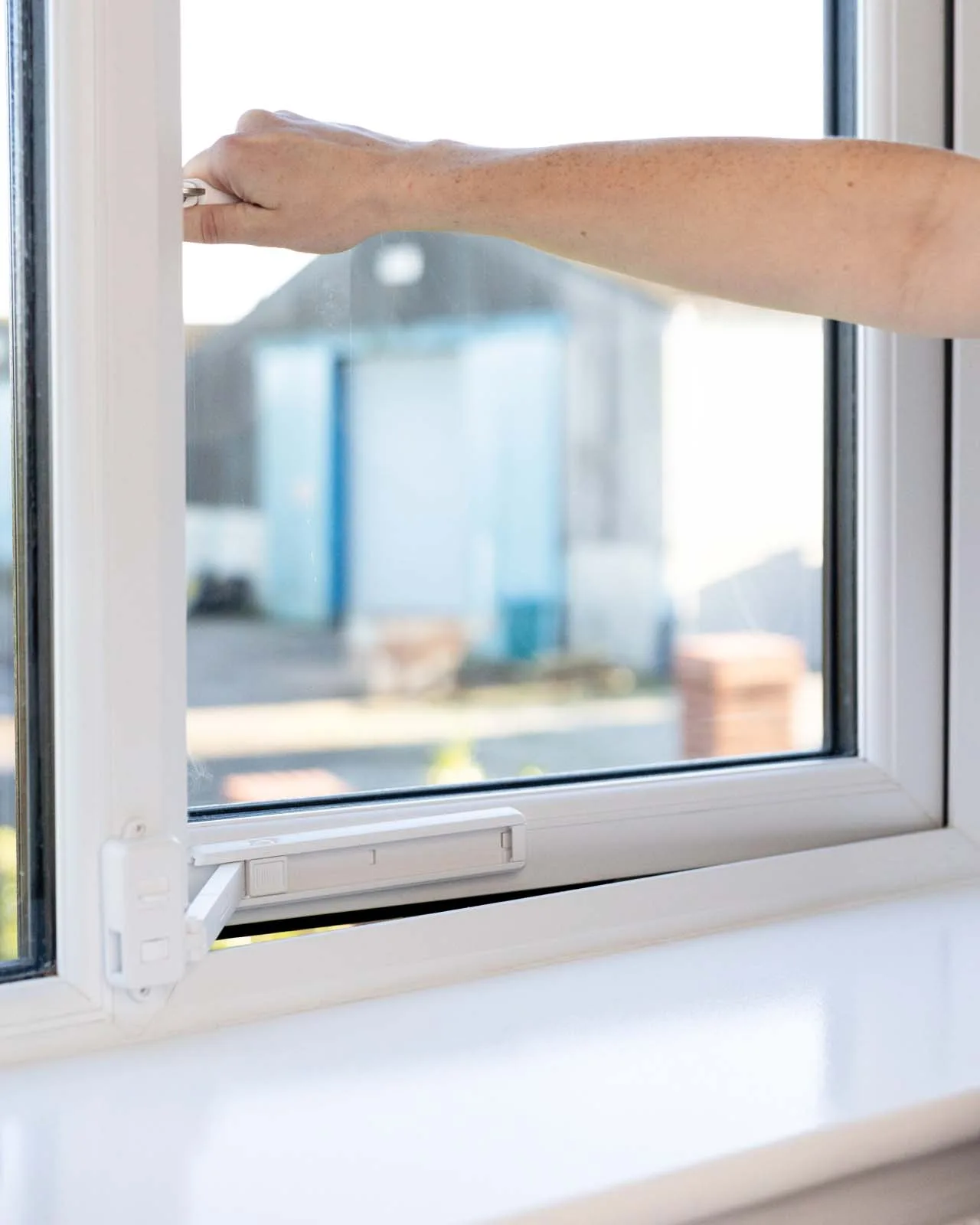
BABYGO® Window Restrictor