Quick answer
Your baby likely won't sleep without white noise because they've formed a sleep association with the sound. This is normal and not harmful, but if you want more flexibility, you can gradually reduce the volume or use a portable machine to maintain consistency away from home.
Why white noise becomes a sleep crutch
White noise mimics the constant whooshing sound babies hear in the womb, which is why it's so effective at calming them. Over time, your baby learns that this sound means it's time to sleep. This is a classic sleep association—just like rocking or nursing. The issue isn't the white noise itself, but the fact that your baby may struggle to fall back asleep without it during normal nighttime wakings.
The good news is that a white noise dependency is not a developmental problem. Many parents use it intentionally to help their baby sleep better. The challenge only arises if you want to stop using it or if you need to travel and can't replicate the same sound environment.
When it might be a problem
If your baby wakes up screaming the moment the white noise stops, or if you find yourself unable to leave the room without them waking, the association may be too strong. In these cases, the white noise is masking other sleep cues like room silence or your presence. This can make it harder for your baby to learn self-soothing.
Also consider the volume. The American Academy of Pediatrics recommends keeping white noise machines at or below 50 decibels (about the sound of a gentle rainfall). If you have to raise the volume to cover household noise, your baby may become reliant on a sound level that isn't safe for long-term hearing.
Diagnosis: Is it a problem or just a habit?
- Symptom: Your baby falls asleep quickly with white noise but wakes up crying when it stops or when the sound is absent.
- Likely cause: Your baby has formed a strong sleep association with white noise. They rely on the sound to transition between sleep cycles, so when it's gone, they don't know how to fall back asleep on their own. This is normal and not harmful. Many babies outgrow it naturally.
- Corrective action (if you want to reduce dependency): Gradually lower the volume of the white noise over 1-2 weeks until it's barely audible, then stop. Alternatively, use a timer to turn it off after your baby is deeply asleep (20-30 minutes). Do not go cold turkey, as this can cause anxiety. If your baby still wakes after the sound stops, consider keeping the white noise on all night at a safe volume.
- When to stop and choose another option: If your baby is sleeping well with white noise and you don't mind using it, there is no medical reason to stop. White noise machines like the Babelio Pocket Mini Glow are safe and effective when used correctly. Only intervene if the dependency causes stress for you or your baby.
Product spotlight
-
White Noise Machine For Sleep & Relaxation-Babelio Pocket Mini Glow: The Babelio Pocket Mini Glow is one of the smallest portable white noise machines, designed to fit in your pocket yet powerful enough to create a calming environment at home, in the nursery, or on the go. If your baby is dependent on white noise, a portable machine lets you maintain the same sleep association while traveling, so you don't have to worry about breaking the habit just because you're away from home.
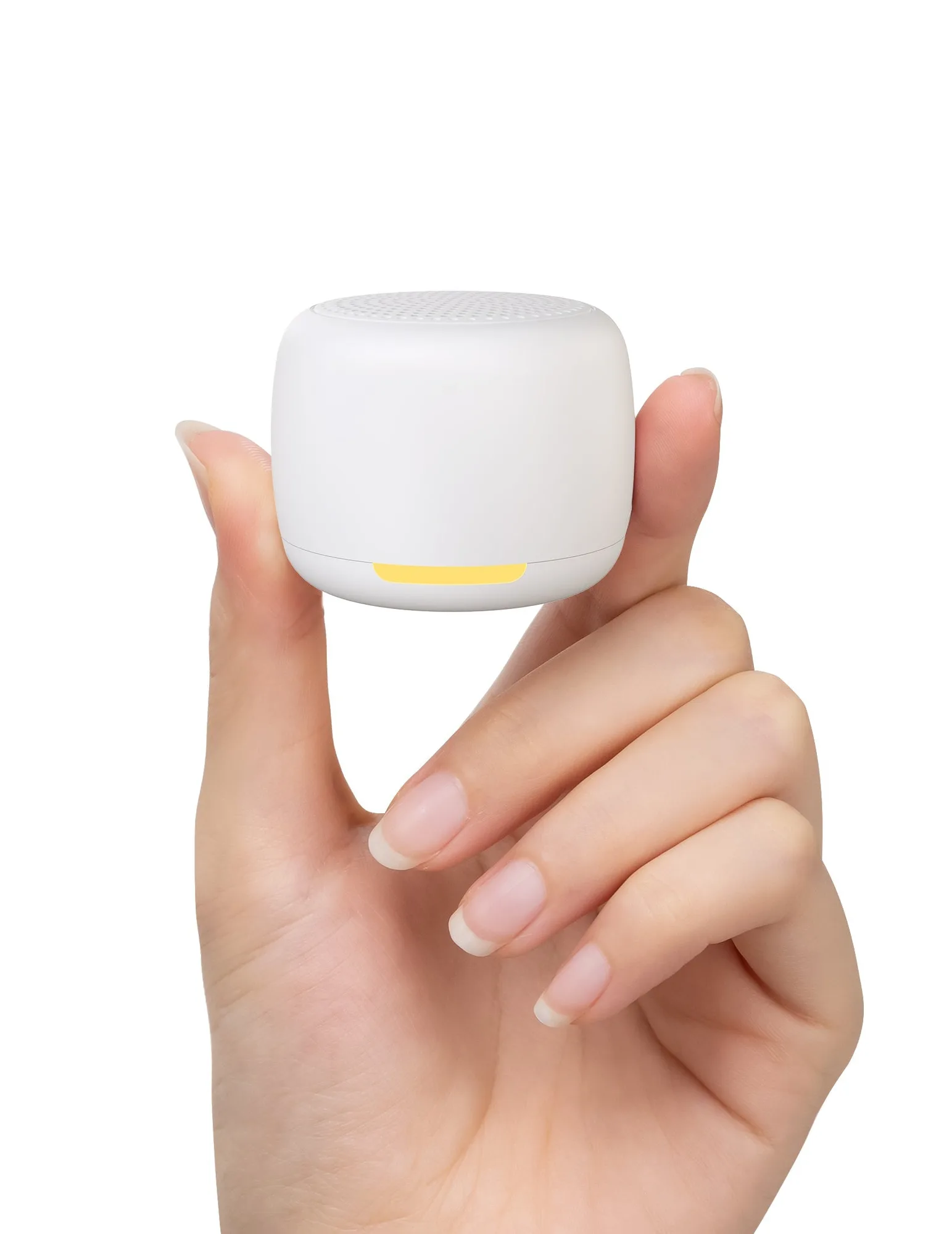
White Noise Machine For Sleep & Relaxation-Babelio Pocket Mini Glow