Quick answer
Most babies walk between 9 and 18 months, so a delay isn't always a problem. If your baby is at least 9 months old and pulling to stand, a wooden baby walker can support practice—but only with supervision, on flat floors, and never near stairs.
When do babies typically start walking?
Walking is a major milestone, but the range of 'normal' is wide. Many babies take their first independent steps around 12 months, but some wait until 16 or 18 months. Before walking, babies usually roll, sit, crawl, pull to stand, and cruise along furniture. If your baby is hitting earlier milestones but hasn't walked yet, they're likely on track.
If your baby is older than 18 months and shows no interest in standing or walking, or if you notice one-sided movement or stiffness, check with your pediatrician. Trust your instincts—you know your child best.
How can a baby walker help (and when to skip it)?
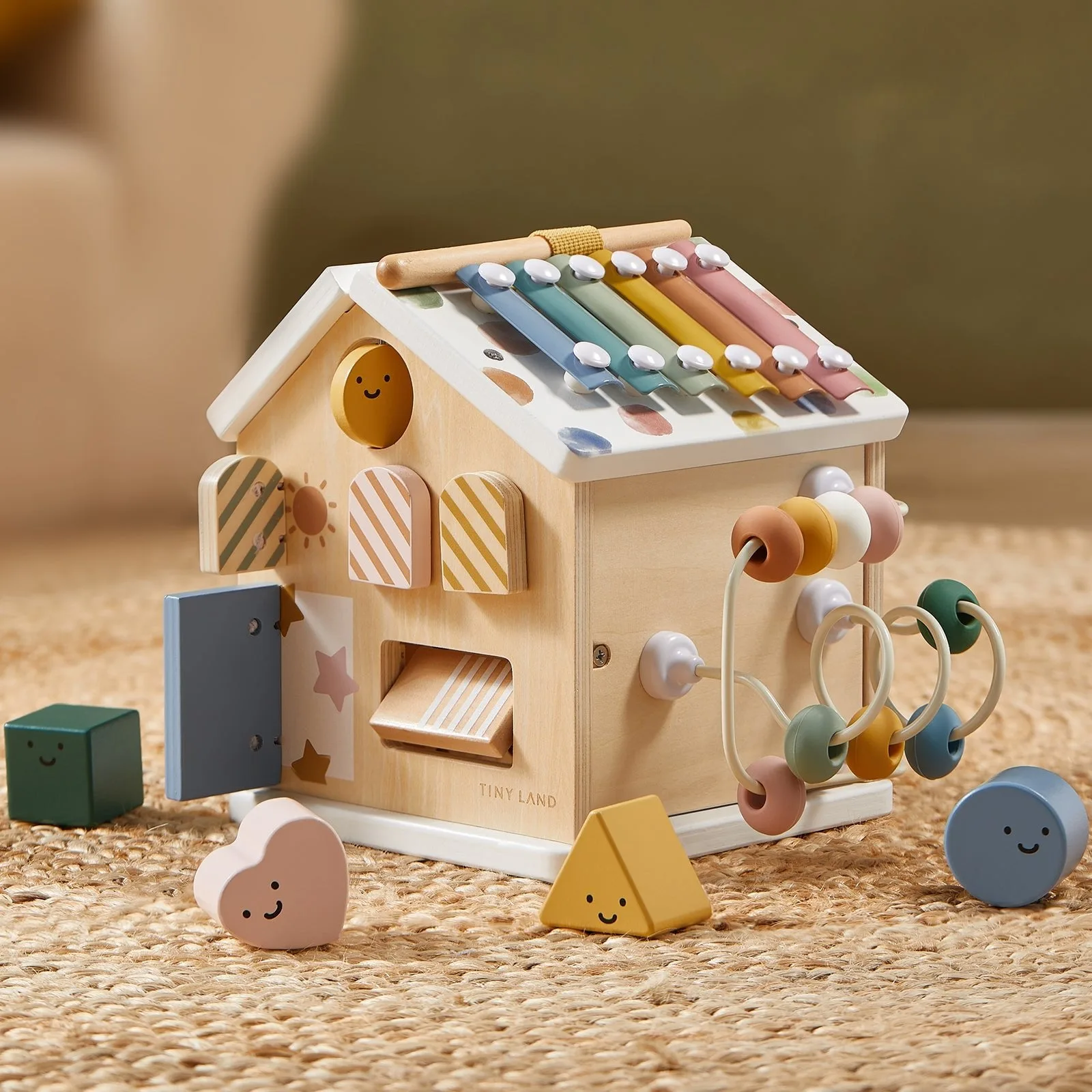
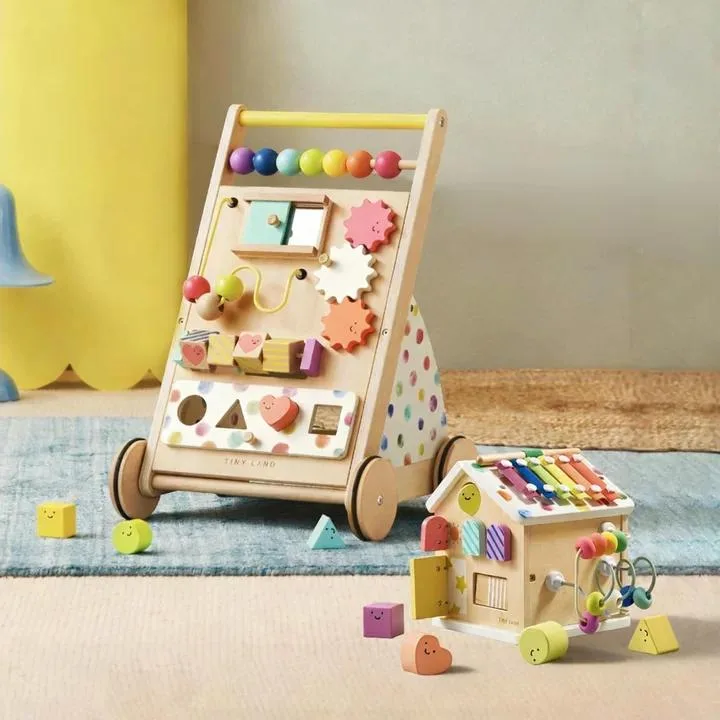
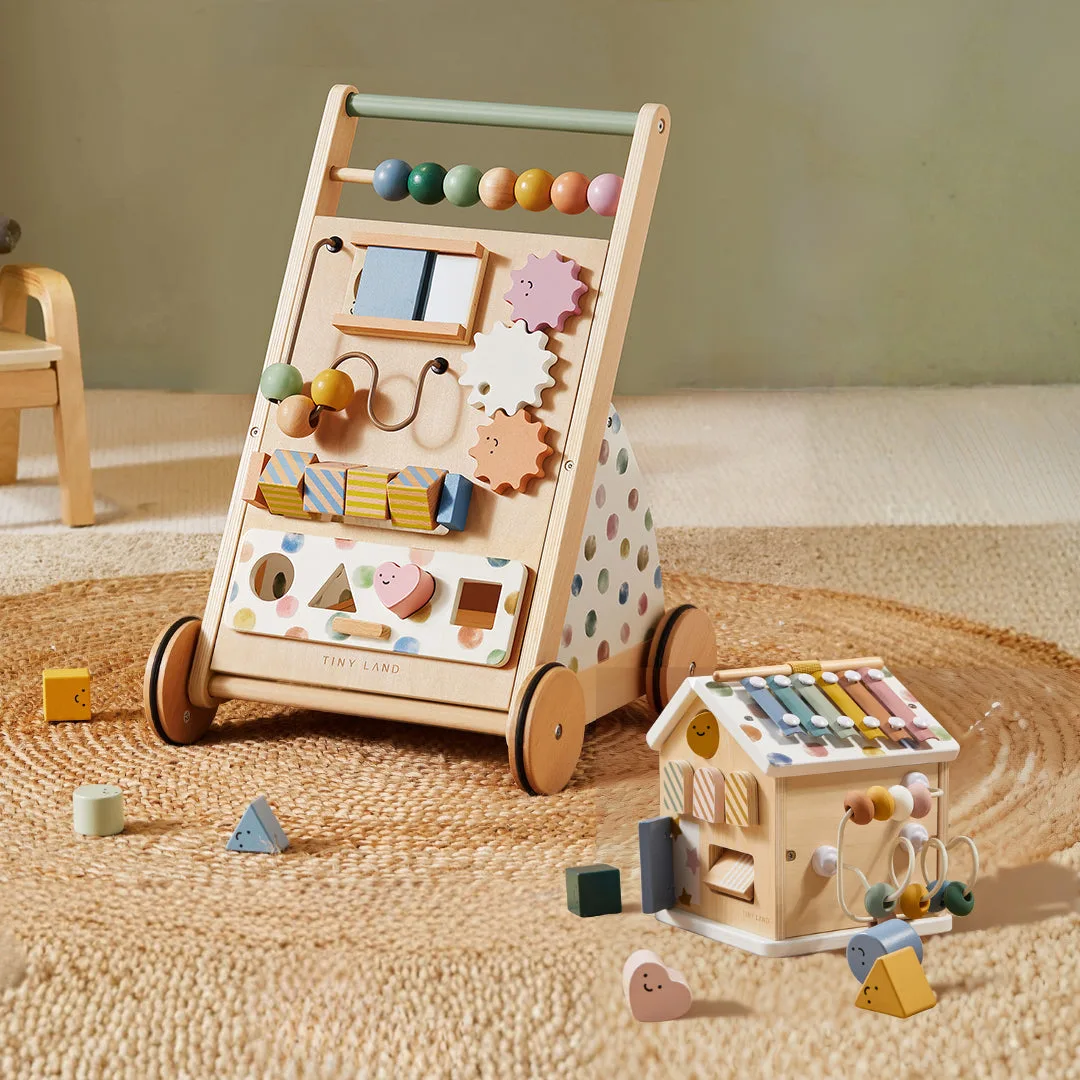
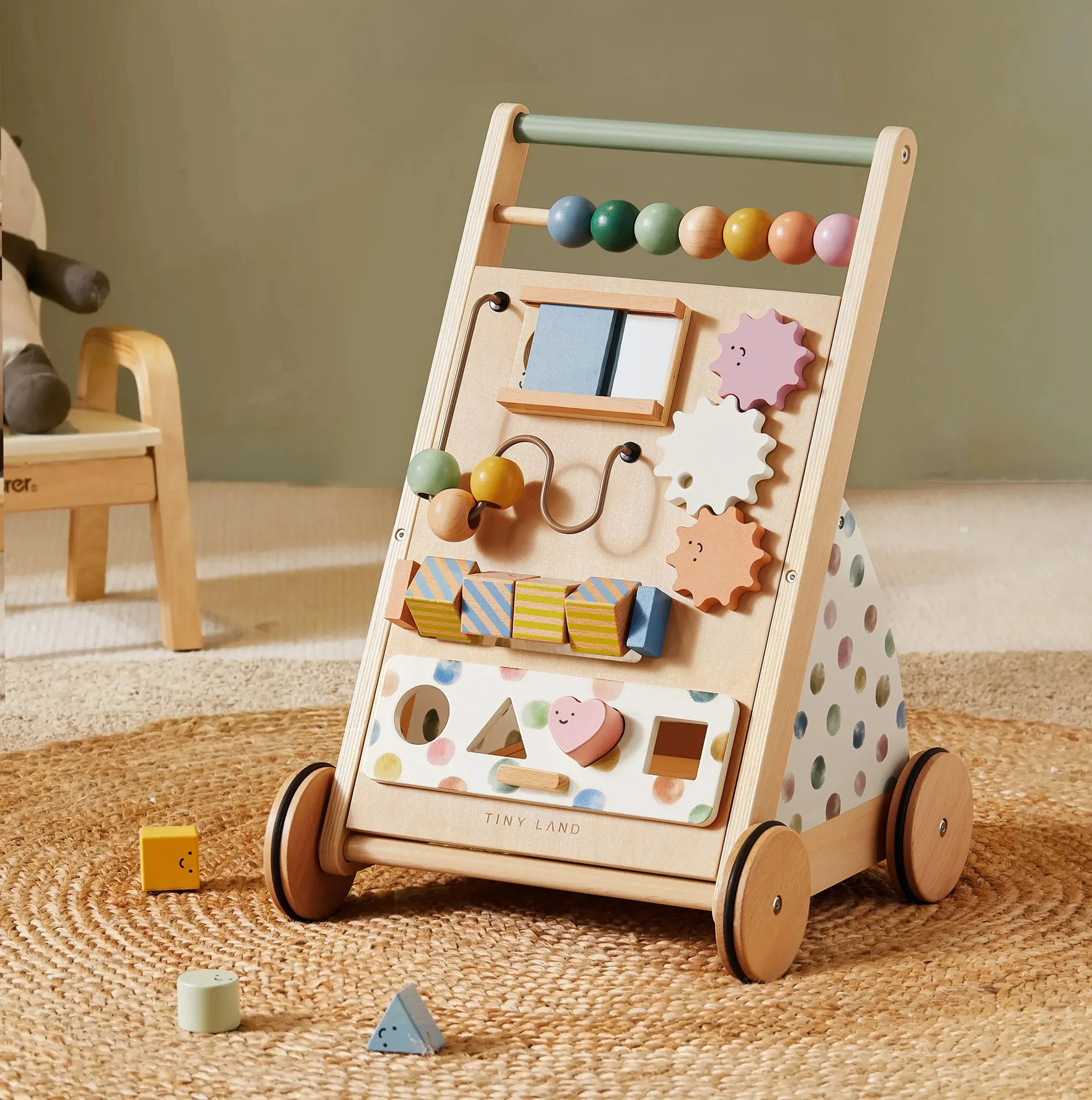
A baby walker can support balance and confidence once your baby can pull to stand and take a few steps with support. The Tiny Land Complete Development Playset — Baby Walker + Activity Cube pairs a sturdy natural wood walker with a Montessori-inspired activity cube, so your child can practice walking and then sit to explore.
Skip the walker if your baby isn't pulling to stand yet. Forcing walking too early can frustrate your child and may delay natural progress. Also, avoid walkers on uneven ground, near stairs, or around hot surfaces. Always supervise active play.
- Use a walker on flat, even floors only.
- Keep walkers away from stairs, thresholds, and rugs.
- Never leave your baby unattended in a walker.
Other ways to encourage first steps
Barefoot time on a safe floor helps build foot strength and balance. Place enticing toys just out of reach to motivate cruising. Hold your baby's hands and walk together, or let them push a sturdy walker while you spot them. Praise every attempt, even if they plop down after a few steps.
Remember, every baby develops at their own pace. Patience and positive encouragement matter more than any toy. If you're concerned, a pediatrician can offer personalized guidance.
Diagnosis: Is it time to worry or to wait?
- Symptom: Your baby is over 12 months old and not walking independently. Still within the typical range if they're crawling, pulling to stand, or cruising.
- Likely cause: Individual development pace, not necessarily a problem. Some babies skip crawling or walk later. Most delays are normal, but watch for one-sided movement or lack of standing by 18 months.
- Corrective action: Encourage barefoot practice, offer a sturdy wooden walker once your baby pulls to stand, and supervise all walker use. Consistent, safe practice builds confidence.
- When to stop or choose another option: If your baby isn't pulling to stand yet, or if you notice regression, pain, or asymmetry, pause walker use and consult a pediatrician. Professional advice can rule out underlying issues and guide next steps.
A walker that fits the milestone
- Complete Development Playset — Baby Walker + Activity Cube: Natural wooden baby walker with a sturdy, child-safe frame that promotes balance and confidence during walking practice. A stable, well-built walker gives your baby a secure base to push against while building leg strength and coordination.
If your baby is cruising and pulling up, a supervised walker session can be a fun way to practice. But if you have any doubts about development, a quick chat with your pediatrician brings peace of mind.