Quick answer
Most toddlers who won't stack blocks are not stubborn; they are still developing the hand control and patience stacking requires. Start with larger, lighter blocks on a stable surface, model one block at a time, and celebrate knocking down as much as building up. If your child is under 18 months or shows no interest after several weeks of low-pressure exposure, stop pushing and choose a different fine motor activity for now.
You bought a beautiful set of wooden blocks, cleared a cozy corner, and sat down ready to build. Your toddler picked up a block, banged it on the floor, and walked away. If this scene feels familiar, you are not alone. Many parents search for answers when their toddler won't stack blocks, wondering if something is wrong or if they are doing something wrong.
The truth is that stacking is a complex skill that combines fine motor control, hand-eye coordination, balance, and persistence. It rarely appears on demand. This guide walks through the most common block stacking problems, what they usually mean, and what you can actually do about them without turning play into a power struggle.
Symptom: Your toddler knocks down every tower you build
If your child seems more interested in destruction than construction, that is developmentally normal. Knocking down a tower teaches cause and effect, and many toddlers find it far more satisfying than the slow work of stacking. The problem is not that they cannot stack; it is that they have not yet discovered the payoff of building.
Try building a two-block tower and leaving it there without fanfare. When your child knocks it down, say 'crash!' and rebuild it once. Then pause. If they knock it down again, rebuild it again but add a third block. Over time, some toddlers start placing a block back on the tower themselves, which is the first real step toward stacking.
- Keep towers short at first; two or three blocks is plenty.
- Use blocks that are large enough not to be a choking hazard but light enough to lift easily.
- Narrate what you are doing: 'I put the red block on top.'
Symptom: Blocks slide or fall as soon as your toddler places them
If your child tries to stack but the blocks topple immediately, the problem may be the blocks themselves or the surface. Very small or very smooth blocks are hard for little hands to align. A soft or uneven surface like a bed or rug makes balancing nearly impossible. Even a slightly tilted floor can sabotage a toddler's best effort.
Move block play to a firm, flat surface such as a low table or hardwood floor. Choose blocks with a bit of weight and a flat face, like standard wooden unit blocks. If your child is still in the early stages, try stacking just two blocks and then gently steadying the bottom one with your hand while they place the top one.
- Avoid stacking on carpet, beds, or sofa cushions.
- Check that the bottom block is not rocking before your child adds another.
- Sit beside your child rather than across from them so they can watch your hands.
Symptom: Your toddler gets frustrated and gives up quickly
Toddler fine motor frustration is real and often looks like a meltdown over a block that will not cooperate. At this age, the gap between what a child wants to do and what their hands can do is wide. When every attempt ends in a crash, some toddlers decide the activity is not worth the effort and move on.
Lower the difficulty. Instead of asking your child to build a tower, ask them to hand you blocks while you build. Or place a block on a flat surface and invite them to put another block next to it, not on top. Success builds motivation. Once they feel competent, they are more likely to try stacking again.
- Break the task into smaller steps: pick up, place, release.
- Celebrate any attempt, even if the block does not land perfectly.
- End block play while your child is still happy, not after frustration peaks.
Symptom: Your toddler stacks other things but not blocks
Some toddlers stack cups, books, or food but ignore the wooden blocks in the bin. This is often a preference issue, not a skill issue. Blocks can feel heavy, cold, or simply boring compared to a colorful toy that makes noise or moves. If your child stacks other objects, they have the motor control; they just need a reason to use it with blocks.
Try mixing blocks with a favorite toy. For example, a wooden block truck like the PAW Patrol Wooden ABC Block Truck combines a vehicle with blocks that stack on attached dowels. Your child can load and stack blocks while pushing the truck around, which gives the stacking a purpose beyond tower building.
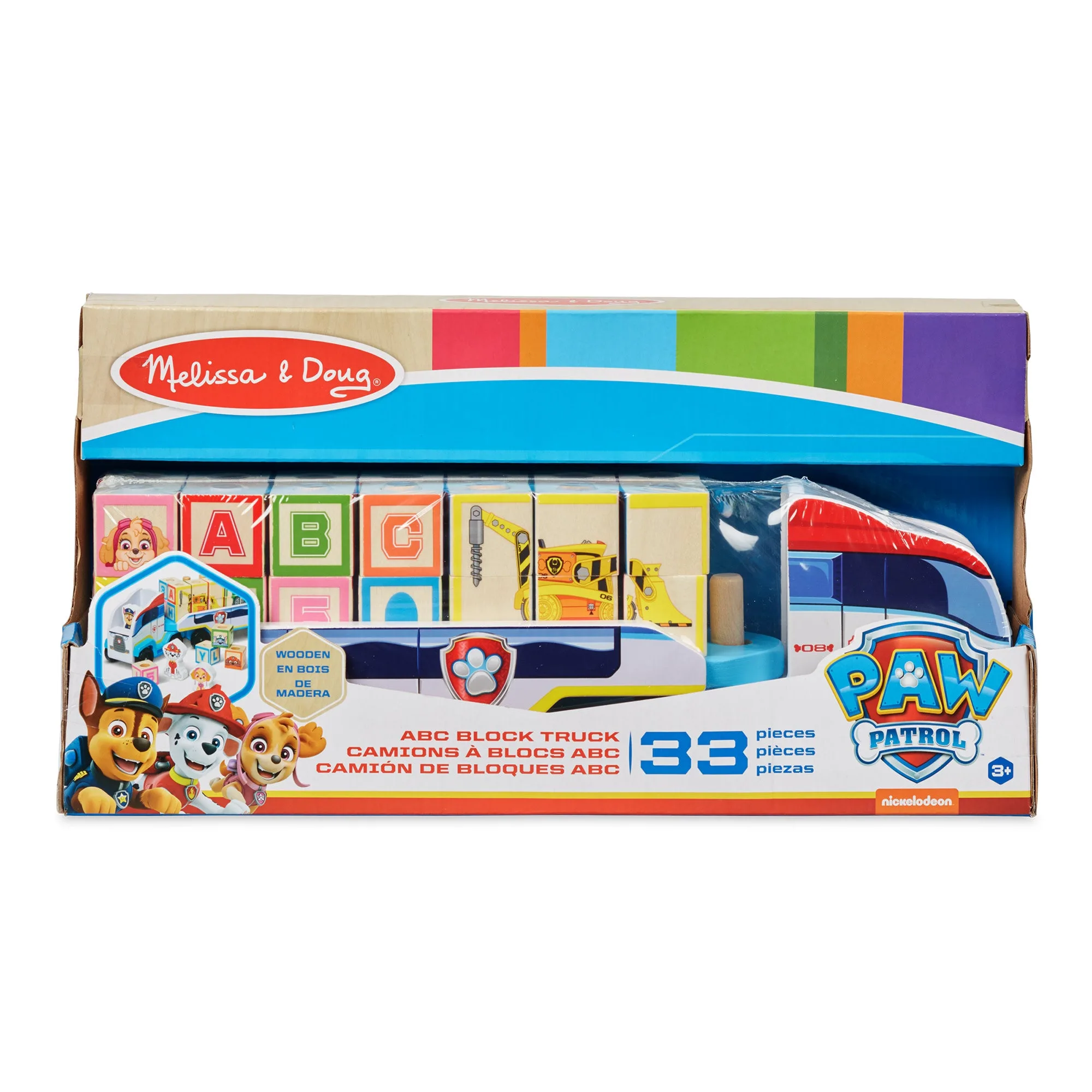
PAW Patrol Wooden ABC Block Truck
- Offer blocks alongside a toy your child already loves.
- Rotate block sets so they feel new again.
- Let your child stack blocks in a container or on a tray to define the play space.
Symptom: Your toddler is not interested at all, no matter what you try
If weeks of gentle exposure have passed and your child still shows zero interest in stacking, it may simply be too early. Stacking typically emerges between 18 months and 3 years, and the range is wide. Some children are more interested in movement, music, or pretend play, and that is okay. Forcing block play can create a negative association that lasts longer than the phase itself.
At this point, stop making stacking a goal and choose another activity that builds similar skills. Pull toys, shape sorters, and simple puzzles all develop hand strength and coordination without requiring a tower. You can always reintroduce blocks later when your child's interests shift.
- Try a pull toy like the First Play Frolicking Frog Wooden Pull Toy to encourage movement and grasping.
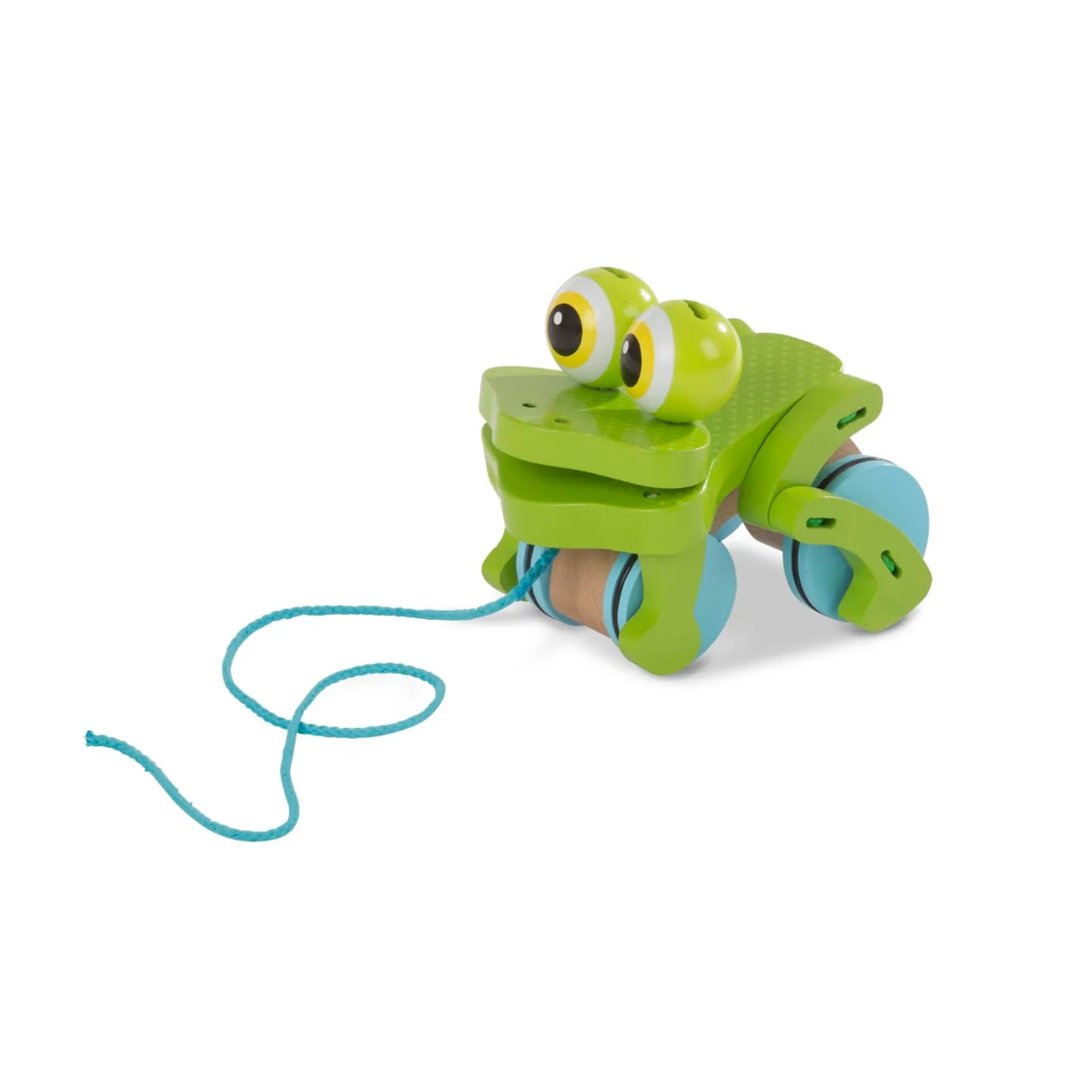
First Play Frolicking Frog Wooden Pull Toy
- Offer a shape sorter or chunky puzzle for fine motor practice.
- Reintroduce blocks in a few weeks with no pressure.
Quick diagnosis: match the symptom to the next step
- Knocks down towers but never places a block: Your child may still be in the cause-and-effect stage. Build two-block towers and let them knock them down. Rebuild once or twice, then stop for the day. If this continues for more than a month with no attempt to place a block, try a different fine motor toy for now.
- Tries to stack but blocks keep falling: Check the surface and the blocks. Move to a firm, flat table and use blocks with flat faces and a bit of weight. Steady the bottom block with your hand if needed. If the blocks still fall easily, the set may be too small or too smooth for your child's current hand control.
- Gets frustrated and gives up after one or two tries: Reduce the challenge. Ask your child to hand you blocks or place blocks side by side instead of on top. Praise effort, not just success. If frustration turns into tears every time, take a two-week break from stacking and revisit later.
- Shows no interest in blocks at all after several weeks: Stacking may simply be too early. Offer pull toys, shape sorters, or chunky puzzles to build similar skills without the pressure of tower building. Reintroduce blocks when your child shows curiosity about stacking other objects.
Toys that support block stacking and fine motor skills
- PAW Patrol Wooden ABC Block Truck: This sturdy wooden hauler vehicle has attached dowels for arranging wooden blocks, and the blocks include letters, numbers, shapes, scenes to piece together, and PAW Patrol characters. Three wooden play figures add pretend play opportunities. The dowels give toddlers a built-in guide for stacking, which reduces the frustration of balancing blocks freehand. The vehicle theme can also motivate children who are not interested in traditional block towers.
- First Play Frolicking Frog Wooden Pull Toy: This pull toy bounces, bobs, and jiggles as it follows kids 18 months and older. Non-skid wheels move forward and backward, and the mouth opens and closes. If your toddler is not ready to stack, a pull toy builds grasping, reaching, and whole-body movement without the precision stacking demands. It keeps fine motor practice playful while you wait for stacking readiness.
Stacking blocks is a skill that arrives on its own timeline, and most toddlers who refuse today will surprise you in a few months. Focus on low-pressure exposure, choose toys that match your child's current abilities, and let knocking down be part of the fun. If frustration runs high, step back and try again later. The blocks will still be there.