Quick answer
Wooden dice boxes vary because of differences in wood species, joinery, and finish application. Understanding these factors helps you pick a box that protects your dice and lasts through years of gaming.
Wood type and construction matter most
Hardwoods like oak and maple resist dents and hold a smooth finish longer than softer woods. A box made from rosewood or walnut often has a tighter grain and richer natural color, but may be heavier and more expensive.
Joinery also separates quality levels. Dovetail or finger joints indicate careful assembly, while glued butt joints or staples suggest lower durability. Check the corners and lid alignment before buying.
Finish affects both look and protection
A quality finish seals the wood against moisture and oils from your hands. Lacquer or polyurethane coatings provide a hard, glossy surface that resists scratches. Oil finishes, like tung or danish oil, penetrate the wood and give a matte feel but require periodic reapplication.
Inspect the finish for evenness. Uneven patches, bubbles, or a sticky feel indicate rushed application. A well-finished box should feel smooth and smell like wood, not strong chemicals.
Random assortments: a trade-off in consistency
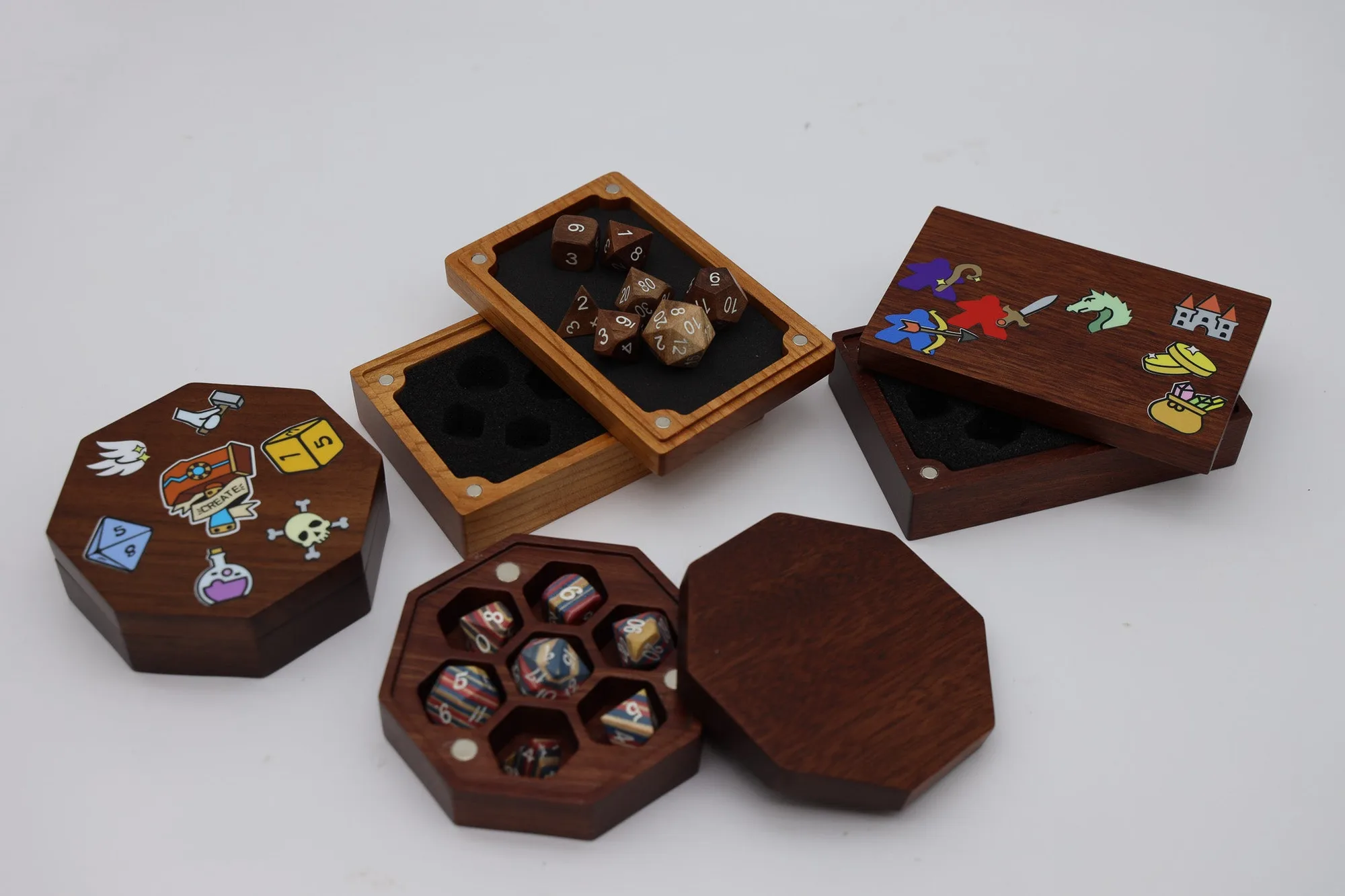
Random assortment boxes offer variety and a lower price point, but you cannot control the wood type, style, or insert configuration. Some arrive with a foam insert, others with wooden compartments. This unpredictability is fine if you enjoy surprises, but less ideal if you need a specific look or fit for your dice.
Because these boxes ship in a bag without a container, the box itself is the only protection. Check the box carefully upon arrival for any damage during shipping.
Diagnosing your wooden dice box
- Symptom: The box feels rough or splintery, or the lid does not close flush. This indicates poor sanding or warped wood. Consider returning the box or sanding and refinishing it yourself if you have the tools.
- Likely cause: Insufficient sanding between finish coats, or the wood was not properly dried before assembly. Low-cost boxes often skip these steps.
- Corrective action: Lightly sand the rough areas with 220-grit sandpaper, wipe clean, and apply a thin coat of furniture wax or mineral oil. For a warped lid, try placing the box under a stack of heavy books for 24 hours. If the warp does not flatten, the wood may be too thin or the grain unstable. At that point, replace the box.
- Stop or choose another option: If the box has a strong chemical smell, visible glue drips, or cracks in the wood, do not attempt repairs. These signs point to a box that will not hold up over time. Look for a box with clear joinery and a smooth, even finish. For a guaranteed quality, choose a box from a known hardwood with a protective finish. Random assortments can be a fun gamble, but inspect them closely on arrival.
Product facts
-
Wooden Dice Box (Random Assortment): Special Buy! Channel your inner druid with these wooden dice boxes. Boxes have assorted styles, shapes, woods and inserts (either wooden compartments or a foam insert). Woods include maple, rosewood, oak and more. NOTE: Unlike our normal products, these will ship in bags without a container. Dice not included. The random assortment gives you a surprise box at a lower price, but you won't know the exact wood or insert type until it arrives, so it's best for collectors who enjoy variety over consistency.
Wooden Dice Box (Random Assortment)