Quick answer
Wooden toys usually cost more than plastic because they use solid wood, simpler finishes, and fewer molded parts, which raises material and production costs. But price alone doesn't guarantee better play. Focus on how the toy is made, what it does, and whether it fits your child's stage. A well-chosen wooden toy can offer strong value for money through durability and open-ended play, while a cheap plastic toy may be replaced sooner.
Myth: Wooden toys are just plastic toys with a higher price tag
The claim that wooden toys are simply overpriced versions of plastic toys misses how they're made. Plastic toys are often injection-molded, which means a single mold can churn out thousands of identical pieces quickly and cheaply. Wooden toys start with a natural material that varies in grain, density, and color. Cutting, sanding, and finishing wood takes more steps and more hands-on work. That's a big part of why wooden toys cost more. But the result is a different kind of object: often heavier, warmer to the touch, and with fewer seams or hollow sections that can trap dirt or crack. Whether that difference matters depends on how your child plays. If a toy is thrown, chewed, or left outside, wood may show wear differently than plastic. If it's used for pretend play, building, or stacking, the weight and feel can make the experience more satisfying. So the myth isn't that wooden toys are always better; it's that the higher price is arbitrary. It usually reflects real differences in material and construction, even if those differences don't guarantee a better fit for every child.
Myth: A higher price automatically means better quality
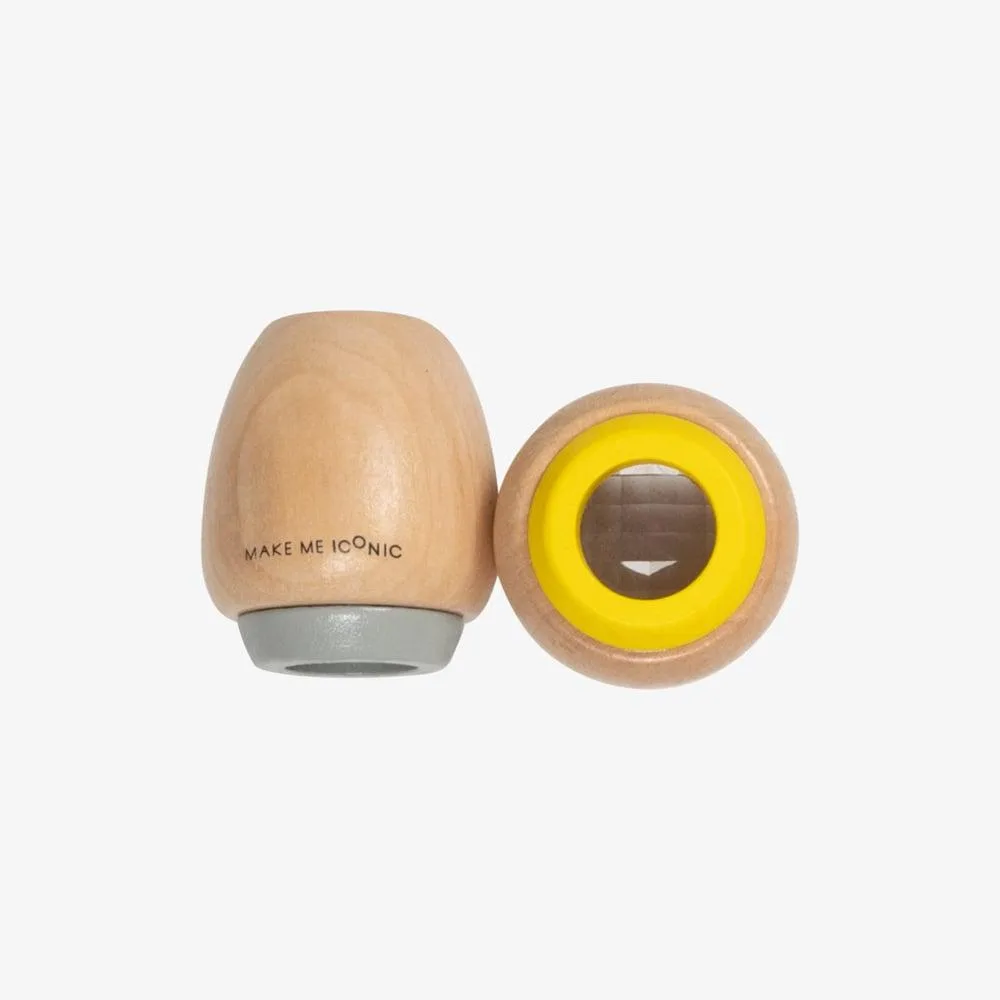
Price is a signal, not a guarantee. A wooden toy can be expensive because of brand, packaging, or limited production, not because it's made better. When you're comparing wooden vs plastic toys cost, look past the number. Check what the toy is actually made of and how it's put together. Solid wood pieces tend to feel denser and have smoother, more rounded edges than particleboard or plywood. Painted details should be clean and not flaking. Joints should feel tight, not wobbly. If a product description doesn't list the wood type or finish, treat that as missing information, not as proof of quality. You can still judge by feel and by how the toy performs in play. A simple wooden kaleidoscope, for example, doesn't need complex parts to be engaging. Its value comes from the optical play it offers, not from a long list of features. So the myth that price equals quality can lead you to overspend on a toy that doesn't match your child's interests. Instead, ask: does this toy do something my child will return to? Is it built to survive that use? That's a better guide than price alone.
Myth: Wooden toys are only for quiet, gentle play
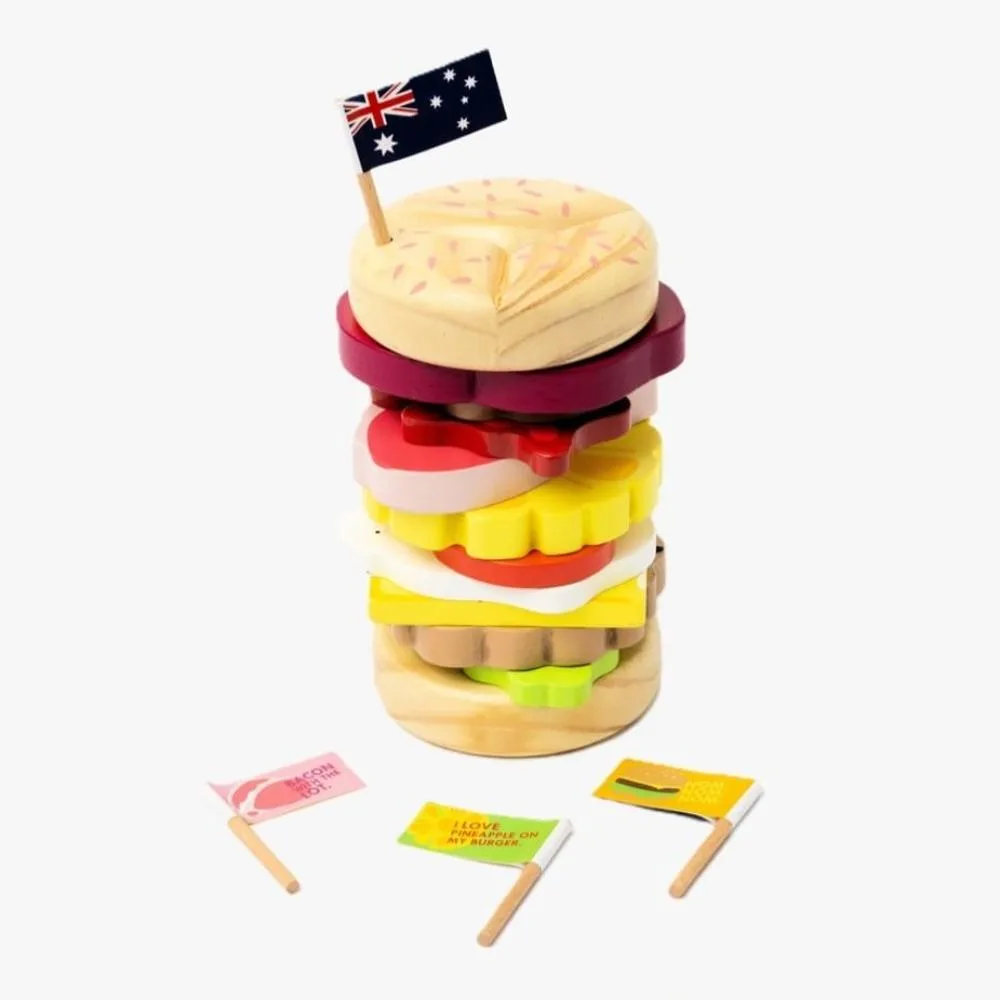
Wooden toys are often associated with calm, tabletop play, but that's a narrow view. Many wooden toys are designed for active, imaginative play that involves building, stacking, and storytelling. A wooden burger set, for instance, lets kids assemble and reassemble layers, which is both a fine-motor exercise and a pretend-play prompt. The material doesn't limit the play; the design does. What wooden toys typically don't do is mimic electronic features like lights, sounds, or screens. That's a deliberate tradeoff. Without batteries, the toy relies on your child's input to come alive. For some kids, that's exactly what keeps them engaged. For others, especially those used to high-stimulation toys, it may take time to adjust. The myth that wooden toys are only for quiet play can stop you from considering them for kids who like to move and build. The real question is whether the toy's format matches your child's energy and interests. A stacking toy can be knocked down and rebuilt; a play food set can be served, sorted, and packed away. These are active forms of play that happen to be made of wood. So don't dismiss a wooden toy just because it doesn't beep or flash. Judge it by what it invites your child to do.
Myth: Wooden toys are always the more sustainable choice
Wood is a renewable material, but that doesn't automatically make every wooden toy the greener option. Sustainability depends on where the wood comes from, how it's finished, and how long the toy lasts. A wooden toy that's poorly made and breaks quickly may have a larger footprint than a plastic toy that's passed down for years. Durability is the key variable. If a wooden toy survives multiple children and stays in good condition, its impact per year of use drops. If it's dropped once and splits, the advantage disappears. You can't verify sustainability claims from a product page alone, and this article won't invent certifications or sourcing details. What you can do is look for signs of repairability and longevity: solid construction, simple finishes, and designs that don't rely on fragile moving parts. A wooden toy with fewer pieces and no batteries is also easier to keep in circulation. So the myth is that wooden automatically equals sustainable. The more accurate view is that wooden toys have the potential to be a better long-term choice if they're built to last and actually used that way. That's a decision you make at purchase and over time, not a label you can assume.
Verdicts on common claims
- Claim: Wooden toys cost more because they're always higher quality.: Verdict: Partly true. Wooden toys often cost more due to material and production, but quality varies. Check construction and finish, not just price. Look for solid wood, smooth edges, and tight joints. If the description doesn't specify, judge by feel and return policy.
- Claim: Wooden toys are only for calm, quiet play.: Verdict: False. Many wooden toys are designed for active building, stacking, and pretend play. The material doesn't dictate the energy level. Match the toy's format to your child's play style. A stacking burger or play food set invites hands-on, imaginative play.
- Claim: Wooden toys are always the sustainable choice.: Verdict: Not automatically. Sustainability depends on sourcing, durability, and how long the toy stays in use. A broken wooden toy isn't greener than a long-lasting plastic one. Prioritize toys that are built to last and easy to pass on. Durability is the clearest sustainability signal you can act on.
Product facts
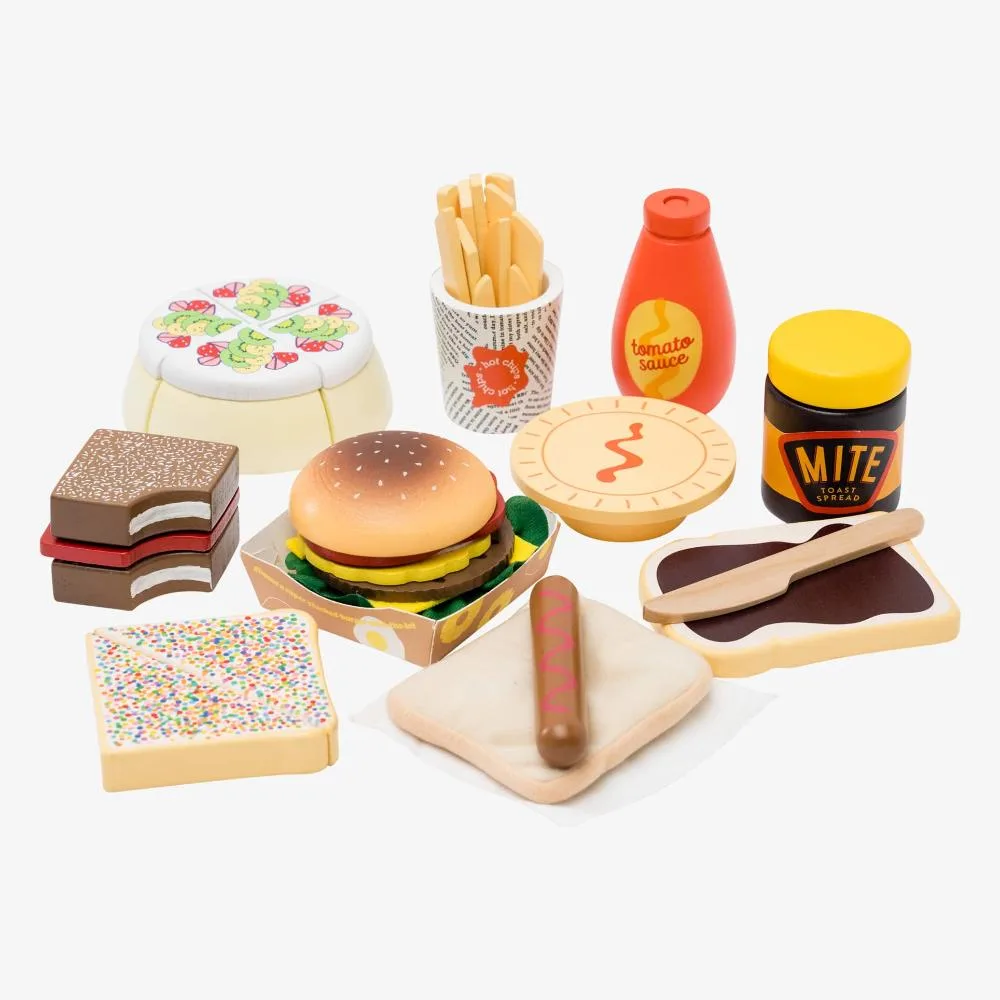
- WOODEN TOY - ICONIC AUSTRALIAN FOOD SET: The Iconic Australian Food Set is a wooden play food set featuring Aussie classics like a sausage sanga, burger with the lot, and hot chips, plus a sweet treat. This set shows how wooden toys can support open-ended pretend play and language development, which is a key part of their value beyond material cost.
- WOODEN TOY - ICONIC AUSTRALIAN STACKING BURGER: The Iconic Australian Stacking Burger is a wooden stacking toy that lets kids build a burger with layers, including Aussie-style toppings like beetroot, pineapple, and a fried egg. Stacking toys build fine motor skills and creativity, and the wooden construction gives each piece a weight and feel that plastic often lacks.
- WOODEN TOY - LOOSE CHANGE KALEIDOSCOPE: The Loose Change Kaleidoscope is a classic wooden kaleidoscope designed for hands-on exploration of light, pattern, and reflection without screens or batteries. At a lower price point, it demonstrates that wooden toys aren't always expensive and can offer focused, screen-free play that holds attention.