Quick answer
Most figures fall because the base is not sitting flat, a foot peg is not fully seated in its hole, or the pose has shifted the center of gravity past the edge of the base. Check those three things in that order before you add putty, tape, or glue. If the peg is cracked or the base is warped, stop and treat it as a replacement or display-support problem rather than a balancing problem.
Start with the surface, not the figure
A figure that stands fine on a shelf but tips on a desk is usually reacting to the surface, not failing as a product. Test the base on a flat, hard surface first. If it rocks, press each corner gently to find the high point. A small piece of museum putty or a thin adhesive foot pad under that corner often solves the problem without touching the figure itself.
Soft or uneven surfaces are a common cause of a figure base not stable enough to hold a tall pose. Fabric runners, thick desk mats, and carpet let the base sink unevenly. Move the figure to a hard shelf, or place a flat acrylic or wooden display riser under it so the base has a rigid plane to sit on.
Check the foot pegs before you blame the pose
A figure foot peg loose in its hole will let the whole body rotate or lean forward over time. Lift the figure straight up, look at the pegs, and look into the base holes for dust, paint flash, or a stray piece of packaging foam. Clear the holes with a dry cotton swab, then set the figure back down with steady downward pressure until you feel it seat.
Do not force a peg that will not go in. If it stops early, the hole or peg may be slightly out of tolerance, and pushing harder can snap the peg. In that case, note it and move to a support method instead of a seating fix.
Re-pose before you re-engineer
On poseable figures, the stance itself is often the problem. Feet placed close together, knees locked straight, or a weapon held far to one side all move the center of gravity away from the middle of the base. Widen the feet, bend the knees slightly, and bring heavy accessories closer to the body. This is the fastest fix for a leaning figure and costs nothing.
If the figure has articulation, tighten the pose at the hips and ankles first, then adjust the upper body. A figure that is stable at the feet can carry a dramatic upper-body pose; a figure that is unstable at the feet cannot.
When to add support, and when to stop
If the base, pegs, and pose all check out and the figure still tips, add discreet support rather than adhesive. A clear acrylic stand, a small figure stand with an adjustable arm, or a low-profile display base under one foot can hold the pose without altering the figure. Keep adhesives off painted surfaces; they can lift paint or leave residue that is hard to remove later.
Stop and choose a different display option if the peg is cracked, the base is visibly warped, or the figure leans even when unposed and flat. Those are structural issues, and repeated balancing attempts can make them worse. In those cases, display the figure seated, in a case, or on a stand that supports the body rather than the feet.
A note on model kits and heavier figures
Model kits and figures with many articulation points can loosen over time, and a pose that held last month may not hold today. Re-seat the feet and re-check the stance after any re-posing session. For kits, confirm that the leg and ankle joints are fully pressed together; a joint that is one click short of seated will make the whole figure lean.
Weight distribution matters more as figures get taller or carry large accessories. If a figure is top-heavy by design, plan for a stand from the start rather than waiting for a fall.
Figure stability diagnosis
- Symptom: figure rocks on a flat shelf: Press each corner of the base to find the high point. Check for a warped base or debris under one edge. If the base is flat and the rocking stops on a hard surface, the shelf or mat was the cause.
- Symptom: figure leans forward or to one side: Lift the figure, inspect the foot pegs and base holes, clear any dust or flash, and re-seat with steady pressure. If the peg is cracked or will not seat, stop forcing it and switch to a body-support stand.
- Symptom: figure stands but tips when posed: Widen the stance, bend the knees slightly, and bring heavy accessories closer to the body to move the center of gravity inward. If it still tips after re-posing, the pose is beyond the base and needs a stand or a simpler stance.
Products where balance and base design matter
- Blokees Saint Seiya Champion Class 08 Aquarius Camus 5.6-Inch Poseable Model Kit: Blokees Saint Seiya Champion Class 08 Aquarius Camus is a 101-piece model kit with 44 points of articulation and stands about 5.6 inches tall. More articulation points mean more chances for a joint to sit slightly unseated, so re-checking the ankles and knees after posing is worth the extra minute.
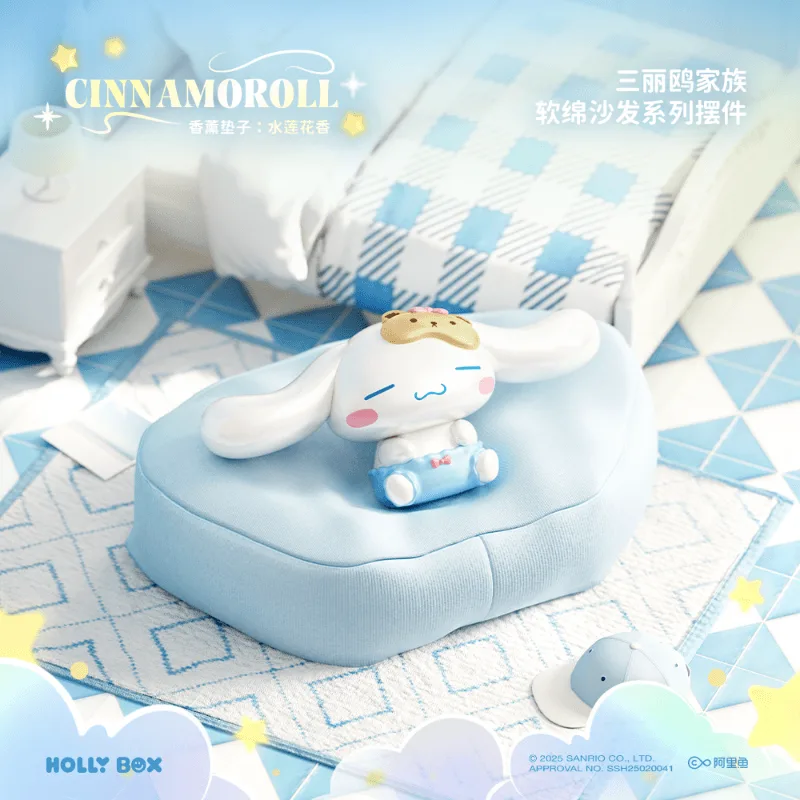
- Sanrio Soft Sofa Character Figure Hello Kitty Kuromi Desk Decor Gift: Sanrio Soft Sofa Character Figure series is sold by character, not as a blind box, and each figure rests on a soft cushion-style sofa. A soft, cushion-style base is not a rigid display base, so these figures are better suited to a flat shelf where they will not be bumped.
- Sanrio Characters Sweet Lolita Mini Figure Blind Box (Single / Case Pack): Sanrio Characters Sweet Lolita Mini Figure Blind Box has 18 designs with each design probability at 1/18 and no secret figure. Small mini figures have a narrow footprint, so grouping them on a stable tray or riser reduces the chance of a domino-style fall.