Quick answer
A blender that won't blend smoothly usually has a jammed blade, an overloaded jar, or a worn drive coupling. Most issues can be fixed at home without tools, but a seized motor or cracked jar means it's time for a replacement.
Why a blender stops blending smoothly
The most common reason a blender struggles is that the blade assembly is blocked by a large or fibrous ingredient. Ice cubes, frozen fruit chunks, or thick greens can lodge under the blades and prevent them from spinning. Another frequent cause is an overloaded jar: when the volume of solids exceeds the liquid ratio, the mixture becomes too thick for the motor to turn.
Over time, the rubber drive coupling on the bottom of the jar can wear down or strip, causing the motor to spin but the blades to stay still. Less often, the motor itself overheats and triggers a thermal cut-off, which makes the blender appear dead until it cools.
When to replace instead of repair
If the jar is cracked or the blade assembly is bent, replacing the jar is safer than trying to fix it. A cracked jar can leak hot liquid and cause burns. A bent blade will never spin true and can damage the motor over time.
If the motor smells burnt or the blender won't turn on even after cooling for 30 minutes, the motor windings may be damaged. At that point, the cost of repair often exceeds the price of a new blender, especially for mid-range models.
How to diagnose and fix a blender that won't blend smoothly
- Symptom: Blades do not spin when the motor runs. You hear the motor humming but the blades are still.
- Likely cause: The drive coupling (the plastic or rubber piece connecting the jar to the motor base) is worn or stripped.
- Corrective action: Unplug the blender, remove the jar, and inspect the coupling on the bottom of the jar and the drive socket on the base. If the coupling is rounded or cracked, replace it (many brands sell a replacement part). If the drive socket on the base is damaged, the blender needs professional service or replacement. If the coupling looks fine, check that the blade assembly spins freely by hand. If it doesn't, food may be wedged under the blades.
- Symptom: Blades move slowly or stop mid-cycle. The motor sounds strained.
- Likely cause: The jar is overloaded with solids and not enough liquid. A common ratio is 2 parts liquid to 1 part solid for thick blends.
- Corrective action: Turn off and unplug the blender. Remove some solids, add more liquid (water, juice, or milk), and stir with a long spoon to redistribute. Restart on a low speed and gradually increase. If the blender still struggles, process in smaller batches. For fibrous ingredients like kale or frozen fruit, add them in small handfuls while the blender is running on low, not all at once.
- Symptom: Blender won't turn on at all. No sound, no lights.
Products that help prevent blending problems
-
the Fresh & Furious®: One touch programs for instant smoothies, green smoothies and ice crushing to make what is a rough start, a smooth finish. Pre-programmed cycles automatically adjust speed and pulse timing, which reduces the chance of jamming from thick mixtures and helps the blades work through tough ingredients without stalling.
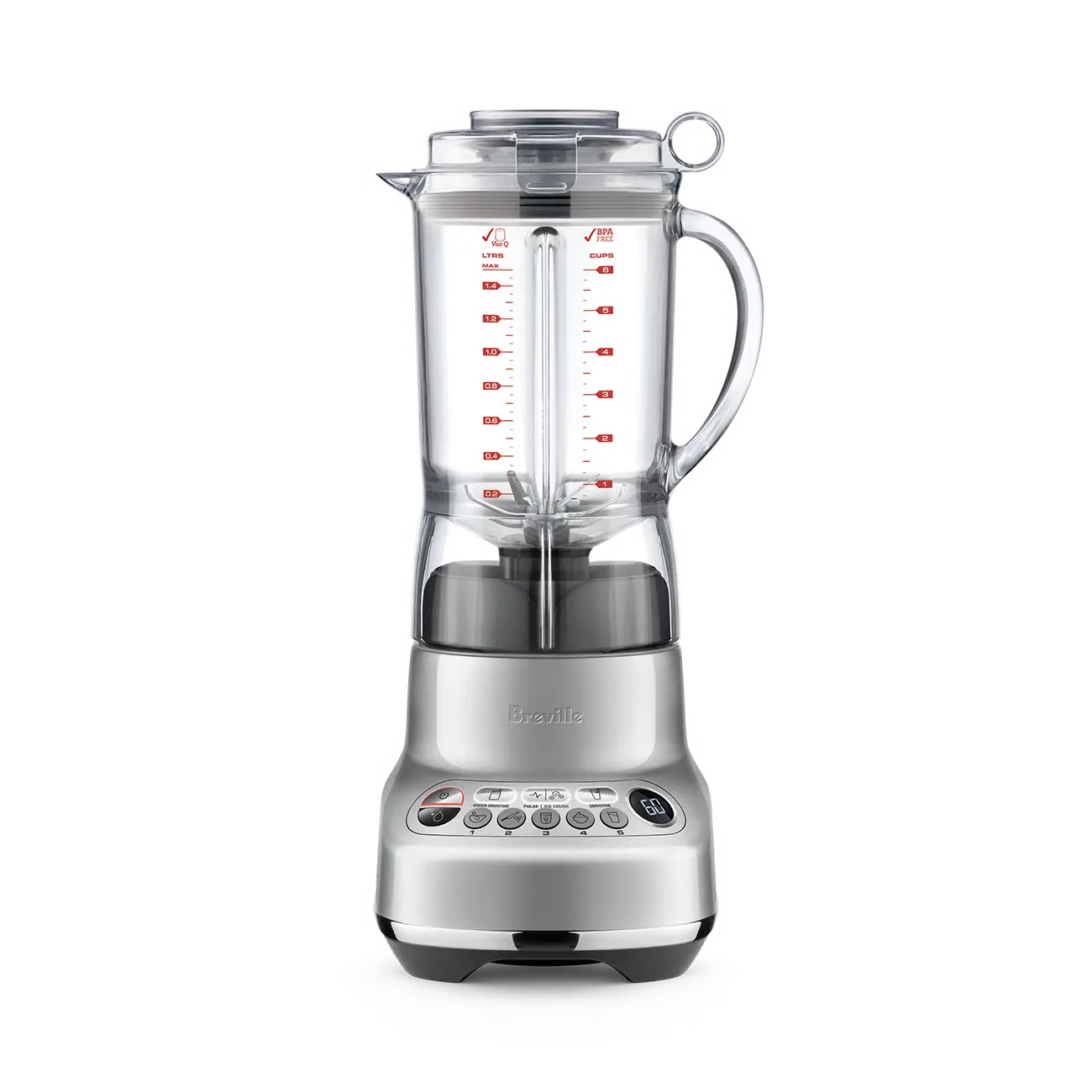
the Fresh & Furious®