Quick answer
Your bread dough not rising often traces back to how you use your stand mixer — wrong speed, over-kneading, or under-kneading can all kill yeast activity or gluten structure. Check your mixer's speed, kneading time, and dough temperature first.
Why your mixer matters for dough rising
A stand mixer does more than save your arms — it controls how gluten develops and how much oxygen gets into the dough. If the mixer runs too fast, it can overheat the dough and kill the yeast. Too slow, and the gluten never forms a strong network to trap gas. The result: a dense loaf that barely rises.
Many home bakers assume any speed works for any dough. But a heavy dough like whole wheat or sourdough needs a different approach than a soft white bread dough. The mixer's planetary action — like the one in the Breville Bakery Chef™ — gives full bowl coverage, but you still need to match the speed to the dough type.
Temperature trouble: when the mixer heats the dough
Friction from the mixer warms the dough. If your kitchen is already warm, or if you knead for longer than the recipe says, the dough can hit 85°F (30°C) or more. At that point, yeast activity slows or stops. The dough might look fine but won't rise in the bowl.
Check your dough temperature after kneading. If it feels warm to the touch (above body temperature), let it cool before proofing. Next time, use cold water or refrigerated ingredients to keep the dough cool during mixing.
Diagnosis: why your dough won't rise
- Symptom: Dough is dense, barely increases in size after proofing, or feels tight and tough.
- Likely cause: Mixer speed too high or too low. High speed overworks gluten and heats dough; low speed fails to develop gluten. Also check if you used the wrong mixing attachment (e.g., whisk instead of dough hook). Always use the dough hook for yeast doughs. For a heavy mixer like the Bakery Chef™, use speed 2 (low) for mixing and speed 4 (medium-low) for kneading — never go above speed 4.
- Corrective action: If the dough is already mixed, try a longer, cooler proof (overnight in the fridge) to let gluten relax and yeast recover. If it's still dense, reshape and proof again at room temperature for 1-2 hours. For future batches: knead for the minimum time the recipe suggests, check dough temperature (aim for 75-80°F / 24-27°C), and reduce speed if the mixer jumps or the dough climbs the hook. After adjusting, the dough should feel smooth, elastic, and slightly tacky — not sticky or stiff. If it passes the windowpane test (stretch a small piece thin enough to see light through), the gluten is ready.
- Stop or choose another option: If the dough still won't rise after two proofing attempts, the yeast may be dead (check expiration date) or the dough may have been overheated beyond recovery. Start fresh with new yeast, cooler ingredients, and a lower mixer speed. If your mixer consistently overheats dough, consider a model with a slower planetary action or a shorter recommended knead time. When in doubt, hand-knead the next batch to isolate whether the mixer is the problem.
Product fact
-
the Bakery Chef™: The Bakery Chef™ has a 360 degrees full bowl coverage and a double sided scraper that cuts mixing time down by 60%. Faster mixing means less friction heat, so your dough stays cooler and yeast stays active — directly helping your dough rise.
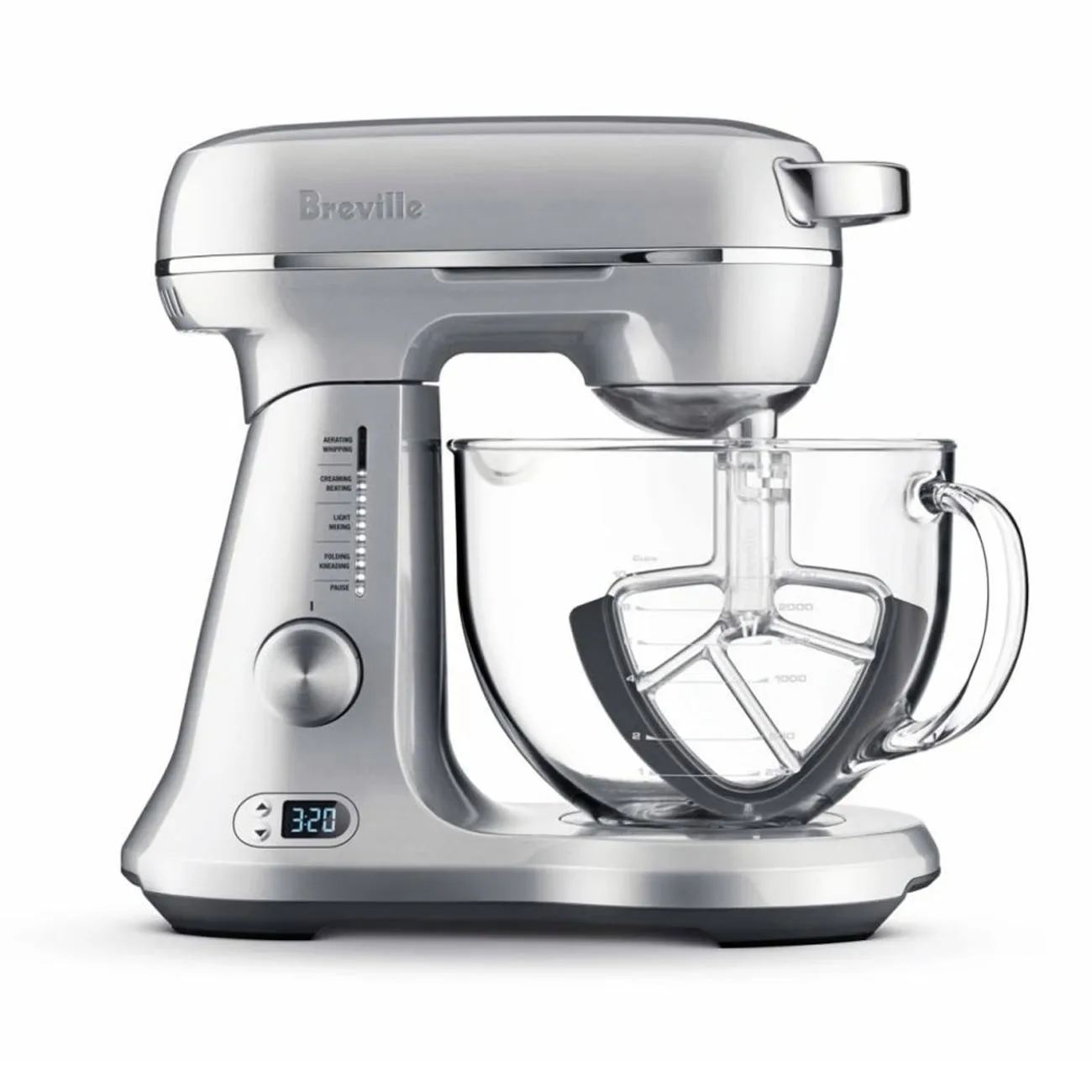
the Bakery Chef™