Quick answer
Your dog bed likely smells after cleaning because detergent residue, trapped moisture, or bacteria in the foam core aren't fully removed during a standard wash cycle.
Why standard washing falls short
Most dog beds have a removable cover, but the inner foam or padding absorbs urine, drool, and oils. A single wash cycle often fails to penetrate the foam, leaving odor-causing bacteria alive inside.
The Blue-9 Restore Dog Bed uses memory foam, which is dense and slow to dry. If moisture stays trapped, mildew can form, creating a musty smell that gets worse over time.
Diagnosis and fix for smelly dog beds
- Symptom: A strong, sour, or musty smell remains after washing the bed according to label instructions.
- Likely cause: Detergent or fabric softener residue trapped in the foam, or incomplete drying that allows bacteria and mildew to grow.
- Corrective action: Strip the bed: run an extra rinse cycle with 1 cup of white vinegar (no detergent). Then dry the foam pad in direct sunlight or use a low-heat dryer with dryer balls until completely dry—this can take 2–3 cycles. If the smell persists after stripping and thorough drying, the foam may be saturated with deep-set oils. Replace the pad.
- Stop or choose another option: If you have washed the bed more than three times without improvement, replace the foam core or the entire bed. Continuing to wash will degrade the fabric without removing the odor.
Product spotlight
-
Blue-9 Restore Dog Bed: Memory Foam Pad | Durable RipStop Material | Machine Washable The memory foam core provides comfort but retains moisture longer than synthetic fill, so thorough drying is critical to prevent mildew odor after cleaning.
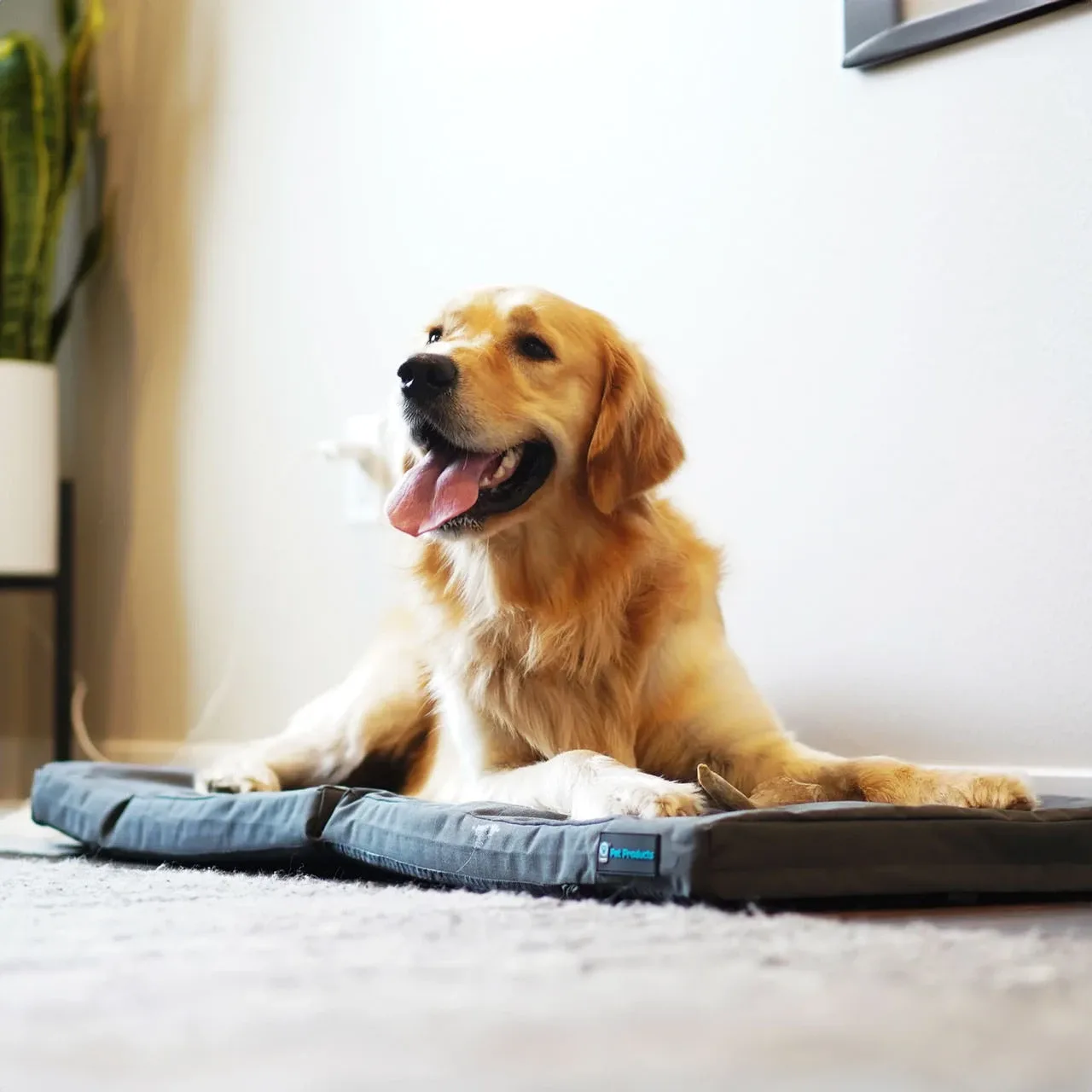
Blue-9 Restore Dog Bed