Quick Answer
A dog that ignores treats is usually either not hungry, distracted, over-faced by the environment, or being offered a reward that is not actually high value to that dog. Fix it by training before meals, cutting the treat into pea-sized pieces, testing two or three proteins to find what your dog will work for, and moving to a quieter space. If your dog still refuses food it normally loves, stop training and check with your vet.
Rule Out the Boring Causes First
Before you change your training plan, check the basics. A dog that just ate a full meal often will not work for kibble or a mild biscuit. A dog that has been in the yard barking for an hour may be too aroused to eat. A dog in a new park with traffic, other dogs, and strangers is often too stressed to take food, and stress-related food refusal is a welfare signal, not stubbornness.
Run a quick test at home with no distractions. Offer a tiny piece of something your dog normally enjoys. If your dog takes it eagerly, the reward is not the problem. The environment or the timing is. If your dog turns away from food it usually loves, or shows other signs such as vomiting, diarrhea, or lethargy, stop training and contact your vet.
Use Training Sessions Before Meals, Not After
Food motivation follows hunger. If you train right after breakfast or dinner, you are asking your dog to work for something it does not need. Move short sessions to before a meal, or use part of the daily food ration as the reward. Ten to fifteen repetitions per session is plenty for most dogs. This also keeps the calorie math simple: if you are paying with food, that food comes out of the bowl, not on top of it.
Find Out What Your Dog Actually Values
High value dog treats are not universal. A reward is high value only if your dog will choose it over the distraction in front of it. Test small pieces of two or three different proteins or textures in a low-distraction room and note which one your dog takes fastest and keeps looking for. That is your training reward. Keep a lower-value option for easy repetitions and save the strongest reward for new or hard skills.
Texture matters too. Some dogs prefer soft, smelly treats they can swallow quickly. Others do better with a crunchy piece that takes a moment to eat, which can slow the session down. There is no single correct choice, so let your dog's response decide.
Shrink the Reward and Raise the Criteria
A common mistake is handing over a large piece for every correct response. That fills the dog up fast and makes the next repetition less likely. Cut treats to pea-sized or smaller pieces. When your dog is reliably offering a behavior, start rewarding only the faster or cleaner versions, then reward intermittently. This is how dog training rewards shift from luring to maintaining a behavior.
If your dog still checks out after a few repetitions, the session is too long or the criteria jumped too fast. End on a success and try again later.
When Food Is the Wrong Reward
Some dogs, especially in high-drive moments, would rather chase, tug, or sniff than eat. For those dogs, a toy or a sniff break is the better reward, and food is saved for calm, focused work. Watch what your dog chooses when it is free to choose. That tells you more than any treat ranking.
If your dog takes treats at home but refuses them in class, at the vet, or on a busy street, that is treat refusal caused by stress or distraction, not by pickiness. Lower the difficulty, increase distance from the trigger, and rebuild the behavior in a quieter place before adding the challenge back.
Treat Refusal Diagnosis
- Symptom: Dog takes treats at home but refuses them outside: This is usually distraction or stress, not a bad treat. Move the session to a quieter spot, increase distance from the trigger, and use a reward your dog already accepts in that environment. If the dog eats again after you increase distance, the environment was the problem. Keep sessions short and add difficulty in small steps.
- Symptom: Dog sniffs the treat and turns away after a few repetitions: The dog is likely full or bored with that reward. Shrink pieces to pea size, train before meals, and switch to a different protein or texture for the next session. If the dog re-engages with a new reward, the old treat was the issue. If not, end the session and try again before the next meal.
- Symptom: Dog ignores all food, even favorites, and seems unwell: This is a medical or welfare concern, not a training problem. Stop the session, note any other signs, and contact your vet before continuing training. Do not push a dog that has stopped eating. Health check first, training second.
Product Facts That Support Training
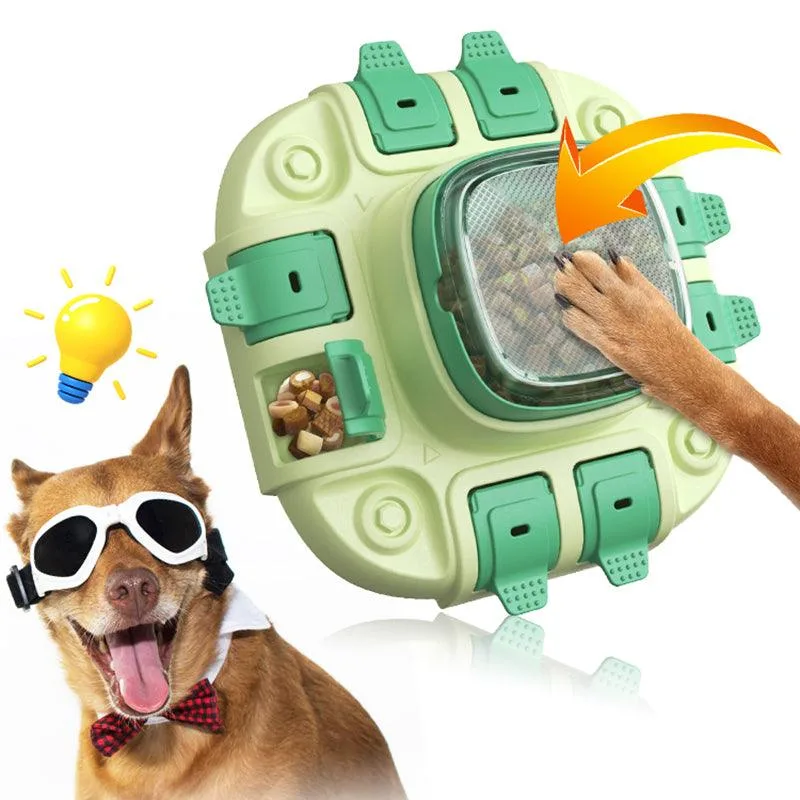
- Dog Puzzle Toys with Press: Dog Puzzle Toys with Press is a press-button puzzle toy designed as a 2-in-1 difficulty option and made with premium materials. For dogs that lose interest in food during training, a puzzle toy gives you a non-food reward and a mental workout that can be used between or instead of treat repetitions.