Quick answer
Your flash battery dies fast mainly due to high power settings, age-related capacity loss, or leaving the battery in a full discharge state. The fix involves adjusting your shooting habits, reconditioning the battery, and knowing when to replace it.
Why high power output drains the battery fast
Each full-power flash consumes a significant amount of energy. If you're shooting at 1/1 power frequently, a battery like the Godox WB29 (2900mAh) for the AD200 Pro delivers about 380 flashes before needing a recharge. At lower power settings, that number jumps dramatically. The same principle applies to the Godox VB26B for the V1 head: rated for 480 full-power flashes, you'll get far more at half or quarter power.
The trade-off is that you may need to push flash power in bright ambient light or when using modifiers like softboxes. In those situations, consider raising your ISO or opening your aperture slightly to reduce the flash power required.
Battery age and capacity fade
Lithium-ion batteries naturally lose capacity over time and charge cycles. A battery that once gave you 380 flashes might only deliver 250 after two years of regular use. This is normal chemistry, not a defect. If your battery feels hot during charging or swells, stop using it immediately and replace it.
Storing a lithium-ion battery fully discharged for weeks or months accelerates capacity loss. The Godox WB400P for the AD400Pro has an upgraded hibernation feature that protects the battery during inactivity, but older models like the WB29 lack this. For any battery, store it at around 40-60% charge in a cool, dry place.
Diagnose and fix your fast-draining flash battery
- Symptom: Battery dies after fewer shots than when new, or the flash refuses to fire after a short session. If the battery is more than two years old, capacity loss is the likely cause.
- Likely cause: High flash power setting (1/1), aging battery, or storing the battery fully discharged for extended periods. Check your flash power history. If you shoot at full power often, the battery is working as designed.
- Corrective action: 1) Reduce flash power if possible (raise ISO or widen aperture). 2) If the battery is old, replace it with a fresh one. 3) For occasional use, fully charge and discharge the battery once a month to maintain calibration. 4) Store batteries at 40-60% charge in a cool place. After trying steps 1-4, test the battery in a real shoot. If it still drains fast, the battery is likely end-of-life.
- When to stop and choose another option: If the battery takes longer than its rated charge time (e.g., over 3 hours for a normally 2-hour charge) or shows physical swelling, stop using it immediately. Replace it with a compatible model like the Godox WB29 or VB26B. Safety first: a swollen or overheating battery can damage your flash or cause injury.
Battery options to extend your shooting time
-
Godox WB29 Battery for AD200pro pocket flash: The Godox WB29 is a 14.4V, 2900mAh lithium-ion battery compatible with the AD200 Pro, AD200, and AD300Pro. It delivers up to 380 full-power flashes per charge. If you own an AD200 Pro and find the original battery insufficient, a spare WB29 lets you swap and keep shooting without waiting for a recharge.
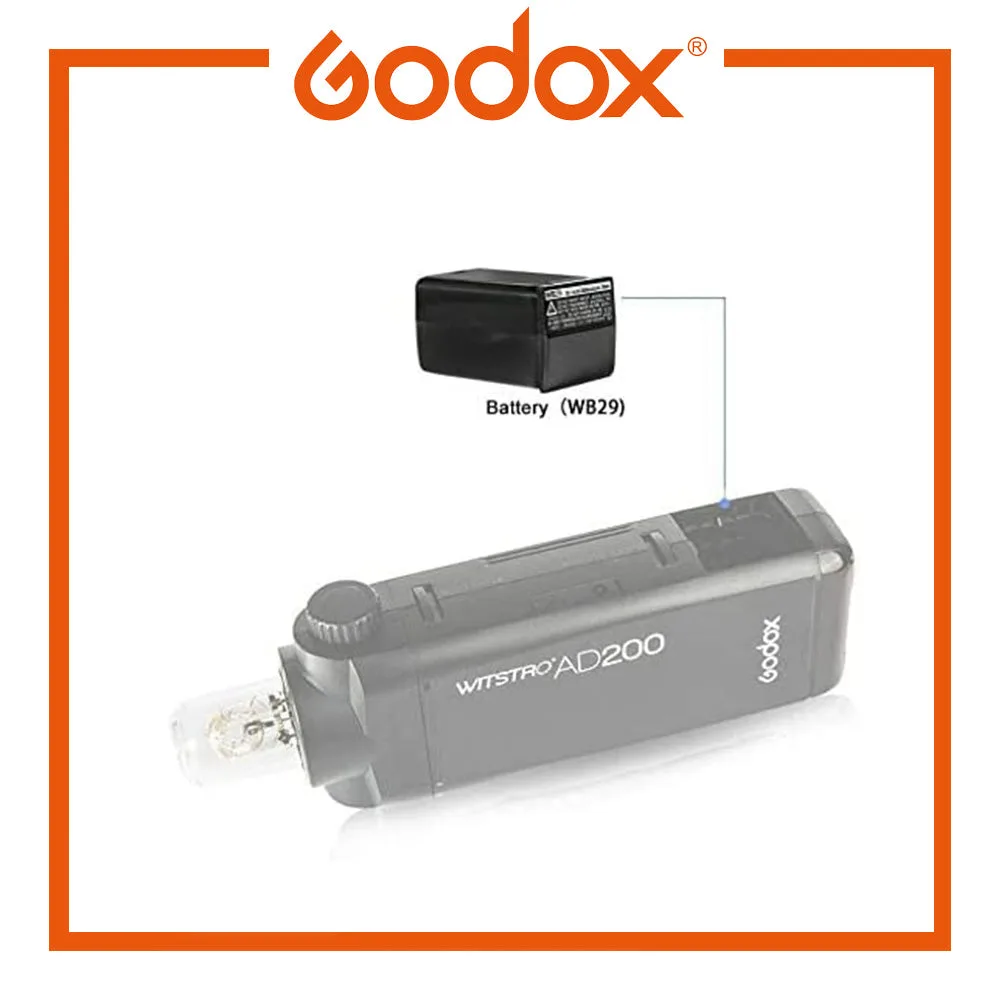
Godox WB29 Battery for AD200pro pocket flash
-
Godox VB26B Battery for V1 Flash Head: The Godox VB26B for the V1 flash head is a 7.2V, 2980mAh lithium-ion battery rated for 480 full-power flashes. For V1 users, the higher capacity of the VB26B over the earlier VB26 means noticeably more flashes per charge, reducing mid-shoot battery changes.
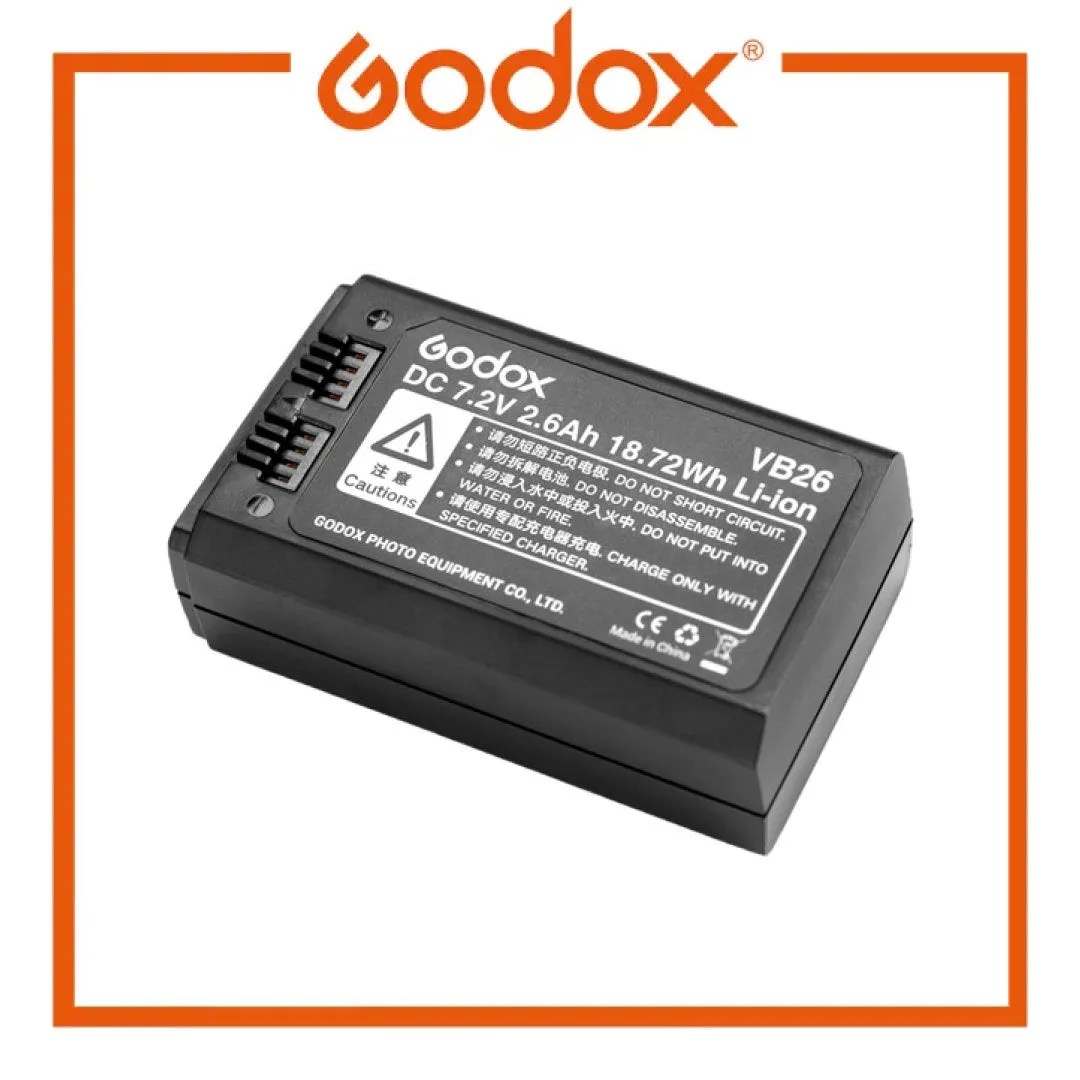
Godox VB26B Battery for V1 Flash Head