Quick Answer
Most holster discomfort traces to one of three causes: the belt sitting too high or too low, the holster pressing into a nerve or bone, or the holster positioned where your body moves. Fix the belt first, then adjust cant and position, then add a pad only if pressure points remain. If the holster still hurts after those changes, the shell or carry position is wrong for your body.
Start With the Belt, Not the Holster
A belt that sags or rides at the wrong height shifts the entire holster and creates pressure where there was none before. Before you adjust anything on the holster, check that your belt sits at your true waist, not your pants waist. Many people wear their pants lower than their actual waist, which drags the holster down and presses the muzzle into the hip or thigh.
Measure your waist with a tape measure at the narrowest point above your hip bones. That number, not your pants size, should guide your belt selection. If your belt is sized off your pants size, it may be two to four inches too small or large, which changes how the holster sits.
- Check belt height: it should sit at or just below your true waist, not on your hips.
- If the belt slides down during the day, the size or stiffness is wrong.
- A belt that is too stiff can also cause discomfort by digging into your sides.
Adjust Cant and Position Before You Add Padding
Cant is the angle of the holster relative to your belt. A holster with too much forward cant presses the grip into your stomach when you sit. Too little cant pushes the muzzle into your thigh or seat. Move the holster along your belt in small increments, then adjust cant, and test each change by sitting, standing, and walking for a few minutes.
Position matters more than most people expect. Moving the holster from 3 o'clock to 4 o'clock, or from appendix to 2 o'clock, can eliminate pressure on the hip bone or the femoral nerve. If you carry appendix, try shifting the holster slightly toward your centerline or away from it. The goal is to find the spot where the holster sits flat against your body without digging in.
- Loosen the belt slightly, reposition the holster, then retighten.
- Test each position while sitting in a chair and in a car seat.
- If the grip digs into your stomach, increase cant or move the holster back.
When Pressure Points Remain, Add a Pad or Change the Shell
If you have adjusted belt height and holster position and still feel a sharp pressure point, a foam or leather pad on the body side of the holster can spread the load. Pads work best for bony prominences like the hip bone or the iliac crest. They do not fix a holster that is fundamentally the wrong shape for your body.
If a pad does not help, the issue may be the holster shell itself. A holster designed for a different handgun model or a different carry position may never feel comfortable, no matter how you adjust it. At that point, the right move is to switch to a holster built for your specific firearm and carry style.
- Add a pad only after you have exhausted belt and position adjustments.
- If the holster still digs in after a pad, the shell or carry position is wrong.
- Choose a holster that matches your handgun model and intended carry position.
Diagnosis: Symptom, Cause, Fix, and When to Stop
- Symptom: Holster digs into your hip or thigh when sitting: Likely cause: Belt is riding too low or holster has too little cant. Corrective action: Raise the belt to your true waist and increase forward cant slightly. Test by sitting for five minutes. If the pain persists after two position changes, the holster may be too long for your torso.
- Symptom: Grip presses into your stomach or ribs: Likely cause: Too much forward cant or holster positioned too far forward. Corrective action: Reduce cant and move the holster back along the belt by one inch. Recheck while standing and sitting. If the grip still digs in, try a different carry position such as appendix to strong-side.
- Symptom: Sharp pressure point on a bone or nerve: Likely cause: Holster shell is pressing directly on a bony prominence or nerve. Corrective action: Add a foam or leather pad to the body side of the holster. If that fails, switch to a holster with a different shell shape or a different carry position. Stop adjusting and change holsters if the pressure point remains after a pad and position changes.
Product Facts
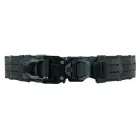
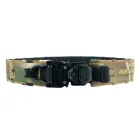
- D3 Belt - MultiCam Black: The D3 Belt combines lightweight laminate materials with load carriage construction techniques. Belt size is based on waist size, not pants size, and pants size is generally 2 to 4 inches smaller than true waist. Sizing your belt off pants size instead of waist size is a common cause of ride height problems that lead to holster discomfort.
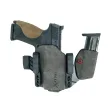
- Incog X Holster S&W M&P M2.0 Nonlight w/ Mag Caddy: The Incog X Holster for S&W M&P M2.0 (nonlight, gun only) is a multi-positional, deep concealment IWB hybrid holster designed with Safariland. A holster designed for multi-positional carry lets you adjust cant and position to reduce pressure points without buying a new holster.
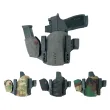
- Incog X® Holster P365 Macro/FUSE w/ Caddy LH: The Incog X Holster for Sig P365 Macro/FUSE (nonlight, gun only) with mag caddy is a left-handed, multi-positional IWB hybrid holster. If you carry a P365 Macro or FUSE, this holster is built for that specific fit, which reduces the chance of a shell that does not match your body or firearm.