Quick Answer
If your IR filter is letting visible light through, the most likely cause is a cut-on wavelength that's too low for your light source, or a substrate that doesn't absorb enough in the visible range. Check your filter's specified cut-on and compare it to your source spectrum; switching to a longer-wavelength longpass filter like the https://uqgopticser.com/products/schott-rg9-3-e8ce866cb39042257f24f7c0-1696613Schott RG9 or https://uqgopticser.com/products/hoya-rm90-3-e3f86077ff6a11681fa69b71-1696576Hoya RM90 usually solves the leak.
Common Causes of Light Leak in IR Filters
The most frequent reason an IR filter fails to block enough light is that its cut-on wavelength sits too close to the visible spectrum for your specific light source. For example, a filter designed to pass above 700 nm may still transmit some deep red light if your source has strong output around 680–700 nm. Another cause is the filter's substrate material: some glass types have limited absorption in the visible band, leading to a gradual rather than sharp transition. Finally, surface reflections or internal scattering can mimic a leak, especially if the filter isn't AR-coated for your application.
How to Diagnose the Problem
Start by verifying the filter's stated cut-on wavelength against your light source's emission spectrum. Use a spectrometer or even a simple test with a known visible-blocking reference filter. Next, inspect the filter for scratches, coating defects, or edge chipping that could scatter light around the intended blocking region. If the filter appears clean and the cut-on seems correct, test it with a narrower-band source (e.g., an LED rather than a broadband lamp) to isolate whether the leak is spectral or structural.
Corrective Actions and Filter Selection
If the diagnosis points to a spectral mismatch, the fix is to choose a filter with a higher cut-on wavelength or a steeper transition slope. For near-IR work, the Schott RG9 longpass filter (cut-on ~780 nm) offers strong blocking below its cut-on and is a reliable choice for eliminating visible light leakage. The Hoya RM90 filter shifts the cut-on further into the IR (around 900 nm), which can be beneficial when working with longer-wavelength IR sources or when maximum visible rejection is required. Both are available in 12.5 mm diameter formats from UQG Optics.
Diagnosis Checklist: IR Filter Light Leak
- Symptom: Visible light passes through your IR filter, reducing contrast or contaminating your signal. Checkpoint: Confirm the leak is spectral, not physical.
- Likely Cause: Cut-on wavelength too low for your source, or substrate material with poor visible absorption. Verdict: Compare filter cut-on to source spectrum.
- Corrective Action: Replace with a longer-wavelength longpass filter such as Schott RG9 (780 nm cut-on) or Hoya RM90 (900 nm cut-on). Next step: Order a test sample in the correct diameter.
- Stop / Alternative: If the leak persists after switching filters, consider adding a separate visible-blocking coating or changing your light source to a narrowband IR LED. Final check: Rule out scattering or coating damage first.
Filters That Solve the Leak
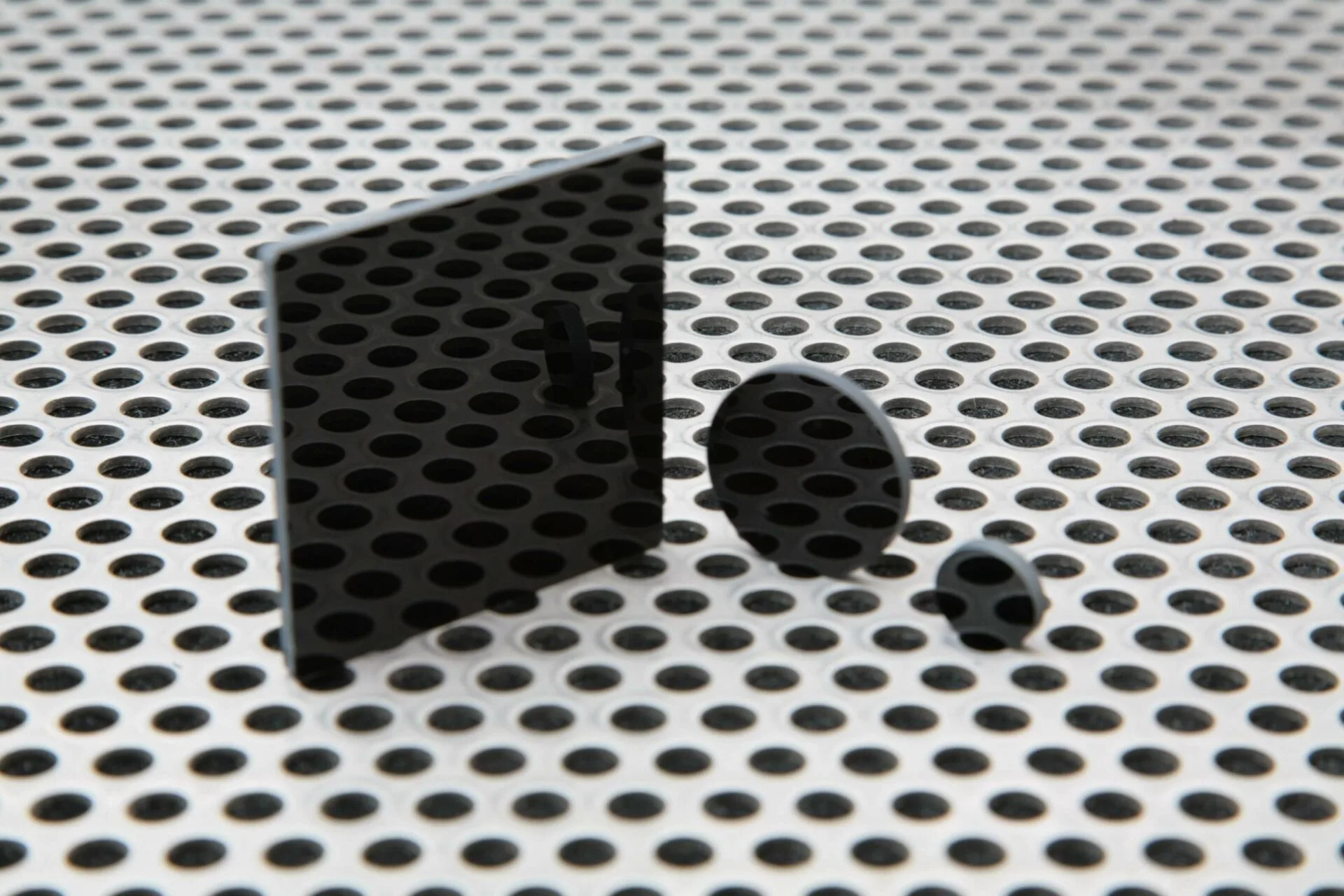
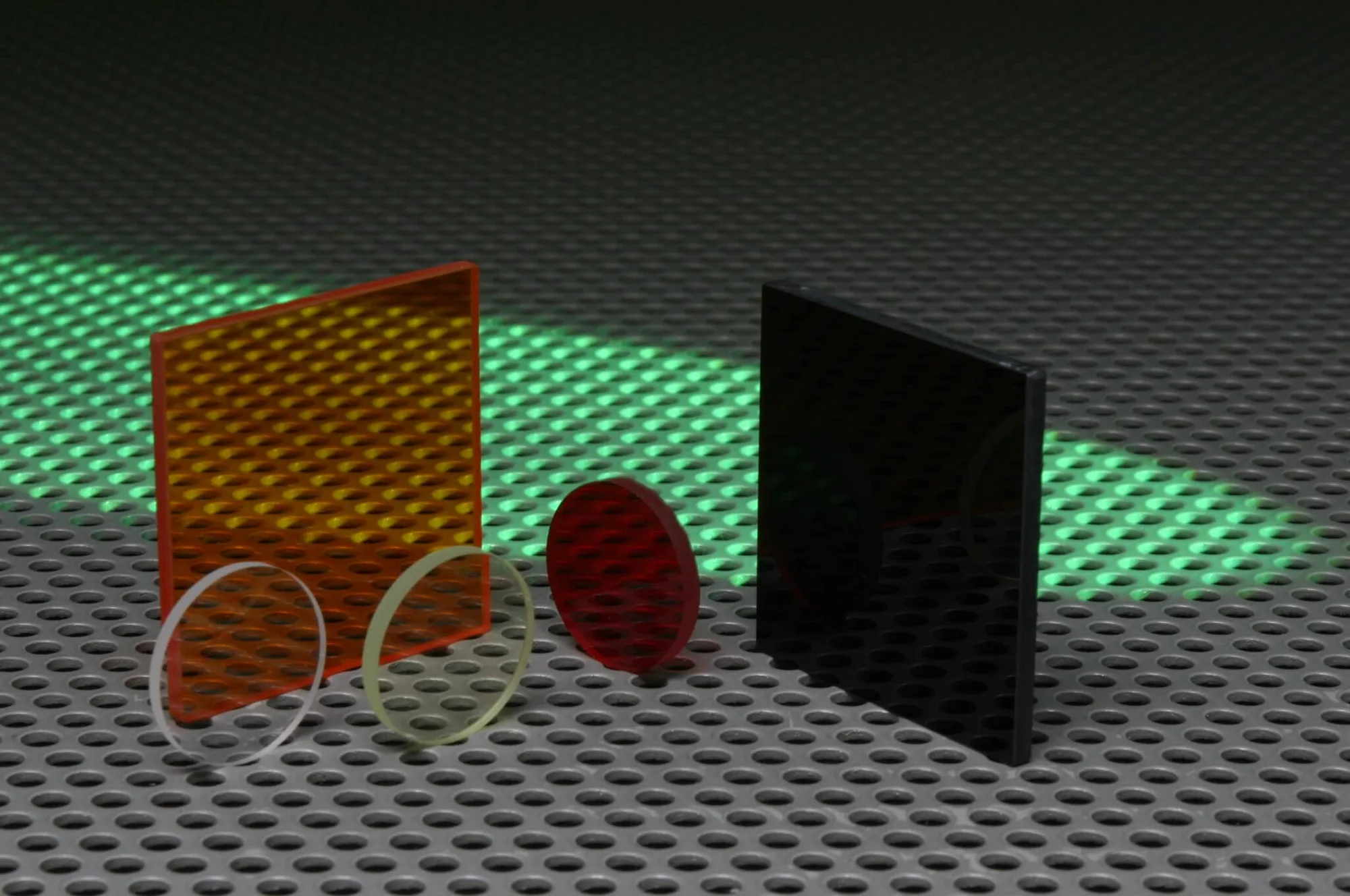
- Schott RG9: Schott RG9 is a longpass filter with a cut-on wavelength around 780 nm, supplied as a 12.5 mm diameter, 3 mm thick element. Its sharp transition and strong visible absorption make it effective for blocking stray visible light while passing near-IR, a common fix for leak issues in IR imaging or sensing.
- Hoya RM90: Hoya RM90 is an infrared transmitting filter with a cut-on near 900 nm, available in a 12.5 mm diameter, 3 mm thick format. The higher cut-on provides even deeper visible blocking, useful when your setup requires minimal visible contamination or when working with longer-wavelength IR sources.