Quick answer
Most edge curling is caused by how the mat was stored, not by normal play. Roll your playmat fabric-side out around a tube at least 2 inches wide, store it flat or standing on end, and give a curled mat 24 to 48 hours under gentle, even weight before you consider replacing it. If the rubber backing has hardened, cracked, or separated from the fabric, flattening will not fix it.
Symptom check: which kind of curl do you actually have
Before you try any fix, look at where the mat lifts and which way it bends. A mat that curls up at the corners but lies flat in the middle has usually been stored rolled too tightly or left in a warm car. A mat that waves along one entire long edge was probably folded or pressed under something heavy for a long time. A mat that cups upward like a bowl across its whole width is often reacting to heat, not storage.
Press the lifted edge down with one finger. If it springs back immediately and the rubber feels stiff or slick, the backing has likely aged or been heat-damaged. If it stays down for a few seconds and slowly rises, the fabric and rubber are still flexible and the curl is recoverable.
How to flatten a curled playmat without damaging it
Work on a clean, hard, flat surface such as a table or floor, not carpet. Roll the mat in the opposite direction of the curl, fabric-side out, around a cardboard tube or a rolled towel at least 2 inches in diameter. Hold it in that reverse roll for 10 to 15 minutes, then unroll it and lay it flat. Repeat once or twice if the curl is stubborn.
For a mat that still lifts, lay it flat and stack books or a board across the curled area, keeping the weight even and moderate. Leave it for 24 to 48 hours at room temperature. Avoid direct sun, hair dryers, irons, and hot cars; heat can distort the rubber backing permanently and turn a fixable curl into a ruined mat.
Playmat rolled vs folded: the storage choice that prevents curling
Rolling is almost always safer than folding. A fold creates a hard crease line where the fabric and rubber are compressed, and that crease becomes the edge that lifts first. If you must fold a mat to fit a bag, fold it loosely once and do not stack anything on top of it afterward.
When rolling, keep the fabric on the outside so the printed surface is not compressed against itself, and use a tube wide enough that the mat does not fight the curve. Store the rolled mat standing on end or lying flat. A tight rubber band around the middle is a common cause of a permanent dent, so use a loose strap or the mat tube's own lid instead.
Playmat storage tips that keep edges flat long term
Keep mats out of hot cars, attics, and direct sunlight, since heat is the main enemy of the non-slip rubber backing. If you rotate between several mats, store the ones you are not using flat in a drawer or upright in a tube rather than leaning them against a wall, which can bow one edge over months. For a mat that doubles as a desk mousepad, lift it occasionally and let it relax flat instead of leaving it under a monitor stand.
Stitched edges add durability, but they also make a mat slightly stiffer, so a stitched mat that is rolled too tightly will hold a curl longer than an unstitched one. Give stitched mats a wider roll and more recovery time.
Diagnosis: match the symptom to the fix
- Corners lift, middle lies flat: Usually caused by tight rolling or heat exposure. Reverse-roll around a 2-inch tube for 10 to 15 minutes, then lay flat for 24 hours. If it still lifts after two rounds, check the rubber for stiffness before trying again.
- One long edge waves: Typically a fold crease or long-term pressure. Lay the mat flat and weight the wavy edge evenly with books for 24 to 48 hours at room temperature. If the crease line is visible in the fabric itself, the damage is permanent and replacement is the practical option.
- Whole mat cups upward: Often a heat reaction. Move it to a cool, flat spot and let it sit unweighted for a day before applying any pressure. Never use an iron or hot surface; heat is what caused the cup in the first place.
- Rubber feels hard, slick, or cracked: The backing has aged or been heat-damaged, and flattening will not restore grip or shape. Stop here and replace the mat rather than risk a slippery surface under your cards.
Mats built to resist the problem
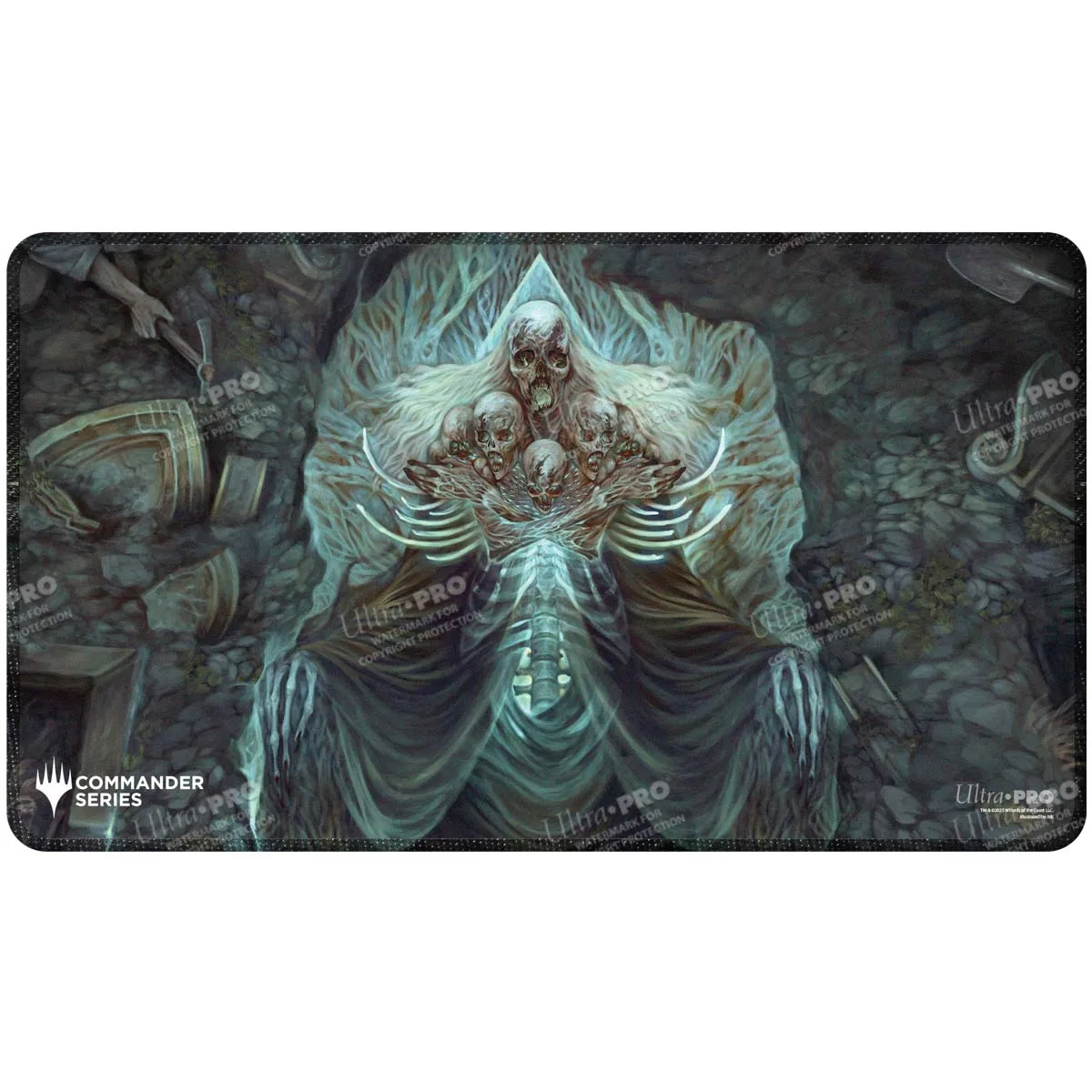
- Commander Series #5 - Three Color Wedge - Myrkul Stitched Playmat for Magic: The Gathering: Commander Series #5 - Three Color Wedge - Myrkul Stitched Playmat for Magic: The Gathering is a stitched playmat with a soft fabric top to reduce damage to cards during play and a non-slip rubber backing to keep the playmat from shifting during use. The rubber backing is what holds the mat flat on the table, so protecting it from heat and tight folds is the core of preventing edge curl.
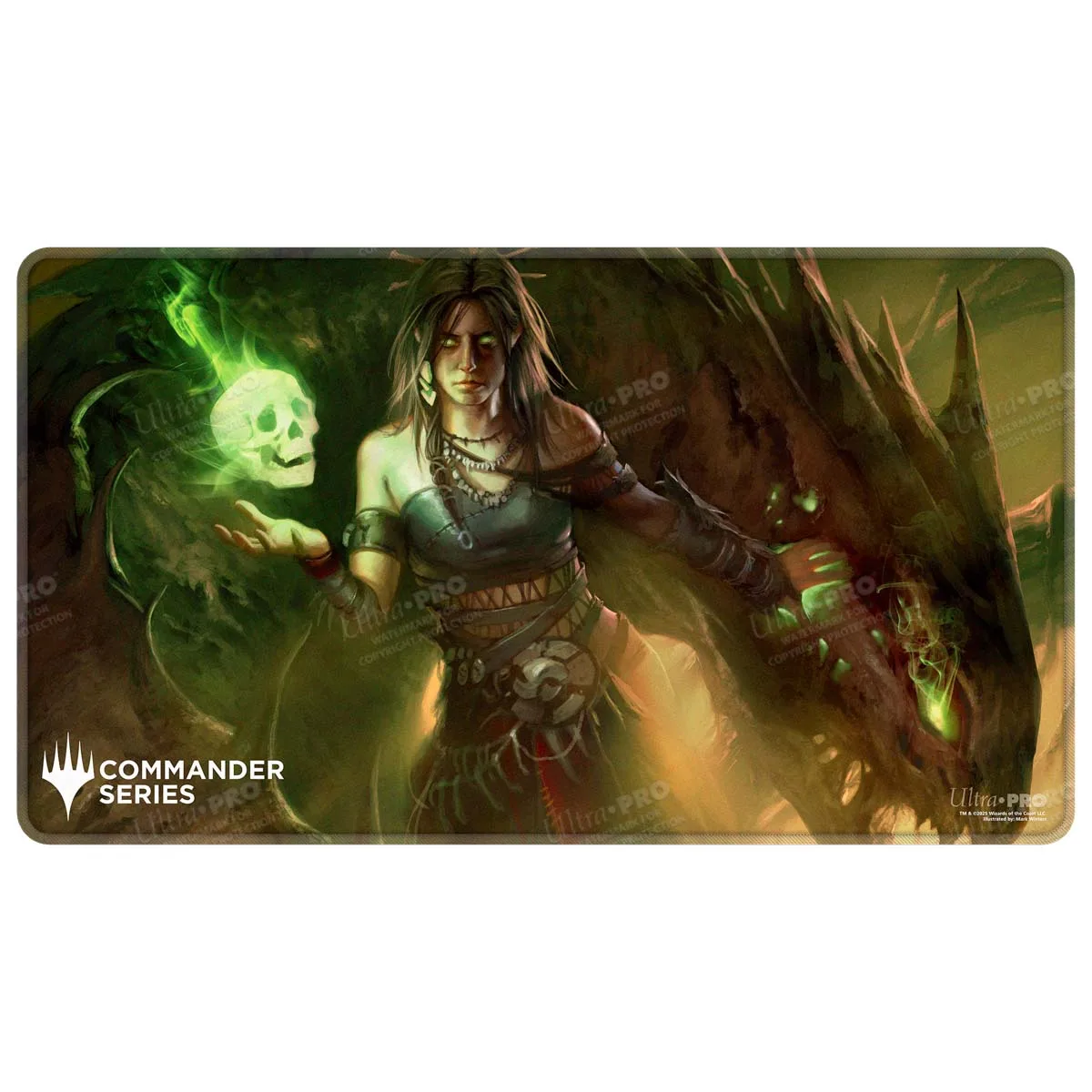
- Commander Series #7 Meren of Clan Nel Toth Stitched Playmat for Magic: The Gathering: Commander Series #7 Meren of Clan Nel Toth Stitched Playmat for Magic: The Gathering measures approximately 24 in. x 13.5 in. and features stitched edges for an added premium feel. The stitched edge is durable but slightly stiffer, so this mat benefits from a wider roll and a flat storage spot rather than a tight fold.
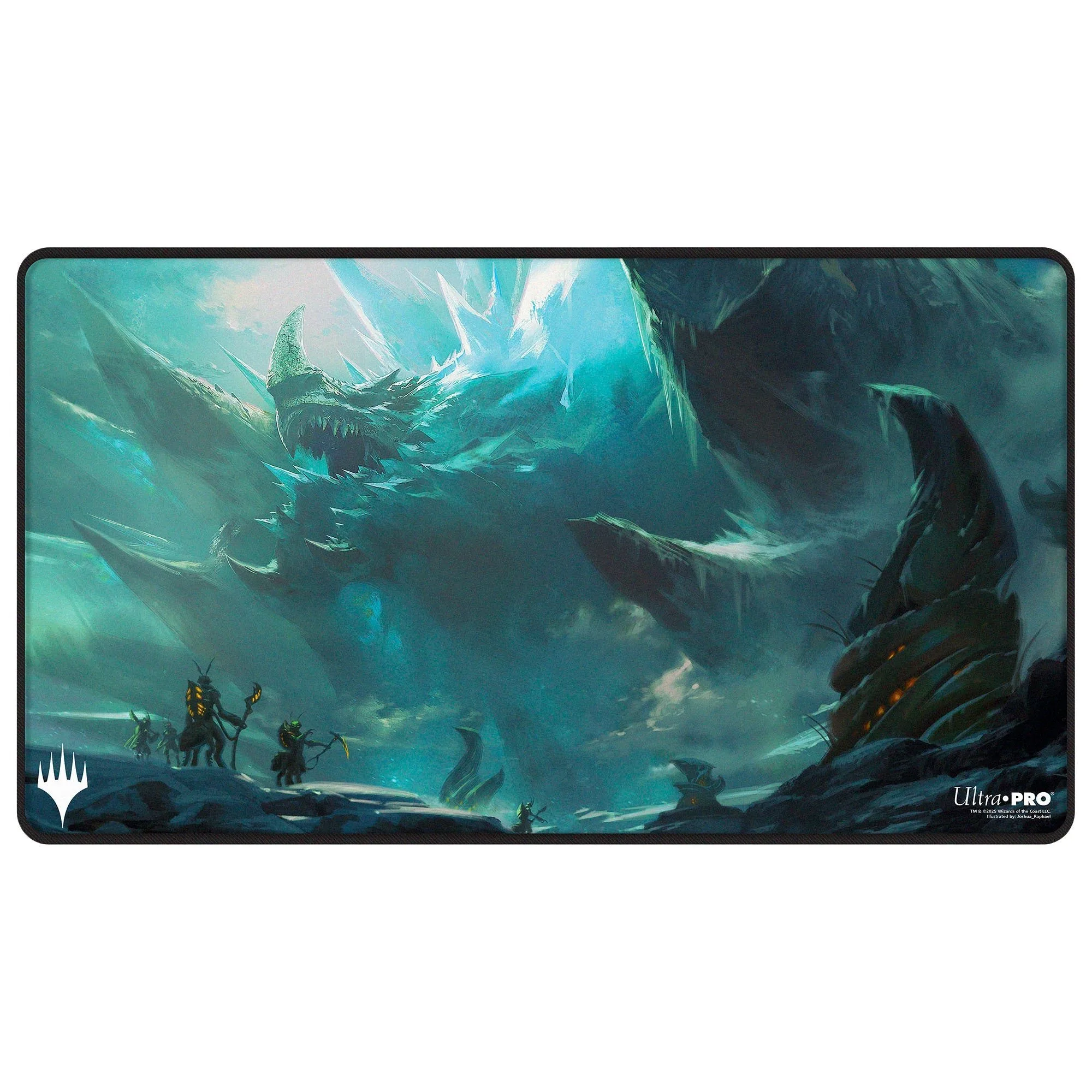
- Edge of Eternities - Black Stitched Playmat - Baloth Prime - Joshua Raphael for Magic: The Gathering: Edge of Eternities - Black Stitched Playmat - Baloth Prime - Joshua Raphael for Magic: The Gathering has a non-slip rubber backing and dimensions of approximately 24 in. x 13.5 in., and also works as an oversize mousepad for home or office. If you use it as a mousepad, it sits flat for long stretches, so check underneath occasionally and let it relax rather than leaving it under heavy desk gear.