Quick Answer
Leggy seedlings are almost always reaching for insufficient light. Move them closer to a grow light or a bright window, and gently brush them daily to strengthen stems.
Why Light Is the Main Culprit
Seedlings stretch when they don't get enough light. Even a sunny windowsill can be too weak for young plants in early spring. The result is pale, thin stems that flop over.
Light quality matters, too. Red-heavy light encourages stretching, while blue light keeps plants compact. If you're using a standard household bulb, it may not provide the right spectrum.
The good news: leggy growth is often reversible if you catch it early. Stems can thicken, and new growth will be more compact once light conditions improve.
Air Movement and Spacing: The Overlooked Factors
A gentle breeze strengthens stems by triggering a stress response that makes them stockier. A small fan on low, directed away from seedlings, works well.
Crowded trays compete for light and airflow. Thin or transplant seedlings so leaves don't touch. This reduces stretching and lowers the risk of damping-off.
If you're using a tray with large cells, you can give each seedling more room without repotting. This is where a well-designed seedling tray helps.
Diagnose and Fix Leggy Seedlings
- Symptom: Tall, pale, thin stems with sparse leaves, often leaning toward a light source. Check the stem color: pale green or white indicates light deficiency.
- Likely Cause: Insufficient light intensity or duration. Seedlings need 14-16 hours of bright light daily, placed just a few inches above the plants. Measure the distance from light to leaves—if it's more than 6 inches, move it closer.
- Corrective Action: Move seedlings closer to a grow light or a south-facing window. Run a fan on low for a few hours daily. Water from the bottom to avoid damping-off. After 3-4 days, check for new growth that looks more compact. If stems are still elongating, increase light intensity.
- Stop or Choose Another Option: If stems are severely bent, broken, or seedlings have fallen over and can't stand even after support, it's best to restart with fresh seeds. Also, if you see mold at the soil line, discard the affected tray to prevent spread. When restarting, use fresh seed-starting mix and ensure proper light from day one.
A Tray That Supports Strong Starts
-
Standard Seedling Tray - 5" x 5": Each cell has air-pruning strips and an individual drainage hole for hassle-free plug extraction. Air pruning prevents root binding, so seedlings develop strong root systems that support healthier, sturdier top growth.
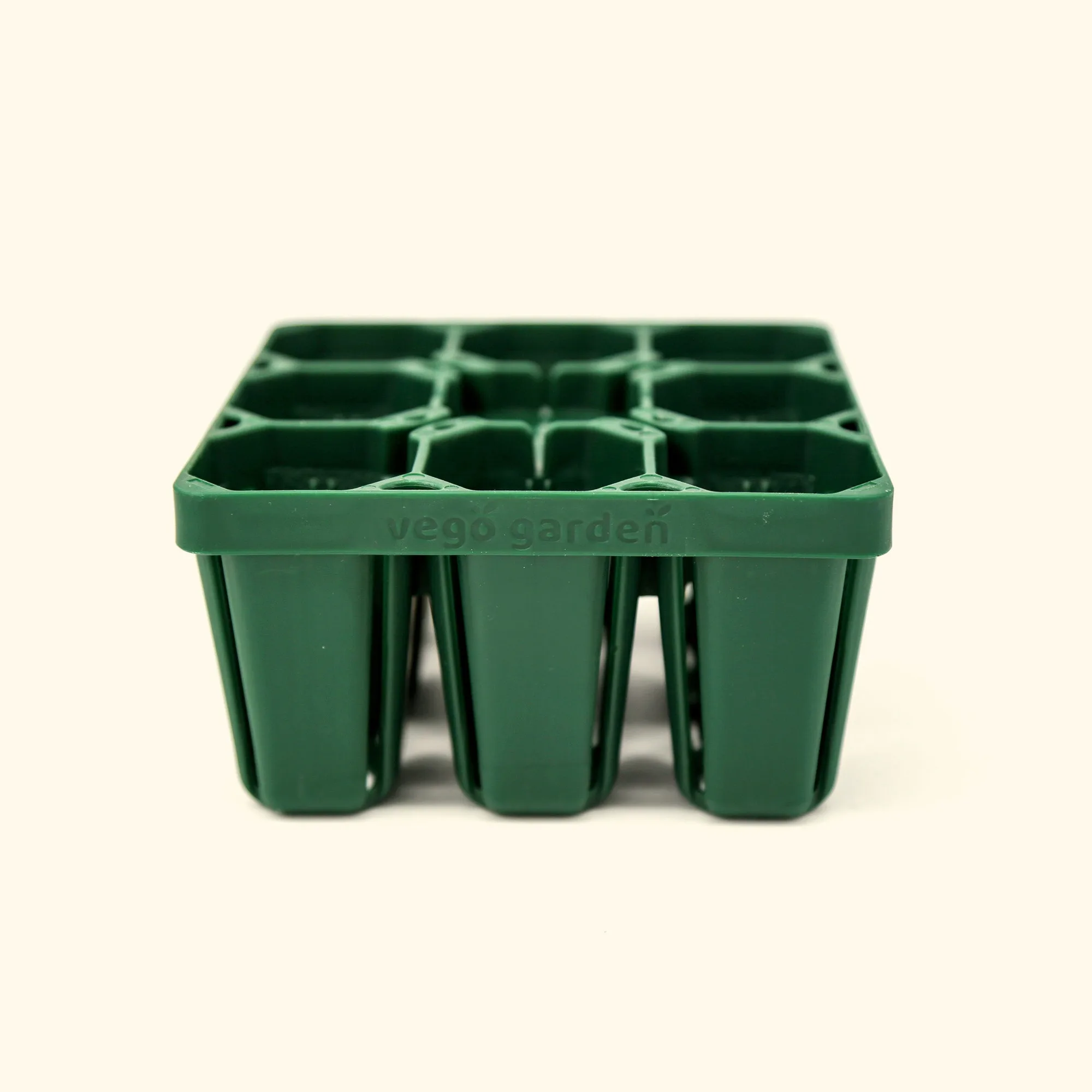
Standard Seedling Tray - 5" x 5"