Quick answer
Most slip fit problems—riding up, gaping at the waist, and twisting—come from three sizing mistakes: choosing the wrong length, ignoring hip-to-waist ratio, or picking a fabric without enough stretch. Here's how to diagnose and fix each one.
Why fabric choice matters for fit
A slip that fits perfectly in the dressing room can still shift during wear if the fabric lacks recovery. Microfiber blends hold shape better than static nylon, while lace trims add grip without bulk. If your slip feels loose after a few hours, check whether the fabric has enough elastic recovery for your body's natural movement.
The trade-off between length and comfort
A slip that's too long will bunch under skirts; one that's too short can ride up and expose the hem. The correct length depends on your skirt or dress length, not just your height. Measure from your natural waist to where you want the hem to fall, then add an inch for movement. A slip with adjustable straps or a stretch waistband can help bridge the gap between standard sizes.
Diagnose your slip fit problem
- Symptom: Slip rides up during wear: Likely cause: The slip is too long for your skirt or dress, or the fabric lacks grip. Corrective action: Choose a slip that is 1–2 inches shorter than your outer garment. If you already own it, try a fabric-safe anti-static spray on the hem. Stop if: The slip still rides up after shortening—look for a style with silicone grip strips or a stretch waistband. Measure your skirt length first, then pick a slip that is slightly shorter.
- Symptom: Waistband gapes or rolls down: Likely cause: The slip's waist circumference is too large for your natural waist, or the elastic is too soft. Corrective action: Size down if the slip has stretch, or choose a style with a wider elastic waistband (at least 1 inch). Stop if: Gaping persists after sizing down—your hip-to-waist ratio may require a slip with adjustable side tabs or a knit fabric that conforms. A slip that fits at the waist but is snug at the hips is better than one that gapes everywhere.
- Symptom: Slip twists or shifts to one side: Likely cause: The slip is too tight across the hips, causing the fabric to torque. Corrective action: Size up for more hip room, or choose a slip with a bias-cut or four-way stretch fabric. Stop if: Twisting continues after sizing up—the slip may have a side seam that doesn't align with your body's natural asymmetry; try a seamless or side-seam-free design. Twisting often means the slip is fighting your body shape rather than following it.
Product that helps
-
Slip noir Luccia Harmony: Slip noir Luccia Harmony features a double front, microfiber mesh back, and a decorative elastic waistband with picot trim. The microfiber back panel provides gentle stretch that adapts to your waist without digging in, while the double front prevents see-through—addressing two common fit complaints at once.
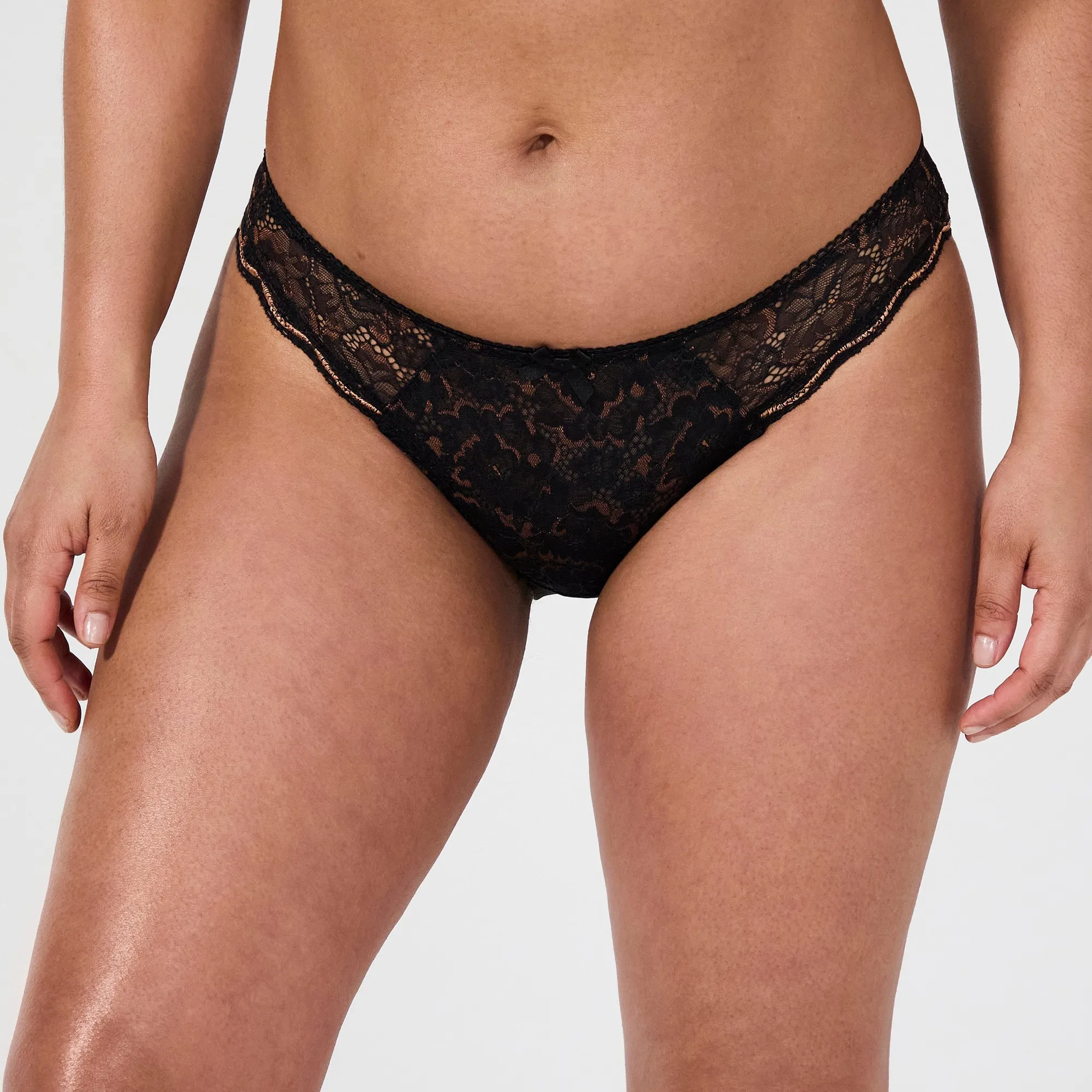
Slip noir Luccia Harmony